


.svg)
.svg)
.svg)
.svg)



.svg)




.svg)
.svg)

Let’s be honest: Most people don’t wake up excited to talk about fleet telematics, AI routing, or warehouse automation. And “digital transformation in logistics” is a big cluster of words. But behind that mouthful is something far more practical: the difference between companies that keep up (and companies that get left behind).
Customer expectations are faster than ever, supply chains are global and fragile, and margins don’t exactly leave room for guesswork. The logistics businesses that survive this reality are the ones with the smartest systems.
From AI-backed routing and blockchain-enabled transparency to hydrogen trucks and drone delivery, logistics is quietly reinventing itself. And the companies that lean into that change are already shipping circles around those that don’t.
In this article, we’ll break it all down:
- the use cases
- the benefits
- the obstacles
- the trends
Let’s begin.
TL;DR
- Logistics is juggling driver shortages, rising costs, and sky-high customer demands. “Digital transformation in logistics” is a big cluster of words, but it boils down to using tech to work smarter, not harder.
- Automation, IoT, AI, and data tools help companies streamline operations and cut costs. These developments lead to faster deliveries, fewer mistakes, happier customers, and better decision-making.
- On the other hand, common challenges include high upfront investment, workforce resistance, and outdated systems.
What is digital transformation in logistics?
Digital transformation in logistics means ditching outdated, manual processes and replacing them with supply chain technology that actually moves the needle: AI, automation, Internet of Things (IoT), and cloud platforms.
Why does it matter? There are a couple reasons, such as:
- Legacy systems slowing teams down and draining budgets
- Customer expectations for speed and transparency being higher than ever
- Disruptions exposing weak, disconnected operations
- Data-driven decisions beating guesswork every time
If you’re in logistics and still relying on patchwork systems, digital transformation isn’t a “nice to have” anymore, it’s your competitive edge.
What are the use cases of digital transformation in logistics?
Digital transformation is in full swing and it’s evolving fast. Let’s take a look at how some of its use cases in logistics can inspire your business:
Automated freight procurement and guided vehicles (AGVs)
Freight sourcing doesn’t have to be slow or manual. Digital platforms automate bidding, rate comparison, and contracting, so teams secure carriers faster, cut admin work, and avoid costly back-and-forth.
But these are only the beginning. These automated processes also lead to shorter procurement cycles, cleaner data, and better margins.
Inside the warehouse, AGVs pick up the slack where manual labor slows things down. They move pallets, shuttle inventory, and handle repetitive material flow without breaks or errors. That means higher throughput, safer operations, and lower labor costs.
Today, four out of five freight forwarders use automated systems to capture sales forecasting and integrate it with financial systems. And they’re already generating more revenue by doing less.
👉 DHL is a great proof point of how automation reshapes both freight sourcing and warehouse operations. The company uses digital freight procurement tools to match loads with carriers instantly, eliminating manual bidding and slow negotiations.
In their warehouses, AGVs now handle pallet movement and inventory transfers, reducing handling time and freeing employees for higher-value work.

👉 Tim Scharwath, CEO of DHL Global Forwarding, explains that digitalization isn’t a side project. It’s built into every major logistics function. He notes that their digitalization team “manages the IT and interfaces into the major products—air freight, ocean freight, customs clearance, and road,” ensuring technology is integrated where it impacts customers most. His point is clear: DHL isn’t “just an old traditional company,” but one actively proving its capability with modern logistics tech.
Asset tracking and data mining
Getting a headache because of losing track of inventory, containers, or equipment is the last thing you should worry about. This situation is very likely to burn a hole through your pocket. Thankfully, there’s a solution: With Internet of Things (IoT) sensors and real-time tracking, every asset gets a digital pulse.
You know where the asset is, what condition it’s in, and whether it’s being used efficiently. Not three days later, but right now.
Data mining takes it a step further. Instead of reacting to delays, damage, or shortages, logistics teams can predict them. Analytics tools surface patterns in usage, inventory flow, dwell time, and asset health, so decisions aren’t based on gut instinct or outdated spreadsheets.
The result?
✅ Fewer losses and write-offs
✅ Better inventory accuracy
✅ Faster incident response
✅ Smarter asset utilization
So, how does this play out in real-life? Maersk is a good example.
Maersk has layered IoT sensors, real-time tracking, and digital-twin models across containers, terminals, and warehouses so teams can see location, temperature, and equipment status at a glance.
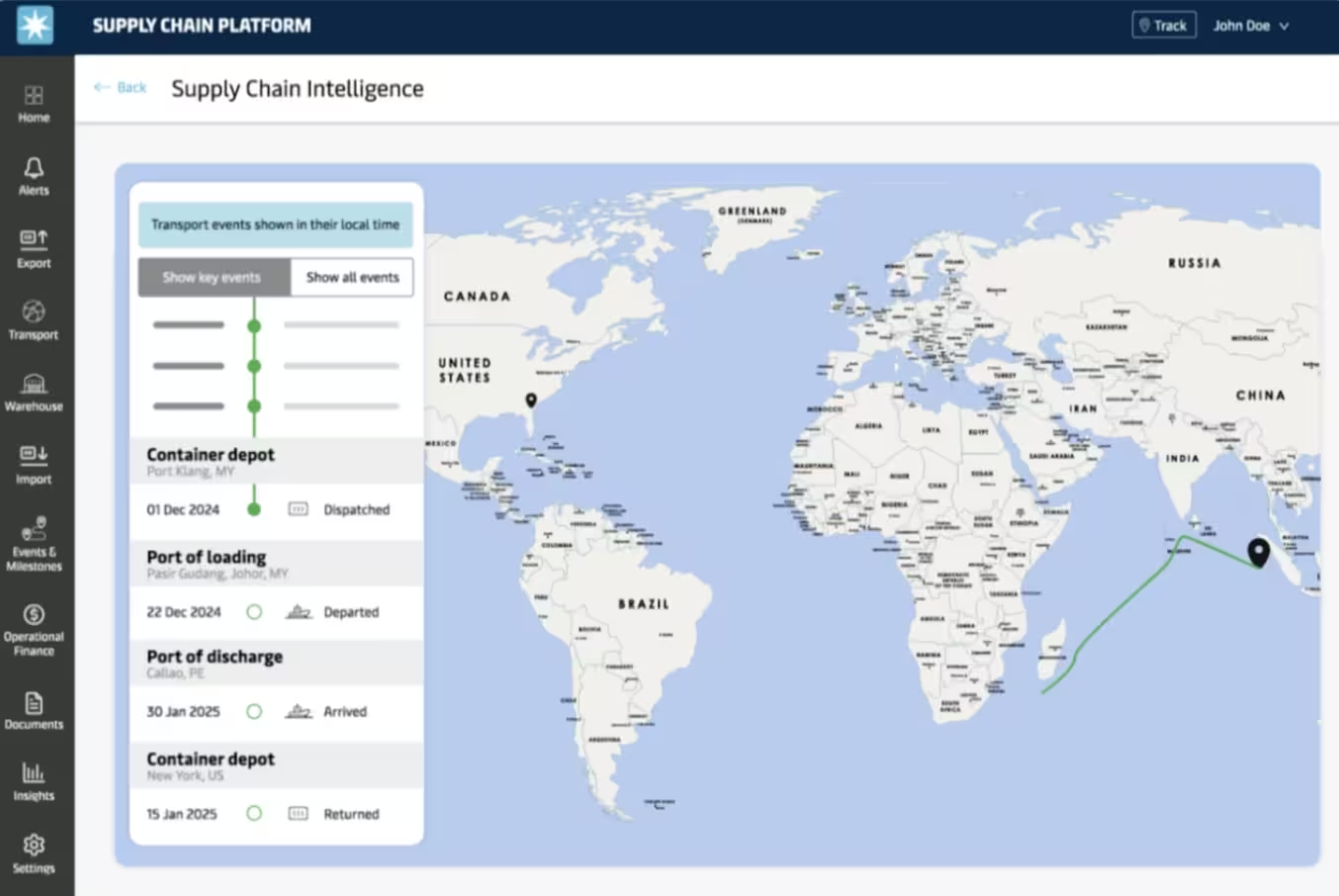
That live feed of asset data lets analytics do the heavy lifting: detect unusual dwell time, flag damage risk, trigger maintenance, or reroute a shipment before a delay becomes a crisis.
Lars Kastrup, Global Head of Supply Chain Products, summarizes how digital transformation serves their customers best:
Bringing that all together gives those actionable insights … and predictability, where you can say, ‘Hey, something is bound to happen in two weeks.’ We raise our hand. ‘Dear customer, let’s work on a solution. Let’s work on a contingency … so you avoid that disruption.’”
Digital yard management
The yard is often the biggest blind spot in logistics: Trailers pile up, containers sit too long, and teams waste time hunting for what’s already on-site. Digital yard management flips that script.
Digital platforms track arrivals, assign parking spots, and sync with warehouse and transportation systems to keep everything moving. And according to McKinsey, digital yard management is developing and being adopted by companies faster than ever.
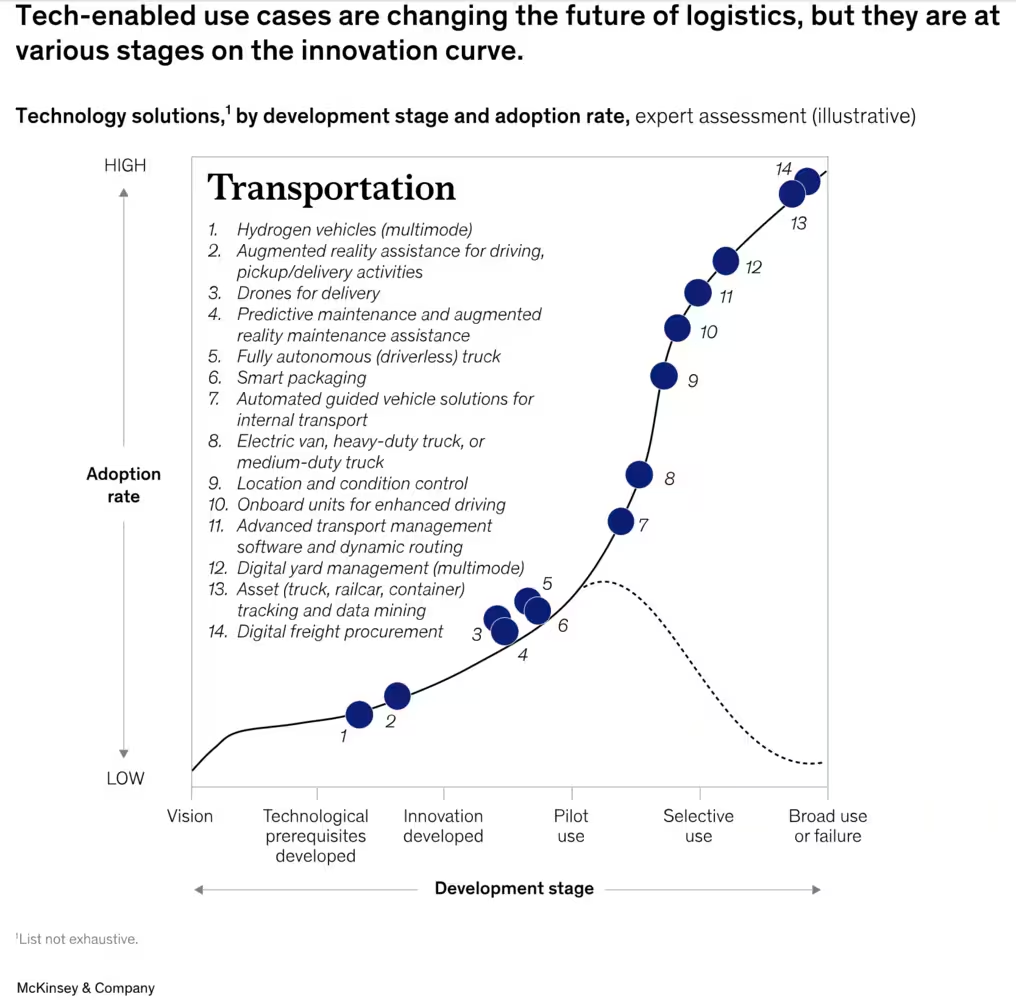
No more clipboards, radio calls, or yard checks on foot. Instead, you get faster gate-in/gate-out times, fewer bottlenecks, and smarter use of space.
👉 Real-world example: Project44’s Yard Management solution takes advantage of this boom. It centralizes facility mapping, predictive ETAs, and appointment management so operations can reassign dock space, reduce driver wait time, and eliminate blind spots at the gate.
Enhanced driving solutions
AI and ML are the driver's new co-pilot: real-time route optimization, predictive maintenance alerts, and fuel-efficiency nudges all happen while the engine's still warm. That means fewer hours burned in traffic, fewer surprise breakdowns, and steady savings at the pump.
And you don’t even have to ask drivers to become data scientists.
Check out this example from Nokia and Alibaba partnership 👇
Nokia’s private-wireless rollout with Alibaba’s Cainiao shows how connectivity supports smarter driving.
By giving vehicles, sensors, and edge systems a low-latency network (<50 ms), Cainiao can feed real-time telemetry and routing signals into decision engines that optimize movement across terminals and last-mile fleets, which reduces delays and improves responsiveness.
What does that deliver in the cab?
✅ Instant route updates that avoid congestion and meet tight ETAs
✅ Early warnings for maintenance issues before a breakdown happens
✅ In-dash coaching for fuel-efficient driving habits that add up fast
Tie those together and you turn trucks into smart, proactive assets. Safer for drivers, cheaper for operators, and a smoother experience for customers.
Delivery drones and hydrogen vehicles
Forget wheels alone. The future of transport is airborne and fueled by cleaner power. Drones shave last-mile time by flying over traffic, ideal for urgent parcels, dense urban pockets, or hard-to-reach rural drop-offs.
Hydrogen vehicles, meanwhile, answer the heavy-duty gap: longer range and fast refueling make them a strong candidate for regional and long-haul routes where battery EVs still struggle.
Companies like IKEA are already embracing these innovations IKEA’s parent company, Ingka Group, recently acquired the U.S.-based AI logistics firm Locus to enhance its home delivery operations. This acquisition enables IKEA to offer more delivery time slots and options, provide real-time package tracking, and speed up deliveries.
The deal is expected to simplify IKEA’s logistics operations and cut delivery costs by approximately €100 million ($117 million) annually.
What are the benefits of digital transformation in logistics?
Wisetech Global’s 2023 survey reports that 95% of logistic providers plan to maintain or increase their investment in technology. Even though adopting new tools takes time, the benefits of digitization in logistics make life easier for both employees and customers.
Here’s what you can expect when you start investing 👇
Improved operational efficiency
Think of IoT tracking and digital yard tools as the end of “lost trailer hide-and-seek.” When a fleet manager can see every container in real time, handoffs get faster and errors drop.
A mid-sized freight carrier that digitizes its yard operations can cut check-in delays by nearly half and shave hours off weekly scheduling.
Cost reduction
AI route planning and predictive maintenance don’t just trim waste. They in fact stop money from burning in the fuel tank.
For example, if one regional distributor uses hydrogen trucks and route optimization software to reduce fuel spend by double digits in the first quarter, there’ll be fewer breakdowns, fewer detours, and way fewer “We’ll get there when we get there” moments.
👉 A Reddit user gives us a bit more context:
Since I’ve been working as a freight forwarder, I often find myself asking why I’m doing certain tasks … For example, tasks like requesting quotes or handling analytical work, which are often repetitive and time-consuming. This is where AI comes in, as it can process large amounts of data, perform quick calculations, and provide accurate forecasts or recommendations.”
Enhanced customer experience
Real-time tracking and personalized delivery updates make customers feel in control instead of in the dark. A third-party logistics company that adds live parcel tracking and automated rescheduling will see repeat bookings jump.
Why? Because nothing says “we’ve got you” like knowing exactly where your shipment is without calling three people.
Increased agility
Let’s go back to digital yard management to talk about this benefit.
If you use a digital yard tool and smart dispatching, adjusting to delays will feel less like a fire drill.
If a port jams up unexpectedly, you can reroute freight in real time and reassign drivers based on live capacity data. No mass email chains required, and deliveries land on schedule instead of in apology territory.
Data-driven decision making
Sensors, telematics, and TMS (transportation management system) platforms pump out data that’s actually useful, only if you put it to work.
Imagine this: You’re a national carrier of analytics. You’ll spot consistent bottlenecks on certain routes, then adjust schedules and fuel planning faster. There’ll also be fewer manual fixes, and managers who finally stop living in spreadsheets.
Win-win for everyone!
Some examples of technology driving logistics transformation
LogComex’s digital transformation with automated onboarding
LogComex is a Brazilian tech startup that provides global supply chain analytics to customers ranging from major airports, transportation companies, freight forwarders, importers, and exporters.
After struggling with not quickly developing features and in-app elements, LogComex chose to automate their onboarding. Before that, teams were behind in responding to customer requests. Malu Vasconcelos, Product Designer at LogComex, understood what the customers wanted but couldn’t deliver:
Customers often don’t want to contact Customer Success; they want to access the platform and understand it intuitively without calling or communicating with anyone.”
The logistics terminology can be confusing (and even frustrating) and the teams cannot predict the questions the customers will come up with. Therefore, instead of adding more to the pile of developers’ to-do lists, they decided to try UserGuiding.
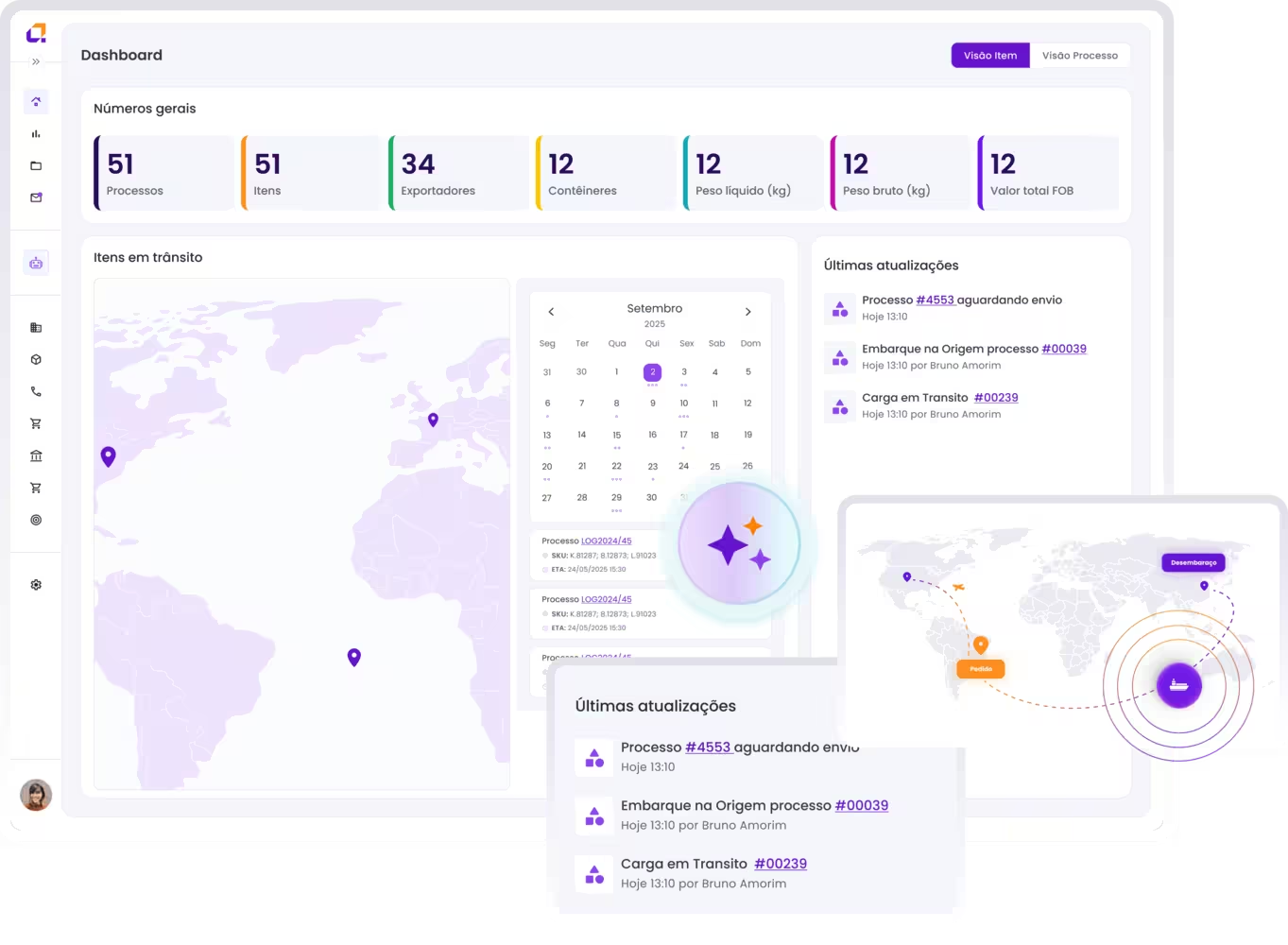
They created a product tour to guide their customers through their dashboard, published tooltips and onboarding checklists to give 24/7 access to their educational materials and clarify issues in minutes.
💡 Struggling with low adoption of new features of your logistics platform? Start a free trial or book a live demo to simplify digital transformation with UserGuiding.
FreightPath’s digital transformation with mobile app

FreightPath is a transportation management system (TMS) that helps companies plan, execute, and track transportation processes of goods from start to finish.
FreightPath’s mobile app is a part of this automation goal. It helps drivers:
- Maintain communication
- Track and trace shipments
- Send loads with attachments
- Capture proof of delivery (PoD)
- Log feedback
With the motto “move smarter, not harder,” FreightPath’s mobile app influences how adopted digital transformation technologies can automate and improve shipment lifecycle.
Tai Software’s digital transformation with remote data monitoring
Tai Software is a freight brokerage software that helps businesses with digital documentation and analytics. Cutting billing cycles up to 65%, it helps businesses:
- Access all carrier rates and load boards from a single screen
- Post to multiple boards with one click
- Monitor carrier compliance and performance metrics in real time
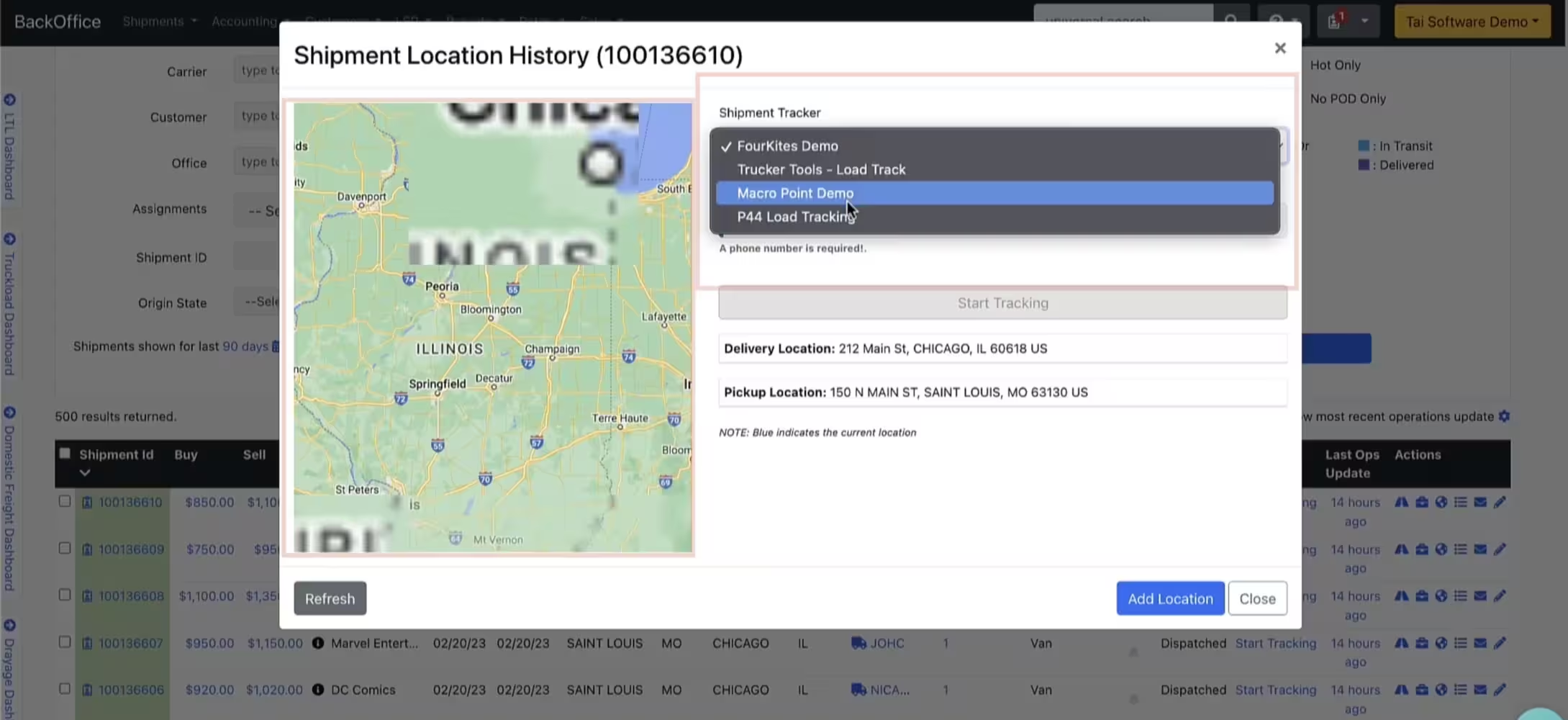
The app itself is intuitive and user-friendly, so it saves time to deliver quotes (11 hours, to be exact).
Tracking is available through hyperlinks within the portal so people can be trained very quickly as well.
Molex’s digital transformation with supplier onboarding
Molex manufactures electric, electronic, and fiber optic connectivity systems. Because of their primary use case, Molex connects a vast amount of suppliers across the world and their manual supplier portal was no longer cutting it.
With over 70,000 parts sourced and 900 suppliers worldwide, they needed to digitize their supplier portal to stay on top of the work. “Subject-matter expertise” and “value engineering” became necessary.
And the solution was an enterprise resource planning software, SAP.
After Molex adopted SAP, they standardized and digitized supplier information about purchase orders, inventory, quality, and invoices, and were able to introduce educational YouTube videos in multiple languages to track progress.
The result was impressive: Within 18 months, $1 billion transaction volume was completed through SAP’s network. Over 90% purchase orders took less than a third of the time required for confirmation. This real-time visibility also increased Molex’s credibility.
Obstacles in digital transformation in logistics
Digital transformation in logistics sounds great until it runs into reality. And reality, in this industry, comes with forklifts, outdated software, and budgets that squeal at the word “upgrade.”
Here’s what companies are up against 👇
Legacy systems
Think of legacy systems in logistics as the digital equivalent of warehouses full of paper files and outdated machinery trying to talk to cloud platforms. And many logistics companies to this day still rely on decades-old transportation management or inventory systems built long before APIs and automation were a thing.
These outdated tools weren’t designed to connect with AI routing software, digital twins, or real-time tracking platforms, and forcing them to integrate is like trying to plug a USB-C cable into a fax machine.
When companies do manage to connect old and new tools, it often leads to slow performance, broken data flows, and high maintenance costs.
But when legacy systems are replaced or modernized with scalable, cloud-based infrastructure, logistics teams gain real-time visibility, faster decision-making, and smoother collaboration across the supply chain.
High initial investment
Digital transformation in logistics is less about “buying software” than it is about requiring new infrastructure, upgraded hardware, training programs, integrations, IoT sensors, automation tools, and sometimes even redesigned workflows.
That adds up fast, especially for mid-sized companies working with tight margins. Digitalization expenditure is expected to hit 2.89 trillion dollars in 2025.

And it’s not just the upfront cost that makes leaders hesitate. It’s the uncertainty around ROI. A study by Köse et al. suggests that the most common financial barriers to digital transformation in logistics include “high cost of investment and budget insufficiency”.
Without a clear roadmap, even promising technologies like digital twins, robotics, and AI routing can feel like financial risks rather than smart investments.
But when companies roll out digital tools in phases and tie them to cost savings, improved utilization, or customer satisfaction, those investments start paying off sooner than expected.
Data security concerns
Every day, logistics companies manage a huge amount of sensitive data from shipment details and customer information to fleet tracking and supplier records.
Now add IoT devices, real-time data sharing with partners, cloud platforms, and mobile access, and suddenly the attack surface gets much bigger.
Cyber threats like ransomware, data breaches, and system hijacking can halt operations, damage reputations, or even disrupt entire supply chains. That’s why cybersecurity isn’t optional in digital logistics.
With the right encryption, access controls, compliance policies, and threat monitoring, companies can protect data integrity while still staying agile and connected.
Skill gaps
Digital logistics doesn’t run on tech alone. It needs people who know how to operate, interpret, and improve that tech. But many logistics teams were built around manual workflows, legacy software, and traditional roles.
So when AI-based forecasting, automation tools, and data platforms enter the scene, there’s a gap between what employees know and what the technology requires.
Upskilling takes time, and hiring new talent isn’t always easy in a competitive market. But companies that invest in training, knowledge transfer, and blended teams often see smoother adoption, fewer interruptions, and higher confidence in new tools.
Resistance to change
In logistics, routines are deeply embedded: Drivers stick to familiar routes, dispatchers rely on old dashboards, and warehouse teams trust processes that have “always worked.” So when digital transformation rolls in with automation, new dashboards, or AI decision-making, hesitation is normal.
Sometimes resistance comes from fear of job loss; other times it’s frustration with change overload or poorly explained rollouts. But the ultimate customers don’t want their suppliers to be “the weakest link” as Graham Parker, VP Digital Freight Solution Sales at Descartes Systems Group, says.
But when employees understand how digital tools make their work easier (not replace them) adoption speeds up. Clear communication, pilot programs, and visible wins can turn skeptics into advocates.
Logistics digital transformation trends
Logistics doesn’t get the luxury of standing still. Shifting customer expectations, tighter delivery windows, and rapidly evolving tech keep pushing the industry to upgrade how it operates.
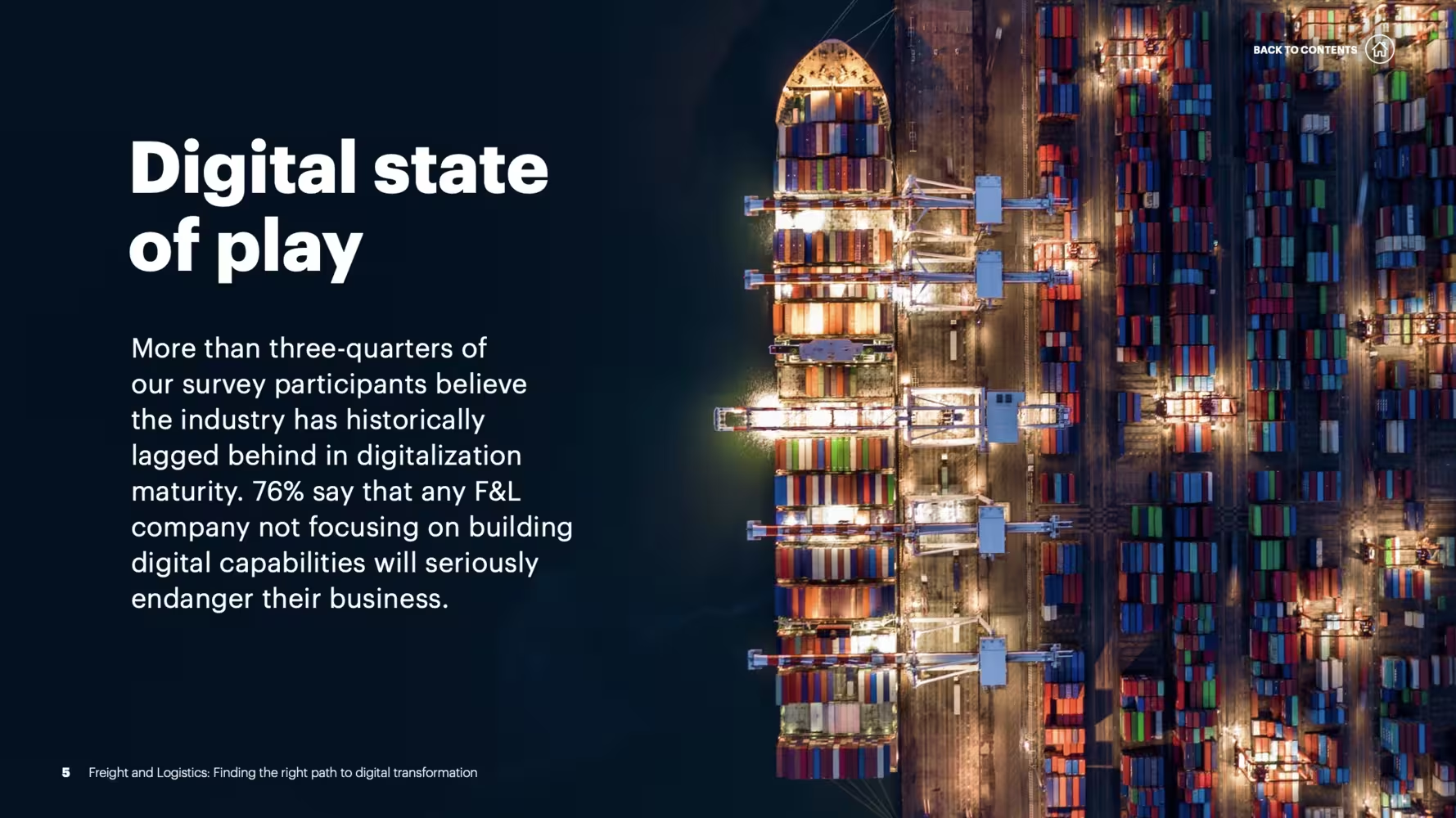
Some changes creep in quietly, like gradual warehouse automation. Others (think: pandemic-fueled e-commerce surges) force companies to overhaul systems almost overnight. Still, logistics is one of the biggest markets that lag behind this transformation.
In fact, 76% of people say that any logistics company not focusing on digitizing their operations will seriously endanger their business.
Here are the digital trends that are steering the next wave of transformation in logistics:
Rise of digital freight platforms
The rise of digital freight platforms is unstoppable: It’s expected to reach 94.8 billion dollars by 2030.
Digital freight platforms reshape how shippers and carriers work together. Instead of relying on back-and-forth emails and manual rate checks, companies can compare carriers, automate bookings, and track loads in real time.
There are platforms specifically built for this purpose. They help reduce empty miles and cut lead times, overall making it easier for even smaller logistics providers to stay competitive without building their own systems.
Integration of AI and automation
AI and automation are becoming part of everyday logistics operations. Companies are using predictive analytics to forecast demand, optimize routes, and prevent maintenance issues before they cause delays.
Chris Caplice, founder and director of MIT FreightLab, has started working with Uber Freight to combine AI and operations research to improve vehicle routing and empty space inside the trucks. Here’s what Caplice has to say 👇
What we see is that initially, AI is taking a subordinate role, but as we advance through, we’re starting to see it take more of a primary role. Eventually, we’d like to see the generative AI take over and solve larger parts of that problem.”
Similarly, in warehouses, autonomous forklifts and automated sorting systems help speed up workflows and reduce labor strain. The result is fewer bottlenecks and faster decision-making.
Sustainability initiatives
Sustainability is no longer just a branding angle. It’s becoming a core business requirement as 71% of survey participants are willing to pay more for green shipping in the logistics industry.

Therefore, logistics providers should be investing more in electric and hydrogen-powered fleets, route optimization to cut fuel waste, and emissions tracking tools to meet regulatory standards.
Warehouses are also adopting energy-efficient systems, such as smart lighting and solar power, to reduce operating costs and environmental impact.
Blockchain for transparency
Logistics chains still struggle with one of the oldest pain points in the book: knowing exactly where something is, who handled it, and whether the data around it can be trusted. That’s where blockchain is starting to make a real impact.
Take Deloitte’s work with a major pharmaceutical and biotech company. They were moving drugs through clinical trial supply chains using paper forms, disconnected systems, and third-party handlers. There was no real-time visibility, no unified data trail, and zero end-to-end traceability.
Deloitte built a proof of concept using AWS Blockchain services, Hyperledger Fabric, and mobile apps with barcode scanning to track individual drug samples across every stage. Everyone involved (from labs to trial sites) could finally access the same ledger and verify movements in real time.
The payoff was remarkable. Manual steps dropped, tracking became streamlined, and the company cut regulatory reporting costs thanks to built-in audit capabilities.
Long story short, blockchain replaces blind spots with verifiable movement and accountability.
Last-mile delivery innovations
The last mile continues to be one of the most expensive and complex parts of logistics. According to Gartner, last-mile logistics make up 41% of total delivery costs. So it makes sense that companies are testing new approaches to make it more efficient.
Autonomous delivery vehicles, drones, parcel lockers, and micro-fulfillment centers are helping reduce delays and lower delivery costs.
Some businesses are also using AI-driven route planning to batch neighborhood deliveries and improve delivery density.
How does UserGuiding help the logistics digital transformation?
UserGuiding isn’t exactly a TMS, a yard management platform, or a company building drone fleets.
But it is the tool that makes adopting those systems a whole lot easier: helping logistics teams skip the endless manuals and start using digital tools with confidence.
So, let’s quickly dive into its capabilities:
UserGuiding is a no-code product adoption platform that lets you design in-app onboarding, guidance, and support flows without writing a single line of code.
Whether you’re rolling out a new transportation management system, upgrading your warehouse software, or onboarding drivers to digital apps, UserGuiding ensures your teams don’t just “get by” but actually get it.
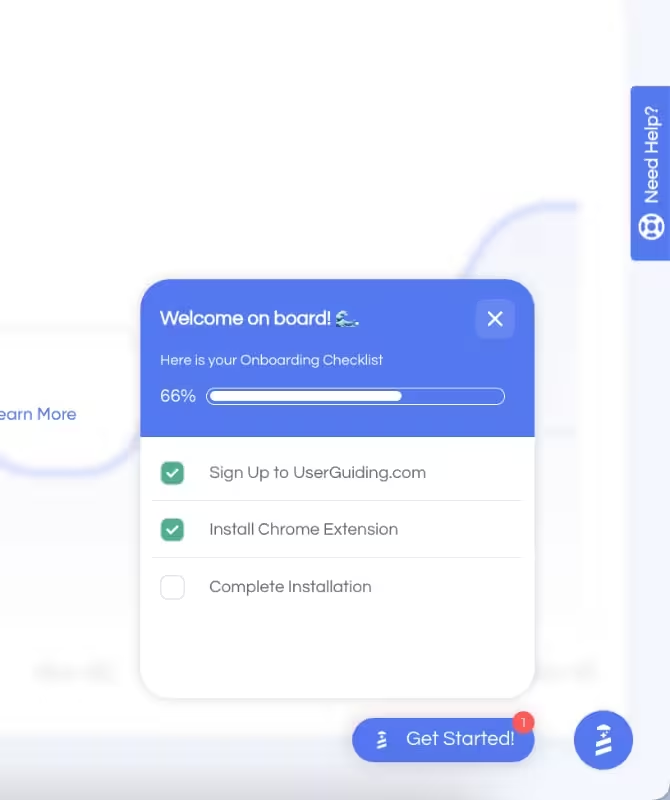
With UserGuiding, you can create:
- Interactive product tours and walkthroughs
- Onboarding checklists for drivers, warehouse staff, or dispatchers
- Hotspots and tooltips to highlight new features or compliance steps
- Resource centers and knowledge hubs for employees and partners
- AI-powered assistants for instant, context-aware help
- In-app surveys to catch pain points before they escalate
Here’s what that looks like in logistics:
👉 Launching a new TMS? Guide dispatch teams through load planning and reporting with step-by-step tours.

👉 Onboarding warehouse staff? Use checklists and tooltips to walk them through scanning, tracking, and returns. Right on the job.
👉 Managing carrier portals? Build a lightweight help center and embed AI assistants so partners get answers instantly without calling your team.

With all these tools, UserGuiding helps logistics companies:
✅ Accelerate adoption of new systems
✅ Reduce training costs and onboarding delays
✅ Boost efficiency across teams and partners
Conclusion
Digital transformation in logistics is already at the loading dock, clipboard in hand, asking if you’re ready. AI, automation, blockchain, drones, hydrogen fleets… All of it is reshaping how the industry moves, tracks, and delivers.
But here’s the part people don’t always admit: the technology itself isn’t the hard part. It’s getting humans to actually use it without confusion, delays, or “I’ll learn it later” energy.
That’s where tools like UserGuiding quietly (and efficiently) save the day.
When you’re rolling out new platforms, onboarding drivers to updated systems, or training ops teams on digital tools they didn’t ask for, guided adoption makes everything less chaotic and a lot faster.
Because success in logistics is more about adoption, clarity, and keeping things moving without 47 email threads and a PDF manual no one opened.
If you’re ready to make digital change feel less like a headache and more like an upgrade…

.png)