

.svg)
.svg)
.svg)
.svg)



.svg)


.svg)
.svg)

Whether you've outgrown Appcues, need a more budget-friendly alternative, or are just exploring similar options before committing, you're in the right place.
No matter your reason, this article covers the top Appcues competitors and alternatives to help you make the best choice ⬇️
TL;DR
- Appcues is a customer engagement platform best known for combining web in-app experiences with native iOS/Android, behavioral email, and mobile push notifications in a single workflow builder.
- ✅ What Appcues does well: native mobile coverage, multi-channel orchestration, A/B testing across in-app and email, a polished editor, and a mature live AI layer (Appcues AI).
- ❌ Where Appcues falls short: opaque and expensive pricing, hard caps on published experiences (10/25/100), no standalone knowledge base or session replay, an AI layer that's assistive rather than autonomous, and recurring complaints about editor performance and multi-project management.
- UserGuiding, for example, is a strong Appcues alternative that solves a lot of Appcues' problems. UserGuiding is a no-code, all-in-one product adoption platform that bundles onboarding flows, surveys, a standalone knowledge base, an AI Assistant, product updates, session replay, no-code event tracking, and analytics into a single tool, with transparent, scalable MAU-based pricing starting at $174/month.
Overview of Appcues Alternatives at A Glance
What is Appcues?
Appcues is a customer engagement platform that focuses heavily on customer communication across platforms. Its key offerings include in-app messages, mobile push notifications, and scheduled emails.
Appcues’ other key features include:
- Flows: Modals, slideouts, and hotspots to create product tours.
- Tooltips: UX elements to draw users’ attention to specific UI elements.
- In-app Surveys and NPS: Forms to capture user feedback and insights.
- Checklists: Interactive task lists that guide users through key workflows.
- Banners: Messages to highlight updates and announcements.
- Resource Centers: Centralized in-app hubs for FAQs and support resources.
- Segmentation: Create user groups with similar attributes.
- Event Tracking: Capture user interactions to measure engagement.
- A/B Testing: Compare different versions of UI elements and/or UX experiences.
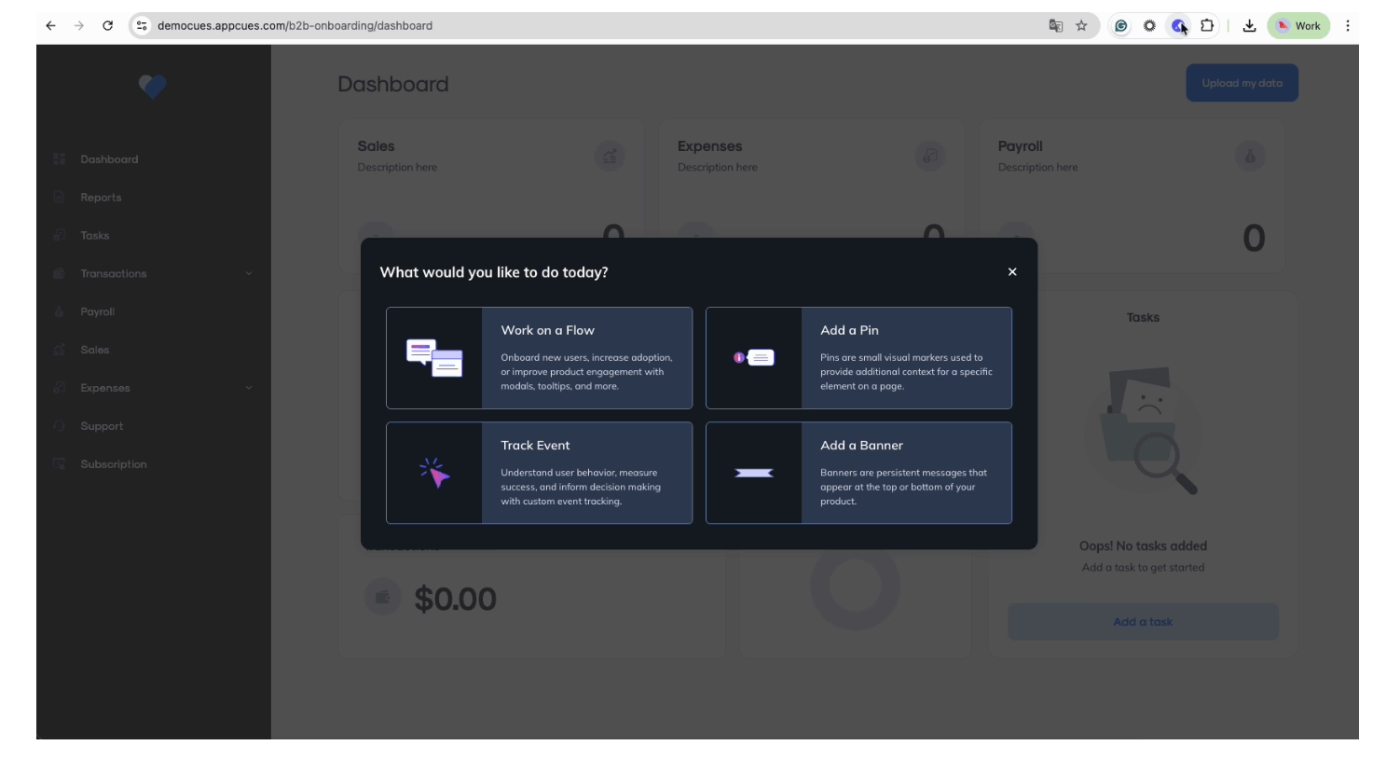
Appcues has also recently introduced Appcues AI, which they call “an AI-powered growth engine”. There are 5 main capabilities (or roles, one can say) of Appcues AI agent.
These are:
- Appcues advisor: provides benchmarks and best practices on adoption and user engagement.
- Delivery specialist: helps with page targeting.
- Segmentation planner: creates user segments.
- Experince builder: creates and optimizes experiences (tours, modals, etc.).
- Growth analyst: analyzes engagement patterns of experiences and offers ideas for improvement.
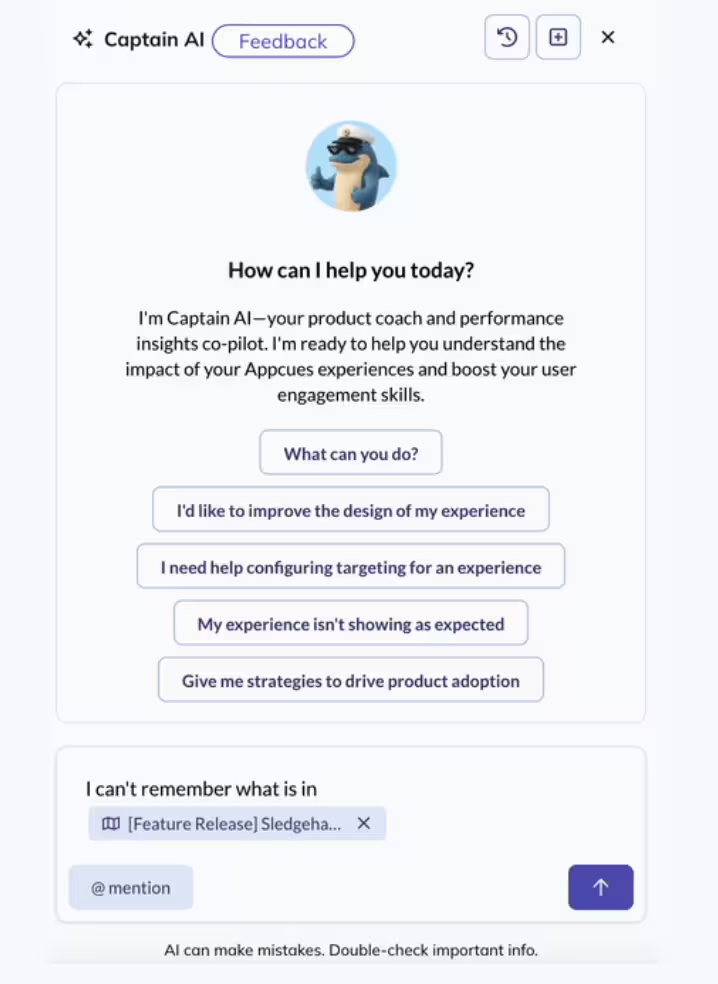
Appcues also offers an MCP server for you to link the platform with your existing AI workflows and automations.
Appcues Pricing
All these cool features do not come cheap, we should warn. Appcues doesn’t have a transparent (or flexible) pricing structure. They offer 3 plans: Start, Grow, and Enterprise, all of which require contacting the sales team to get any numerical price information.
All three plans include all the capabilities and features Appcues offers, though, which is very nice.
What affects Appcues’s prices are:
- The number of MAUs (the Start plan can only be used up to 3,000 MAUs, while Grow can be used up to 50,000 MAUs, for example)
- The number of installations
- The feature/capability quota you require
With the Appcues Start plan, you get 10 published experiences, and up to 1,000 free emails. With the Grow plan, these numbers increase to 25 published experiences and up to 5,000 free emails. And with the Enterprise, you get 100 published experiences included in your subscription.
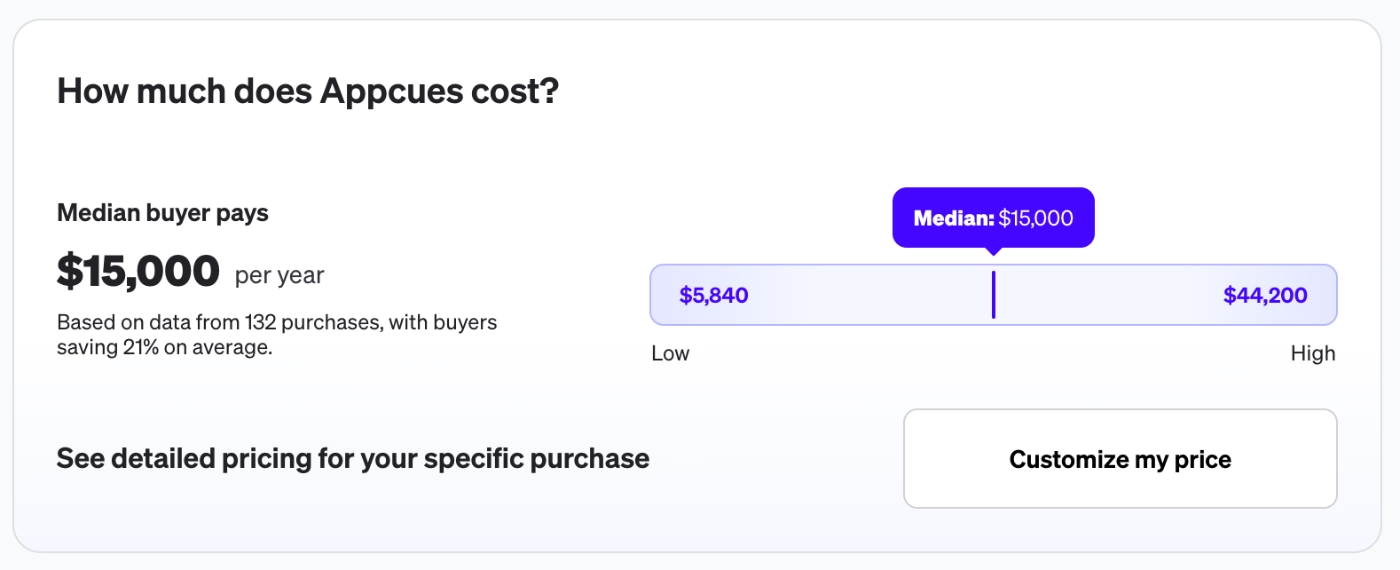
According to Vendr data, the average cost of Appcues is around $15,000 per year, which translates to roughly $1,250 per month. However, the cost of the platform can easily rise up to mid-6 figures, depending on your implementation needs…
Appcues Pros & Cons in 2026
Why Look for an Appcues Alternative?
➡️ Heavy reliance on integrations for the "full product adoption picture"
To get the end-to-end stack most teams want (in-app onboarding + KB + analytics + support + roadmap + feedback), you'll be integrating Appcues with a lot of other software. While it would be unfair to expect Appcues to solve all of your business’ problems, it could still offer a standalone knowledge base, a product updates page, and a session replay (all of which are offered by Appcues competitors like UserGuiding).
Appcues’ survey modals are also not very advanced and they do not come with any use-case-oriented templates that allow you to get started with user feedback easily.
➡️ Appcues AI is not autonomous like some other onboarding AI agents
Appcues added AI for copy generation, segmentation suggestions, and post-launch experiment review over the past year, which is genuinely useful. However, if you’re looking for more autonomous capabilities like Chameleon’s Ranger agent who audits your experiences weekly and proposes fixes; Pendo’s Predict who surfaces churn risk and feature-adoption likelihood per segment; or Frigade’s and Userorbit’s AI agents who author and maintain flows from a connected codebase…
Well…
Appcues is not there.
➡️ Published experience caps create artificial scarcity
Even on the Grow plan ($50K MAUs), you're capped at 25 published experiences. That sounds like a lot until you realize an onboarding checklist, a feature announcement modal, an NPS survey, and a tooltip tour all count as separate "experiences."
Teams running mature product-led motions with role-based onboarding, feature-by-feature adoption flows, and ongoing in-app campaigns hit the ceiling faster than they expect.
➡️ Editor performance and multi-project management have rough edges
Two of the most common themes in recent G2 reviews are: (a) the poor UX of Appcues which is frustrating, particularly with tracking, slow flow transitions, and domain management; and (b) the need for improvement in metrics, organization, targeting, and overall user experience in Appcues.
In addition to that, in April 2026, a mid-market US edtech running two products at about 7,500 and 35,000 monthly active users told UserGuiding it was leaving Gainsight-owned Appcues because the minimum cost was too high and Appcues now aims at companies much larger than theirs.
Neither of the G2 complaints are dealbreaking on their own, but they're consistent enough complaints that teams running several apps from one workspace often re-evaluate at renewal.
👉🏻 Read more about what real Appcues customers say about the platform and their experiences.
10 Alternatives to Appcues with Different Strengths and Use Cases
#1 Appcues Alternative: UserGuiding
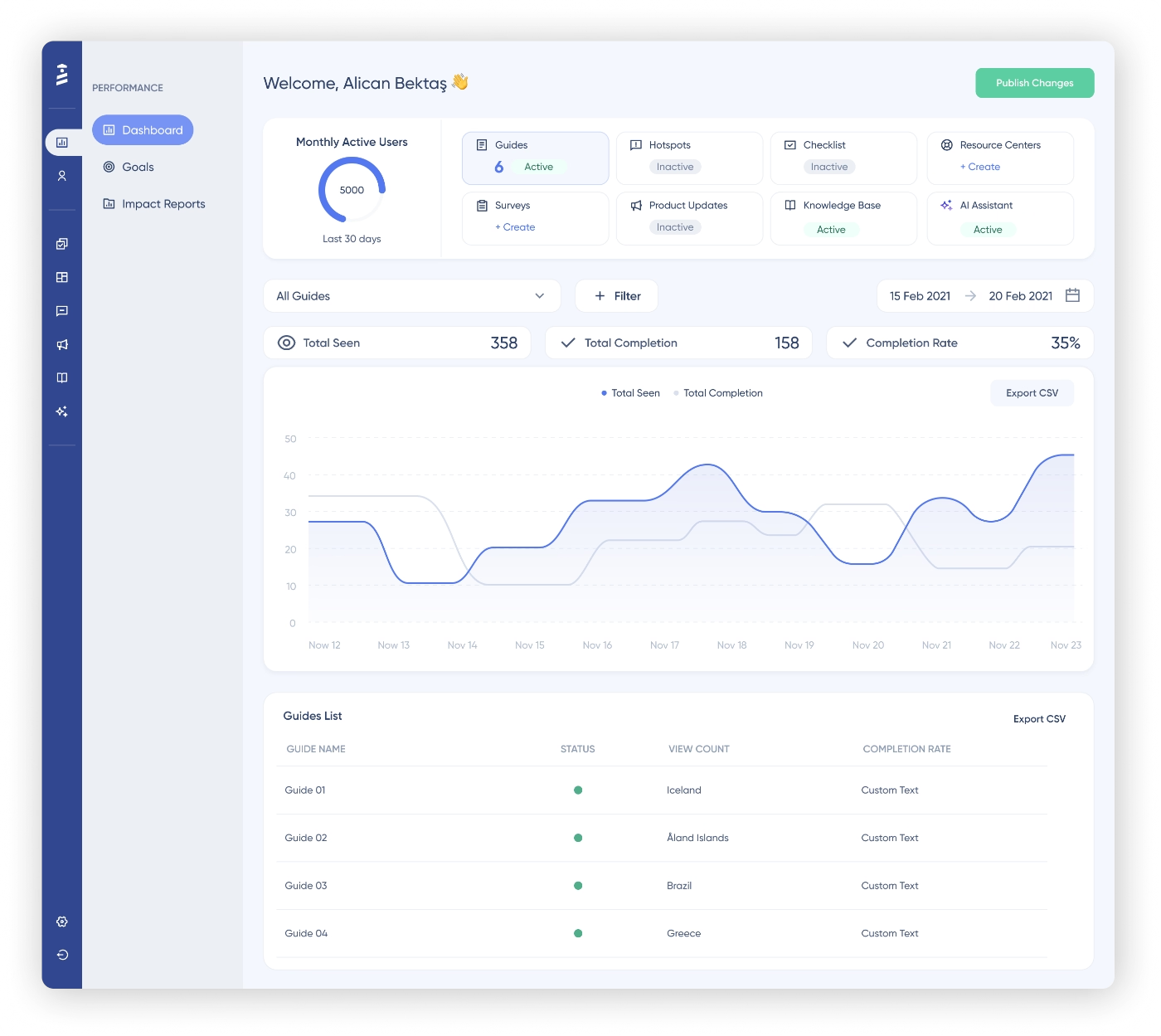
UserGuiding is an all-in-one product adoption platform built for teams that want a full no-code onboarding, in-app engagement, user feedback, and self-serve support stack in one easy-to-use platform.
Key Features
- Product tours, tooltips, hotspots, modals, banners, and checklists.
- AI Assistant that answers user questions inside your product.
- Resource Center for in-app help, FAQs, and announcements in one place.
- Standalone Knowledge Base for off-product self-serve support.
- Product Updates page for changelogs and feature announcements.
- Session replay paired with no-code event tracking and flow analytics.
- NPS, CSAT, and other in-app surveys with use-case-oriented templates.
- Multi-project workspace management for teams running several apps or roles from one account.
- MCP (Model Context Protocol) support for plugging UserGuiding into your AI workflows.
- Automated localization.
Who UserGuiding is for:
- Product, growth, and customer success teams at PLG SaaS companies that want one tool covering onboarding, in-app guidance, surveys, and self-serve customer support.
- Mid-market and growing teams looking for a flexible, transparent, MAU-based pricing model that scales gradually with their user base instead of jumping by tier.
- Non-technical teams that want a comprehensive toolkit they can launch and iterate on without engineering or development support.
UserGuiding Pricing
UserGuiding has 3 paid plans (Starter, Growth, Enterprise).
For 2,000 MAUs:
- Starter is $249/month (billed annually).
- Growth is $499/month (billed annually).
AI features (Lighthouse included), are available across all platforms.
UserGuiding also allows for a flexible monthly billing option.
👉🏻 Read how to scale your onboarding past 100 MAUs, and how to scale it past 10,000 MAUs.
UserGuiding vs Appcues
UserGuiding Wins at…
- Transparent, scalable, MAU-based pricing. UserGuiding publishes everything on the site with an MAU slider; Appcues requires a sales conversation just to find out your number. UserGuiding is also significantly cheaper at the entry tier ($174/month vs Appcues' ~$1,250/month Vendr median).
- Bundled self-serve customer support. The standalone Knowledge Base, AI Assistant, and Resource Center are part of the same product. Appcues has none of these, you'd pair it with other tools.
- Session replay tied to flow analytics. Both UserGuiding and Appcues offer no-code event tracking and flow engagement analytics. However, UserGuiding also offers session replays for more in-depth engagement analysis.
- Faster, easier implementation. UserGuiding is genuinely no-code; a non-technical PM or CSM can install the snippet and ship a working onboarding flow the same day.
- Multi-project workspace management. Teams managing multiple products, brands, or environments can keep them clean in separate projects under one account. Appcues' multi-product setup gets clunky fast. It's one of the most recurring complaints in G2 reviews…
Appcues Wins at…
- Native iOS and Android onboarding. UserGuiding is web-only. If your primary user experience lives in a native mobile app, Appcues has dedicated iOS and Android SDKs and is genuinely strong there.
- Behavioral email and mobile push notifications. Appcues lets you orchestrate web in-app + email + push from a single workflow builder.
👉🏻 Read more about what real UserGuiding customers say about the platform and their experiences.
#2 Appcues Alternative: Userpilot
Userpilot is probably Appcues' most direct head-to-head competitor. It's a product growth platform with the same multi-channel approach: web in-app, native iOS/Android, behavioral email, and mobile push, all from one workflow builder.
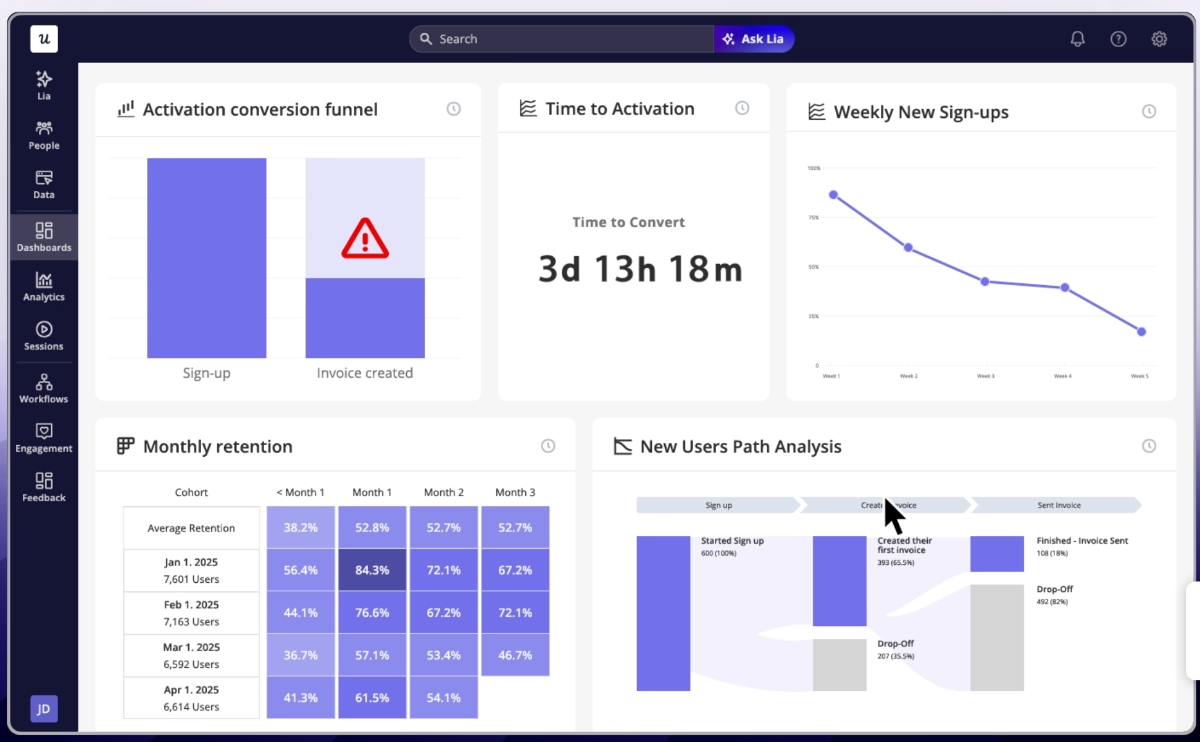
The platform recently announced Lia, its AI assistant, currently on a waitlist. According to Userpilot, Lia will monitor engagement trends and user feedback, detect anomalies, suggest fixes for dropped engagement, and surface tailored insights for product, marketing, success, support, and sales teams. It's not live yet, so how it'll compare to Appcues AI in production remains to be seen 👀
Key Features:
- Flows, modals, tooltips, banners, slideouts, hotspots, and checklists
- Mobile onboarding with carousels and push notifications for iOS and Android
- Behavior-driven lifecycle emails (Userpilot Email) triggered by in-product activity
- Microsurveys, NPS, and session replay
- Engagement analytics and detailed reporting capabilities
- Userpilot MCP
Who Userpilot is for:
- SaaS teams that want web + mobile + email + push in one product growth platform, which also offers strong product and engagement analytics.
Userpilot Pricing
Userpilot publishes only its Starter tier on the website. Growth and Enterprise are gated behind a sales conversation, and pricing scales by MAU volume and feature depth.
- Starter starts at $299/month (billed annually) for up to 2,000 MAUs. No monthly billing option, no MAU scaling on Starter.
- Growth starts at the 5,000 MAU tier (custom-priced).
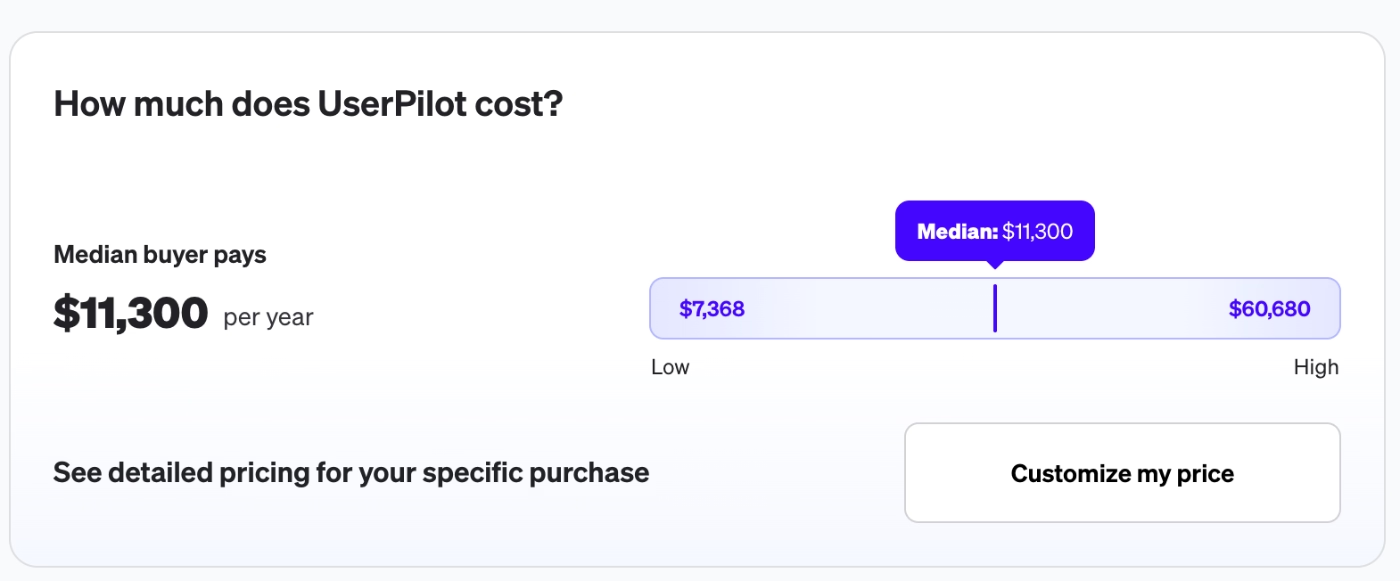
💰 Per Vendr, the average Userpilot contract lands around $11,300/year (~$950/month), which is only a little cheaper than Appcues' median.
Most of Userpilot's higher-value features (advanced analytics, custom surveys, workflow automations, session replay, advanced segmentation, even the in-app resource center) are locked behind Growth and Enterprise.
Userpilot vs Appcues
Userpilot Wins at…
- Session replay. Userpilot has it; Appcues doesn't.
- Deeper analytics. Userpilot's analytics layer is more detailed, especially for funnels and behavioral segmentation.
- Transparent entry pricing. Userpilot at least publishes its Starter tier; Appcues publishes nothing.
Appcues Wins at…
- Live AI capabilities. Appcues AI is shipping today across copy generation, segmentation, and experiment review. Userpilot's Lia is still on a waitlist.
👉🏻 Read more about what real Userpilot customers say about the platform and their experiences.
#3 Appcues Alternative: Pendo
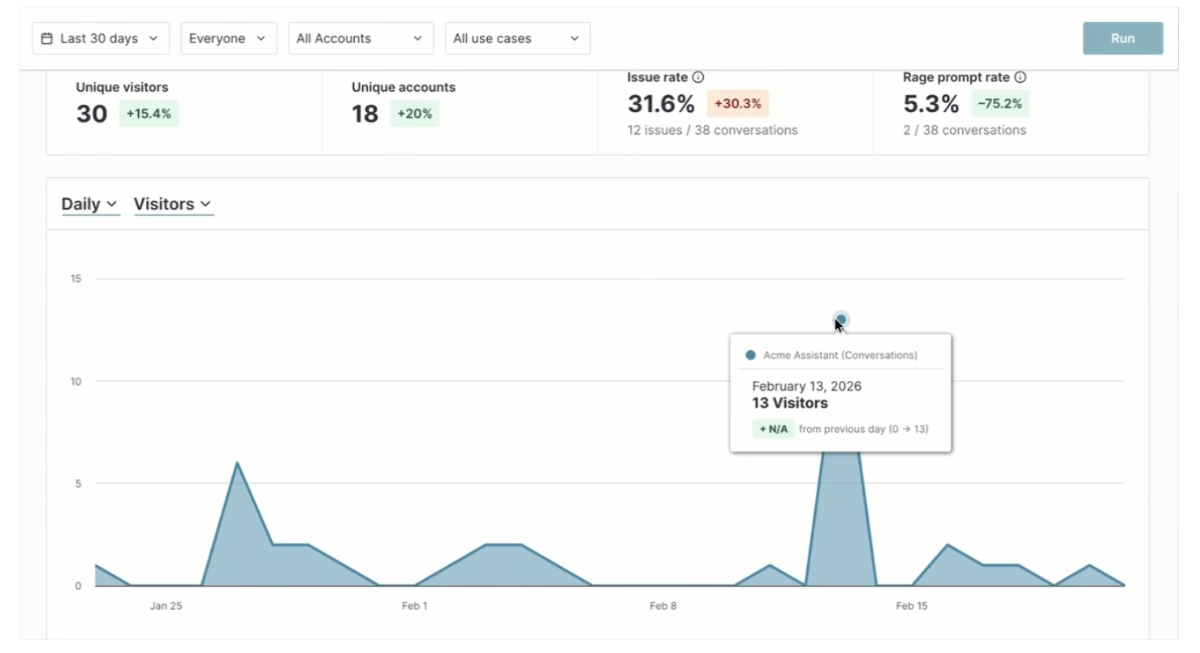
Pendo is an AI-powered product analytics and adoption platform that covers onboarding, user research, product planning, in-app engagement, and customer communication in one tool.
Key Features:
- Onboarding essentials (tours, checklists, tooltips, hotspots, modals, etc.)
- Advanced product analytics suite (paths, funnels, retention curves, segments, custom event tracking)
- Session replay + Pendo Listen for AI-powered feedback collection and analysis
- Pendo Predict, the predictive analytics that surfaces churn risk, expansion signals, and feature-adoption likelihood
- Pendo Agent Analytics for measuring AI agent and copilot usage inside your product
- MCP (Model Context Protocol) support
- Roadmap and product planning capabilities
Who Pendo is for:
- Mid-market and enterprise product teams that want deep analytics, predictive AI, and product roadmaps in the same tool as their adoption layer.
Pendo Pricing
Pendo offers a free tier up to 500 MAUs that includes guides, NPS, and basic analytics, but most of the platform's competitive features aren't included.
So, not very usable, we should say…
Beyond the free plan, Pendo's paid plans (Base, Core, Ultimate) are custom-priced and scale by MAU volume, modules (Analytics, Guide, Replay, Listen, Adopt), and platform coverage (web, mobile).
Notably, many of Pendo's most differentiating features (Product Discovery, Sentiment Analysis, Journey Orchestration) aren't included even in the higher Core plan. Pendo AI (Predict + Agent Analytics) is sold as an add-on for all plans, including Ultimate.
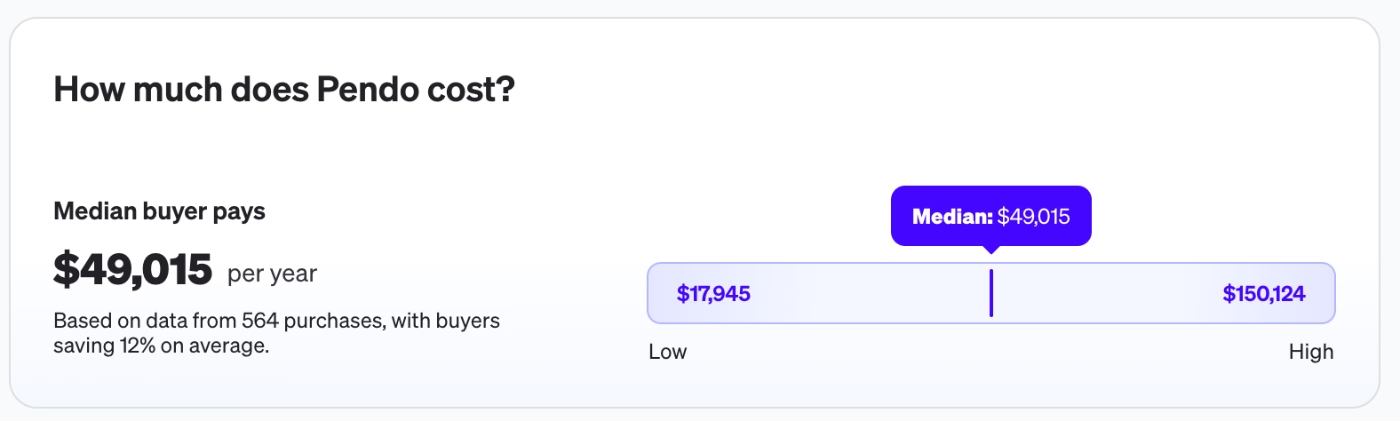
💰 Per Vendr, the median Pendo contract lands around $49,000/year (~$4,083/month), which puts it firmly in the enterprise tier, roughly 3x what teams pay for Appcues.
Pendo vs Appcues
Pendo Wins at…
- Deep product analytics. Paths, funnels, retention curves, behavioral cohorts. Appcues' analytics are functional but shallow by comparison.
- Product planning and roadmaps. Pendo doubles as a product management tool; Appcues doesn't.
- Free tier (up to 500 MAUs), even if limited.
Appcues Wins at…
- Easier no-code implementation. Pendo has a notably steep learning curve.
- Far more accessible pricing. Appcues' ~$1,250/month median sits well below Pendo's ~$4,083/month.
- Stronger in-app announcement variety (modals, banners, slideouts, push, email), as Pendo's engagement layer is more guide-centric.
- Faster time to value for teams that just want onboarding and feature adoption, not a full PA platform.
👉🏻 Read more about what real Pendo customers say about the platform and their experiences.
#4 Appcues Alternative: WalkMe
WalkMe is an enterprise digital adoption platform that was acquired by SAP in 2024. Since then, its center of gravity has shifted toward WalkMeX, the AI assistant and agent layer that sits across enterprise applications, predicts where users will get stuck, and automates repetitive workflows.
WalkMe and Appcues solve fundamentally different problems. Appcues is built for customer-facing product adoption inside your own SaaS app. WalkMe is built for employee-facing adoption across third-party enterprise software.
Key Features:
- WalkMeX AI agent for predictive guidance, error detection, and workflow automation
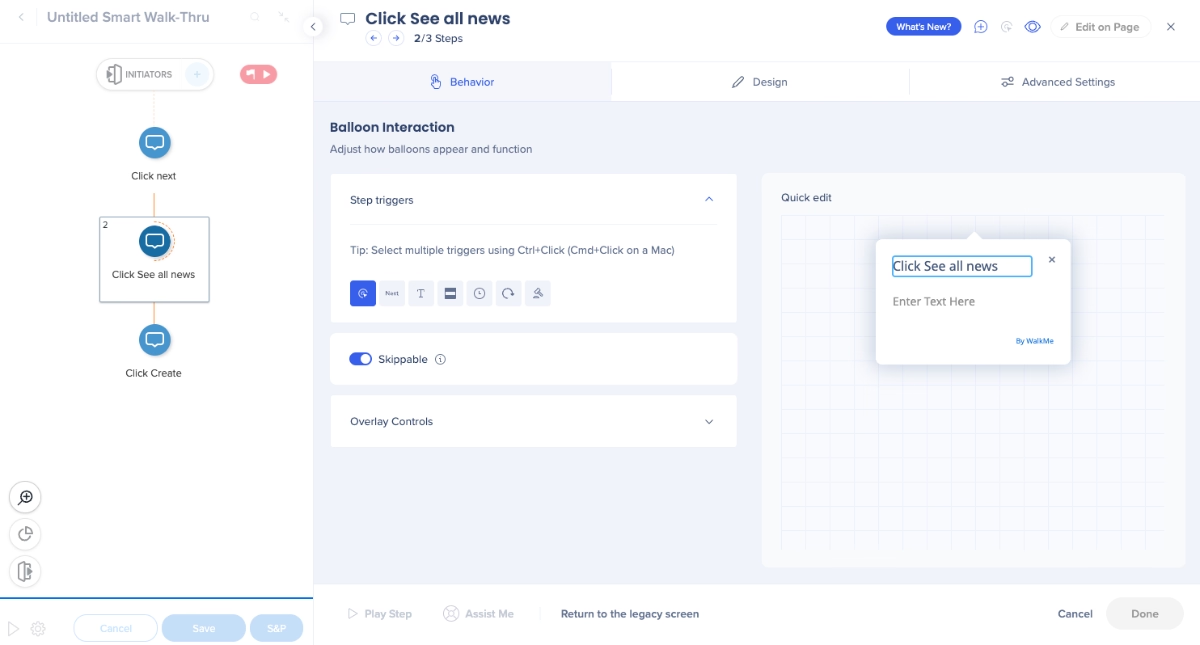
- Smart Walk-Thrus, ShoutOuts, ActionBots, and Workstation
- Cross-platform coverage with support for web, desktop apps (Windows), mobile, and virtualized environments
- Deep analytics tied into SAP Datasphere and SAP Analytics Cloud
Who WalkMe is for:
- Large enterprises driving employee adoption of internal applications, especially SAP-centric organizations, and IT/transformation teams that need AI-driven workflow automation across multi-platform stacks.
WalkMe Pricing
WalkMe doesn't publish pricing. Based onVendr, WalkMe deployments typically land around $39,000 per year for median-sized enterprise customers, with larger deployments easily clearing $200,000 once implementation, integrations, and AI modules are factored in.
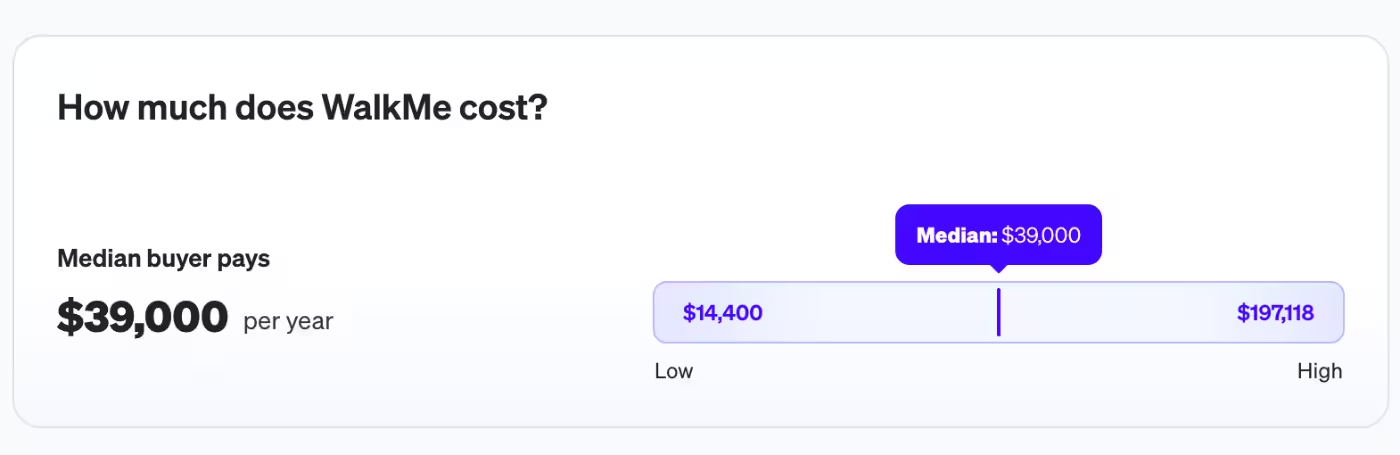
Contracts are annual or multi-year, with implementation services priced separately.
So, in short, WalkMe’s pricing structure is NOT transparent or scalable, plus, implementation takes a very long time and often times requires constant technical support and handholding.
Not the most budget-friendly or user-friendly Appcues alternative, we must say 👀
WalkMe vs Appcues
WalkMe Wins at…
- Employee onboarding across third-party enterprise software.
- Cross-platform coverage (web, desktop, mobile, virtualized).
- Workflow automation and process intelligence at enterprise scale (ActionBots, Workstation).
- SAP integration depth for organizations running SAP.
Appcues Wins at…
- Customer-facing PLG SaaS use cases.
- In-app announcements variety (modals, slideouts, banners, push). WalkMe doesn't have a real announcement layer.
- Fast, no-code implementation. Appcues ships in days. WalkMe takes 8–12 weeks.
- Pricing accessibility. Appcues is expensive, but WalkMe is in a different universe entirely.
👉🏻 Read more about what real WalkMe customers say about the platform and their experiences.
#5 Appcues Alternative: Whatfix
Whatfix is another enterprise digital adoption platform, so it’s similar to WalkMe, but with a generally lighter implementation lift and a stronger story around training and simulation.
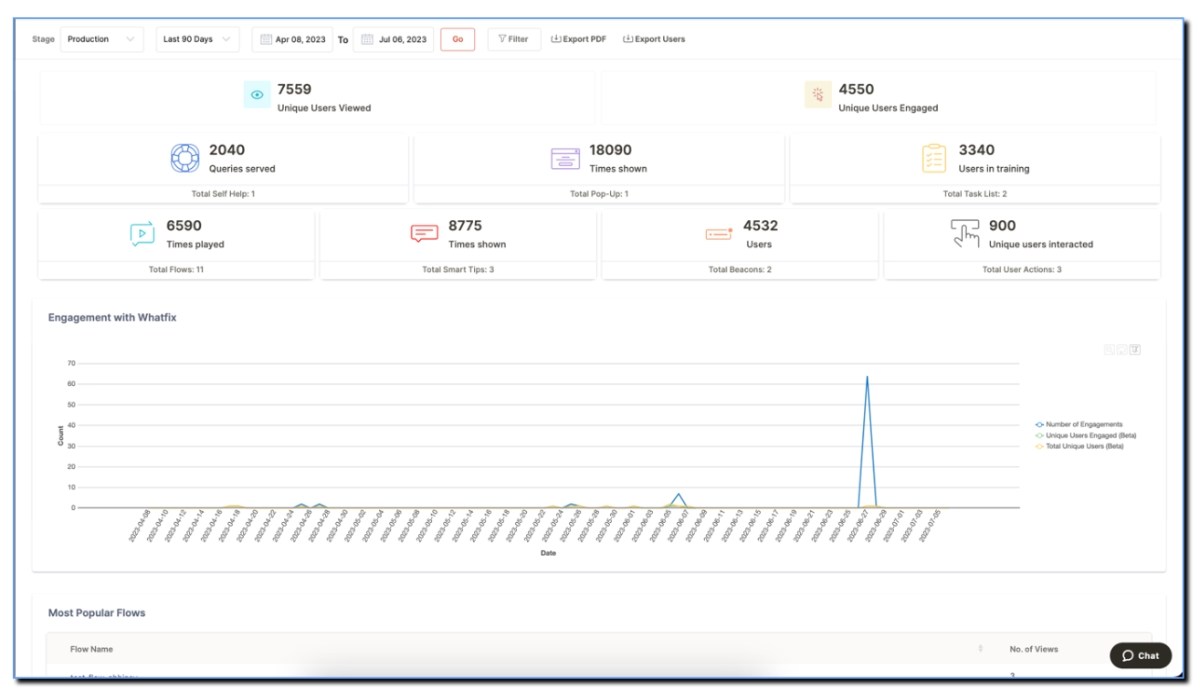
It splits into three products you can buy separately or together: Whatfix DAP (in-app guidance, task lists, self-help), Whatfix Mirror (sandbox simulation training environments), and Whatfix Analytics (advanced product analytics).
Key Features:
- Whatfix Mirror, a sandbox simulation training environment
- Product Analytics with adoption funnels, drop-off analysis, and behavior insights
- AI-powered content authoring and automatic translation
- Smart Tips, Task Lists, Flows, Pop-Ups, and a Self-Help wiki
- Cross-platform support (web, desktop, and mobile applications)
- Automatic content updates when application UIs change
Who Whatfix is for:
- Mid-market and enterprise teams rolling out internal SaaS to large employee bases, especially when sandbox simulation training is a requirement.
Whatfix Pricing
Whatfix is custom-priced and doesn't publish plan tiers. Pricing scales by application count, MAUs, and which modules (DAP, Mirror, Analytics, Mobile) are included.
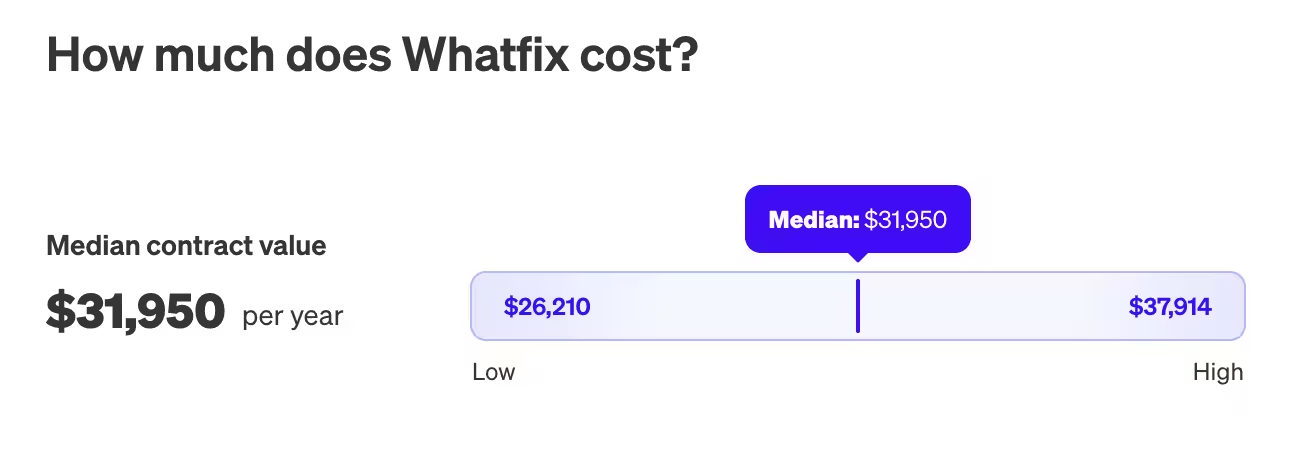
💰 Entry deals reportedly start around $1,000/month for a single-application rollout. The median annual contract on Vendr is roughly $31,950/year (~$2,663/month), roughly 2x Appcues' median.
Whatfix vs Appcues
Whatfix Wins at…
- Whatfix Mirror simulation training, there’s no Appcues equivalent to Mirror.
Appcues Wins at…
- Behavioral email from the same workflow builder.
- Faster, no-code implementation for non-technical teams.
#6 Appcues Alternative: Chameleon
Chameleon is a product adoption and user retention platform built for design- and product-led teams that care a lot about how guidance looks inside their app.
Key Features:
- Tours, tooltips, modals, slideouts, banners, embedded cards
- Interactive Demos for sandbox-style product showcases
- HelpBar, a universal in-app CMD+K search
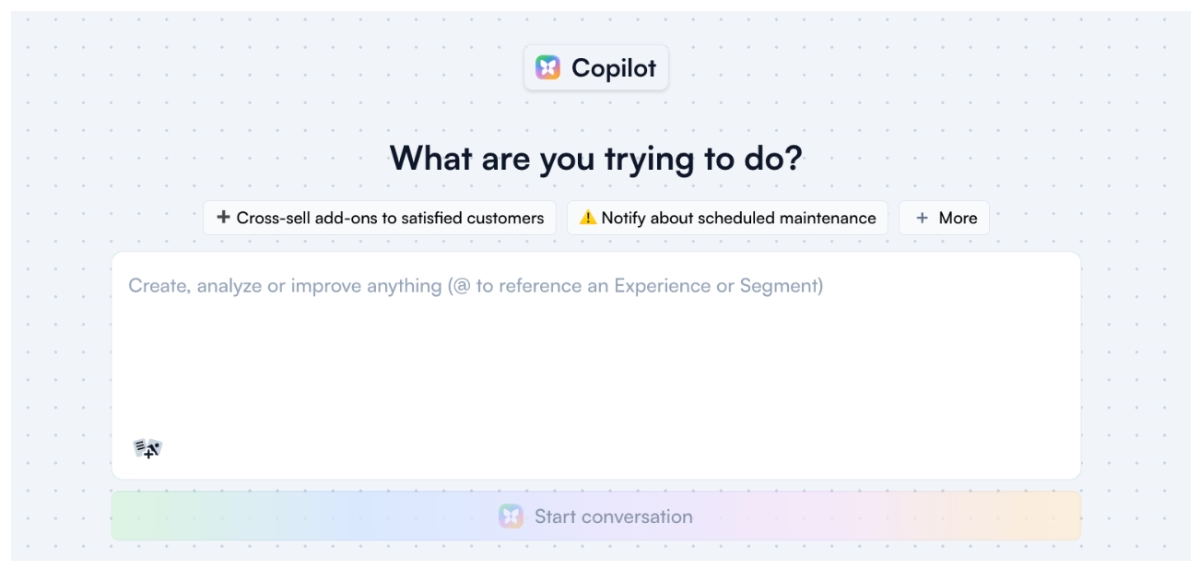
- Chameleon Copilot (AI for copy + segmentation)
- Chameleon Ranger (autonomous AI agent that audits experiences)
- Integration Recipes Library for wiring up alerts and automations
Who Chameleon is for:
- Product teams that prioritize design and require precise control over UI and templates, as well as those looking to integrate pre-recorded interactive demos with their live in-app experiences.
Chameleon Pricing
Chameleon's pricing is transparent but restrictive. It scales by Monthly Tracked Users (MTUs), with steep jumps between tiers and limited billing flexibility:
- Startup starts at $279/month for up to 2,000 MTUs. Monthly billing only.
- Growth starts at $15,000/year for up to 1,000 MTUs, increasing to $18,000/year between 1,000 and 2,000 MTUs. Annual billing only.
Startup pricing jumps to $354/month at 3,000–3,999 MTUs and $504/month at 4,000–4,999 MTUs. The price jumps between tiers are sharp, and the MTU quotas aren't generous.
Chameleon vs Appcues
Chameleon Wins at…
- UI customization and design control. The widest variety of in-app surface types in the category (embedded cards, slideouts, modals, HelpBar search, demos).
- Interactive Demos. Pre-recorded sandbox-style product demos you can share.
- Autonomous AI agent (Ranger). Weekly audits and improvement suggestions. Appcues AI is assistive, not autonomous.
- HelpBar universal in-app search that pulls from multiple connected knowledge sources.
Appcues Wins at…
- Native mobile coverage. Chameleon is web-only.
- Behavioral email and mobile push from the same builder.
#7 Appcues Alternative: Userlane
- ⭐ G2 Rating: 4.6/5 (344 reviews)
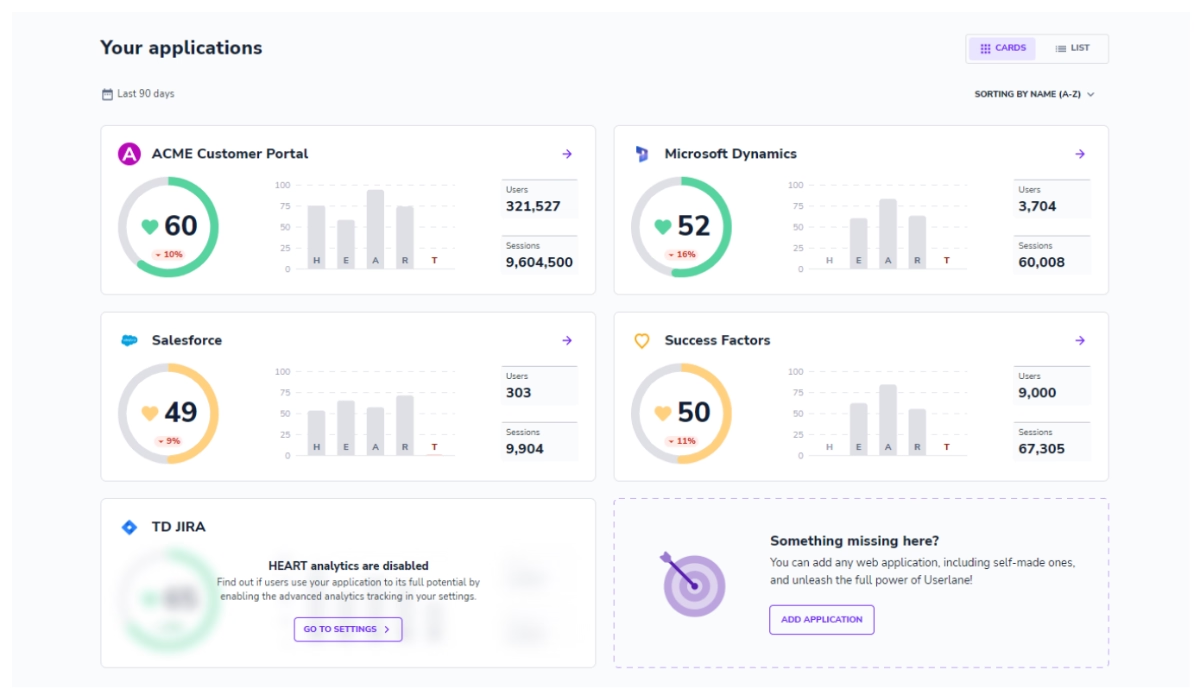
Userlane is an enterprise software intelligence and guidance platform with a heavier emphasis on analytics.
Its standout feature is App Discovery, which scans which third-party SaaS tools employees actually use. Like WalkMe and Whatfix, Userlane is built primarily for employee adoption of internal applications, not customer-facing SaaS onboarding.
Key Features:
- HEART analytics dashboards with executive-friendly visualizations
- App Discovery for visibility into actual SaaS usage across the organization
- AI assistant for in-app help
- In-app guidance materials (guides, tooltips, checklists, resource centers)
- License optimization and cost reduction insights (Organization tier)
Who Userlane is for:
- Teams whose goal is montoring employee software adoption, and teams that want strong analytics dashboards and SaaS portfolio visibility.
Userlane Pricing
Userlane is fully sales-led with no public pricing. There are three plans tailored to use cases: Application (one tool), Department (a portfolio of tools), and Organization (unlimited applications across the company).
There are also two pricing models you can choose between (application-based or consumption-based). Every conversation requires a sales call.
Userlane's pricing isn't even publicly available on Vendr…
Userlane vs Appcues
Userlane Wins at…
- HEART analytics dashboards built for executive reporting.
- SaaS spend optimization and license utilization (App Discovery).
- Multi-application portfolio visibility for IT operations.
- Internal application adoption at enterprise scale.
Appcues Wins at…
- Customer-facing PLG SaaS focus.
- Native mobile coverage and mobile push notifications.
- Behavioral email in the same platform.
- Faster implementation.
#8 Appcues Alternative: Userflow
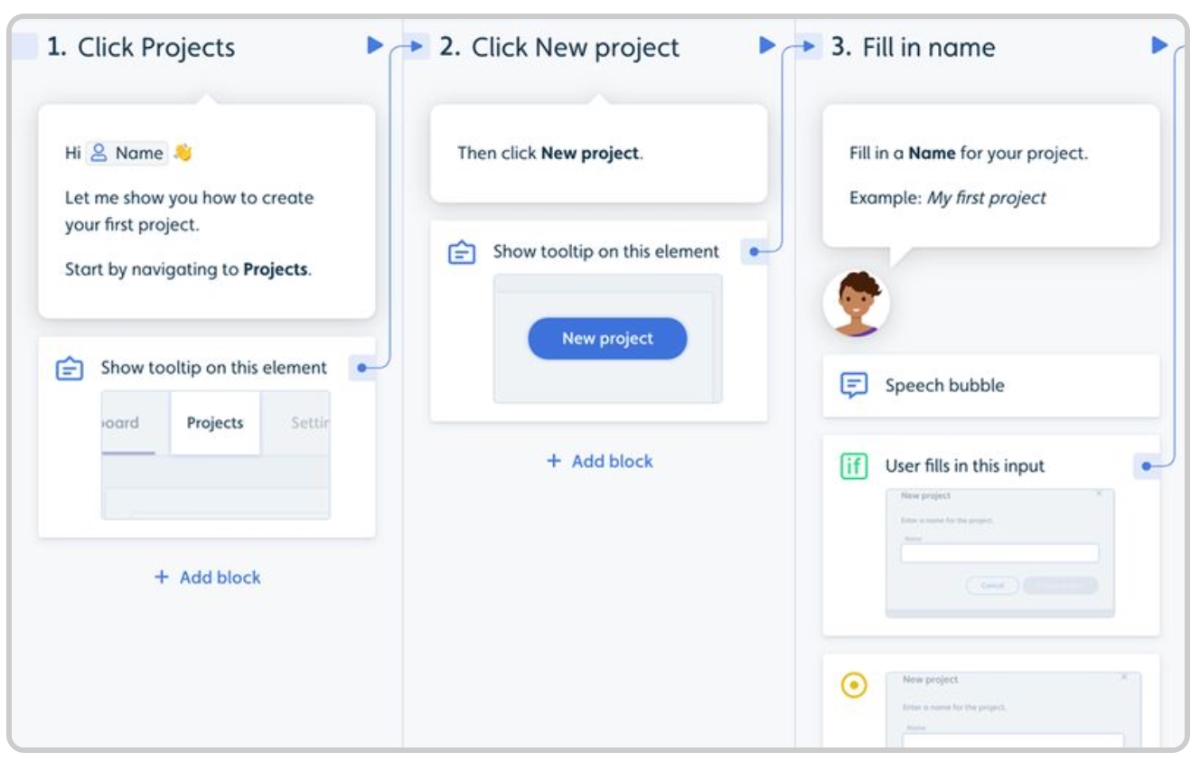
Userflow is an onboarding tool with a clean, intuitive editor, where you build flows step by step on a map-like dashboard. Compared to Appcues and Appcues alternatives like WalkMe or Whatfix, Userflow is a very user-friendly and intuitive alternative.
The platform was acquired by Beamer in 2024, but there hasn’t been a drastic change in the platform’s offerings so far in that regard. Both products are still sold separately.
An important change in the direction of Userflow’s feature roadmap and releases is its AI capabilities, mainly, the FlowAI.
Key Features:
- In-app guidance: guides, checklists, surveys, hotspots, banners
- AI customer support agent
- FlowAI Actions for triggering external automations from product events
- FlowAI Signals for surfacing friction patterns
Who Userflow is for:
- Teams with expectations of easy implementation and basic onboarding need coverage, rather than full adoption suites or advanced analytics.
Userflow Pricing
Userflow has a transparent, MAU-based pricing structure with 3 paid plans. All key capabilities are included in every plan, mostly with unlimited usage, even on Startup you get unlimited guides, tooltips, checklists, banners, and announcements.
- Startup starts at $240/month (paid annually) for up to 3,000 MAUs.
- Pro starts at $680/month (paid annually) for up to 10,000 MAUs.
Startup pricing scales to $320/month at 4K–8K MAUs, and $400/month at 9K–13K MAUs.
Userflow vs Appcues
Userflow Wins at…
- Unlimited published experiences on every plan. Appcues' 10/25/100 caps are a real ceiling for mature teams.
- FlowAI Signals surfacing friction patterns automatically.
- Implementation ease and speed.
Appcues Wins at…
- Native mobile coverage (iOS/Android). Userflow is web-only.
- Behavioral email and mobile push notifications.
👉🏻 Read more about what real Userflow customers say about the platform and their experiences.
#9 Appcues Alternative: Product Fruits
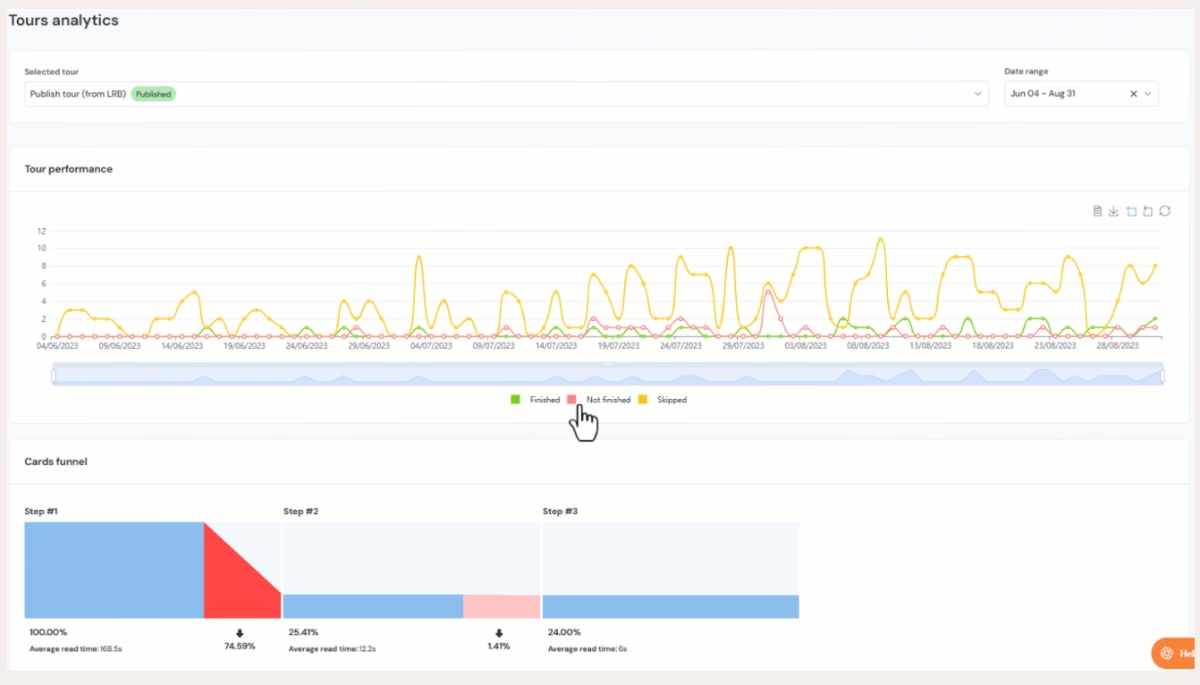
Product Fruits is another easy-to-use onboarding tool. Compared to Userflow, it’s also a much more budget-friendly Appcues alternative.
Key Features:
- Elvin Copilot, an AI assistant for both content creation and in-product support
- Feedback Widget for collecting user feedback in-app
- Product tours, checklists, surveys, hotspots, tooltips, banners
- Standalone knowledge base
- Event tracking
Who Product Fruits is for:
- Smaller SaaS teams that want a basic onboarding and engagement toolkit with some AI capabilities, at a price meaningfully below Appcues and most other platforms in this article.
Product Fruits Pricing
Product Fruits has fully transparent, MAU-based pricing.
- Starter starts at $111/month (annual billing) at 1,500 MAUs.
- Pro starts at $187/month (annual billing) at 1,500 MAUs.
- Business starts at $374/month (annual billing) at 1,500 MAUs.
At 3,000 MAUs, those starting prices increase to $149/month, $224/month, and $524/month respectively.
Product Fruits vs Appcues
Product Fruits Wins at…
- Dramatically lower pricing. $111/month vs Appcues' ~$1,250/month median.
- Elvin Copilot, which doubles as both a content authoring AI and a customer support agent. Appcues AI only helps with authoring.
Appcues Wins at…
- Native mobile coverage and mobile push.
- Behavioral email orchestration.
- More mature analytics, segmentation, and A/B testing.
👉🏻 Read more about what real Product Fruits customers say about the platform and their experiences.
#10 Appcues Alternative: Kompassify
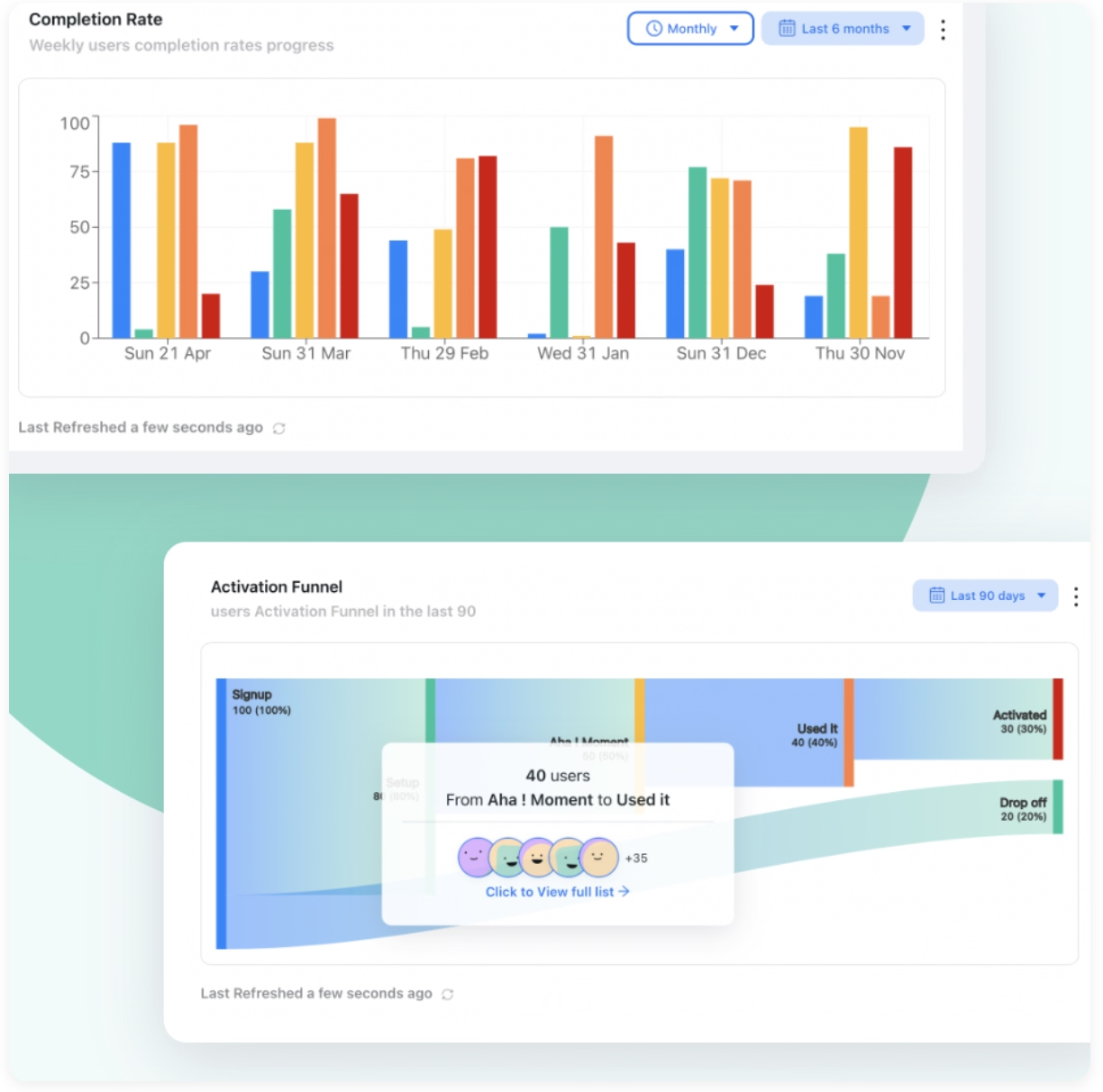
If most of the tools in this list feel oversized for what you actually need, Kompassify is the budget pick. It's a no-code onboarding toolkit aimed at small SaaS teams that want the basics.
Key Features:
- Onboarding Progress Bar
- In-app product tours
- Onboarding checklists with multi-choice branching
- Announcements widget
- NPS & surveys
- Product analytics
WhoKompassify is for:
- Teams that need basic onboarding shipped quickly without spending much time on design polish, custom CSS, or advanced segmentation. Solo founders, indie SaaS, and very early-stage teams.
Kompassify Pricing
- Free: up to 100 MAUs, 1 team member, 2 product tours, with Kompassify branding.
- Pro: $123/month for up to 5,000 MAUs. 5 team members, 20 product tours, multi-choice onboarding, progress bar, segmentation, custom CSS, branding removed.
- Business: $249/month. Unlimited MAUs, unlimited team members and tours, multiple progress bars/checklists, product analytics, dedicated CSM.
- Enterprise: Custom for 10,000+ MAUs.
Kompassify vs Appcues
Kompassify Wins at…
- Free plan for teams under 100 MAUs.
- Fastest time to launch for true beginners.
Appcues Wins at…
- Native mobile, push, email. Kompassify is web-only with no multi-channel layer.
- A/B testing, advanced analytics, AI assistance, none of which Kompassify has at meaningful depth.
- Polished editor and broad template library.
- Mature ecosystem with thousands of customers vs Kompassify's still-tiny user base.
AI-native Onboarding Tool Alternatives to Appcues
If you’re looking for AI-native alternatives that go beyond Appcues' assistive AI, there are two worth shortlisting ⬇️
#1 AI-native Appcues alternative: Jimo
Jimo is an AI-native digital adoption platform. Its key differentiator is AI-generated product tours, which means that you record a user journey, and Jimo automatically builds the tour structure with auto-progressing steps.
It also includes an AI resource center, a Success Tracker (automatic feature usage analytics with drop-off detection), checklists, hints, banners, in-app changelogs, and surveys. Pricing starts at $249/month for the Starter plan (2,500 MAUs included, billed annually).
#2 AI-native Appcues alternative: Frigade
Frigade, or Frigade Assistant, is an AI agent that learns your product by using it. Once you install it, Frigade's agent navigate your real workflows, document the current user experience, ingest your existing knowledge base, and guide users through actual multi-step tasks in real time.
A key capability Frigade offers is self-healing flows. With the self-healing flows, Frigade's agents re-train automatically with no manual re-authoring as your UI changes.
Pricing starts at $1,000/month for Growth (5 seats, 2 AI agents, 2,500 queries).
⚠️ These AI-native tools are relatively new tools in the market, so they don’t have a lot of customers who can speak for the platform’s capabilities (for good or for worse). Their prices are high, compared to Appcues’ other alternatives, and their security and compliance levels are not the same with other Appcues alternatives.
If you’re coming from a heavily-regulated region or industry, you should always consider the compliance levels of these tools.
Free & Open-Source Onboarding Libraries for an In-house Alternative to Appcues
If you have engineering capacity and would rather build than buy, four open-source libraries cover the core tour and tooltip layer at zero per-seat cost. None of them include analytics, surveys, segmentation, or non-developer editing, so you'll also be building those yourself...
#1 Open-Source Alternative to Appcues: Intro.js
- GitHub Stars: 23.5K ⭐ / 2.6K forks
A code-based, open-source library for product tours, step-by-step walkthroughs, and hints. Covers tooltips, pop-ups, multi-page tour support, keyboard navigation, and manual localization.
Pricing:
Free for personal/non-commercial use (open-source projects only). Commercial license required for proprietary use, starting at $9.99 per project (one-time payment).
Intro.js Wins at…
One-time licensing cost (no subscription), full developer control over tour behavior, and being the most battle-tested library in the category.
#2 Open-Source Alternative to Appcues: Shepherd.js
- GitHub Stars: 13.7K ⭐ / 653 forks
A lightweight JavaScript library focused on product tours. Ships with minimal default styling and a "bring your own UI" philosophy, so tours can be made to look like a native part of your product.
Pricing:
Free for personal/non-commercial use. Commercial licenses from $50/lifetime.
Shepherd.js Wins at…
Design-system-grade customization, official and community wrappers for React, Vue, Angular, and Ember.
#3 Open-Source Alternative to Appcues: Driver.js
- GitHub Stars: 25.6K ⭐ / 1.2K forks
A lightweight, dependency-free JavaScript library for product tours, feature spotlights, and step-by-step walkthroughs. Its standout UX is a "highlight + overlay" pattern that draws focus to one element at a time.
Pricing:
MIT-licensed, which means completely free for any use, including closed-source commercial SaaS. No commercial license required.
Driver.js Wins at…
Permissive MIT licensing (no commercial license purchase needed).
#4 Open-Source Alternative to Appcues: Reactour
- GitHub Stars: 4.1K ⭐ / 352 forks
A React-first tour library that fits naturally into React-based SaaS apps. Like the others, it covers the tour rendering layer only, so no checklists, surveys, analytics, or non-developer editing.
Pricing:
MIT-licensed, fully free, including for closed-source commercial use.
Reactour Wins at…
Native React developer experience and permissive licensing for SaaS.
To Wrap Up…
Appcues is still a solid mid-market choice, especially if you're mobile-first or emails are such an important part of your customer communication and onboarding. However, it’s neither cheap, nor offers a really comprehensive product adoption toolkit.
So, it’s only fair that you have your doubts about the platform’s use cases…
In this article, we listed several strong Appcues alternatives that are best suited for different priorities, use cases, team structures, products, and budgets.
There’s no one perfect customer engagement tool.
Even one tool is not perfect one customer… The truth is, you need to make a prioritization list, and find what checks most of your requirements. You might need to use a separate product analytics solution or a customer feedback tool, depending on your priorities (and budget, of course, most importantly).
But if we are to be honest with you, UserGuiding probably checks off a lot of features and use cases in your list, if you’re considering alternatives for Appcues.
- Extensive user engagement, onboarding, feedback, and support features
- Easy implementation and usability
- Flexible, transparent, and scalable pricing structure
- Strong security and compliance
🎁 Start your free trial today and check out UserGuiding with your own eyes.
Frequently Asked Questions
How much does Appcues cost in 2026?
Appcues doesn't publish pricing on its site. Per Vendr's median data, contracts land around $15,000 per year (~$1,250/month), but pricing scales by both MAU volume and the number of product installations you're tracking, so cross-platform or multi-product teams regularly land in the $30K–$40K/year range. The three plan tiers (Start, Grow, Enterprise) also cap published experiences at 10, 25, and 100 respectively, which can push teams to higher tiers faster than they'd expect.
What is the cheapest Appcues alternative for user onboarding?
The cheapest commercial options are Kompassify (free for up to 100 MAUs, $123/month Pro plan) and HelpHero ($55/month for 1,000 MAUs with unlimited tours). Product Fruits at $111/month for 1,500 MAUs is the best price-to-feature ratio in the budget tier. If you're willing to build, the open-source libraries (Shepherd.js, Intro.js, Driver.js, Reactour) carry zero per-seat cost but require engineering effort. Among full-feature platforms, UserGuiding's Starter plan at $249/month offers the best value-to-price ratio.
What is the best Appcues alternative for SaaS companies?
For most SaaS teams, UserGuiding is the strongest all-around pick, as it bundles onboarding, surveys, knowledge base, AI support, product updates, session replay, and analytics into a single transparent, MAU-priced platform. Userpilot is another direct, head-to-head with Appcues if you specifically need mobile + email + push in the same workflow builder.
How long does Appcues take to implement?
Appcues' basic implementation is fast, with most teams ship a first flow within a day or two. The full multi-channel setup (web + mobile + email + push + segmentation + A/B testing) typically takes 2–4 weeks of configuration and content authoring. Larger or enterprise rollouts with custom integrations can take 4–8 weeks.
Which Appcues alternative is best for mobile onboarding?
Userpilot is the closest direct match with its native iOS/Android, carousels, push notifications, and behavioral email all in one platform. Pendo also offers mobile coverage as part of its broader platform. Most other tools on this list (UserGuiding, Userflow, Chameleon, Product Fruits) are web-only.
Which Appcues alternative is best for AI-powered customer support?
UserGuiding ships with an AI Assistant that answers product questions inside your app using your existing documentation, plus a standalone knowledge base. Product Fruits' Elvin Copilot also doubles as an in-product support agent. Userflow has its own AI customer support agent, as well.

.png)