


.svg)
.svg)
.svg)
.svg)



.svg)



.svg)
.svg)

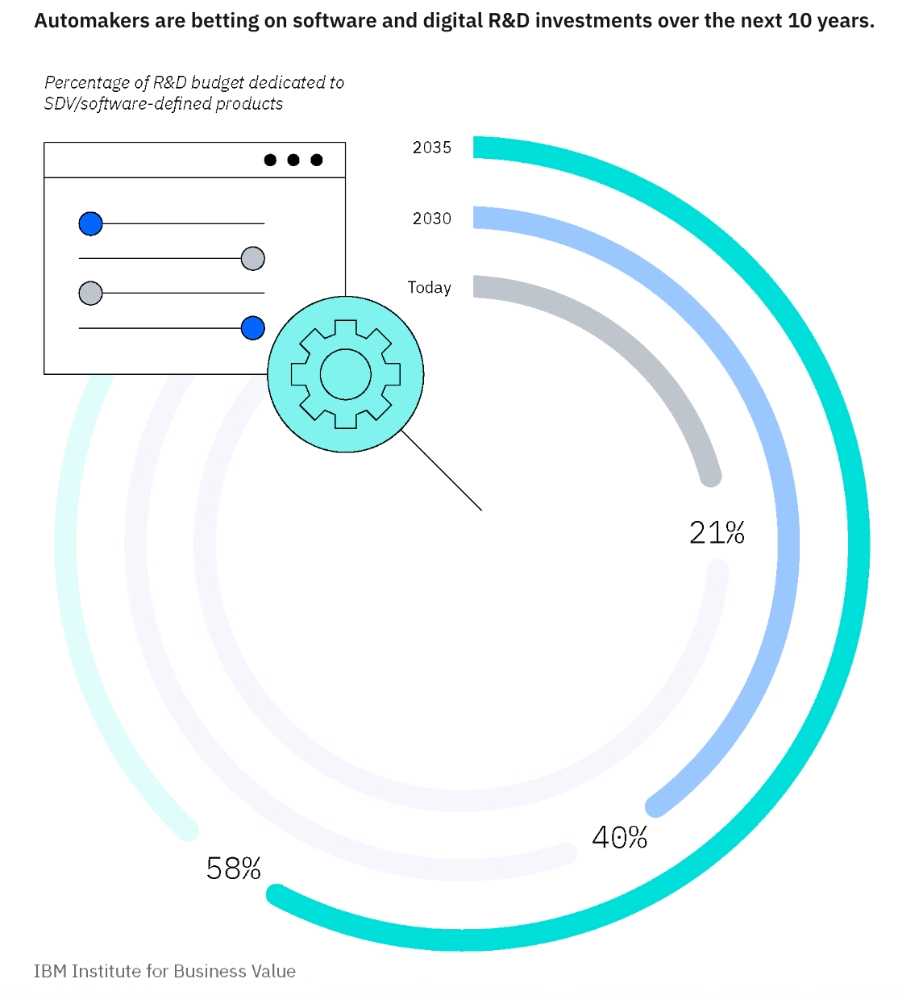
According to IBM’s recent report, Automotive 2035, 75% of automotive executives say that the software-defined experience will be the core of brand value by 2035.
And to accelerate this shift, manufacturers are nearly tripling their R&D investments in software and digital technologies, from 21% today to an expected 58% by 2035.
Across the entire value chain, digital transformation is connecting factories, vehicles, dealers, and customers like never before.
In this article, we’ll explore:
- What digital transformation in automotive really means today,
- How manufacturers, dealerships, and customers each experience digital transformation differently, and
- Real-world use cases, benefits, trends, and examples that show how leading brands are driving this change.
Let’s get started without further ado.
TL;DR
- Digital transformation in automotive is the integration of digital technologies across vehicle design, manufacturing, sales, and customer experience.
- It aims to create smarter, connected, and software-driven vehicles, more efficient operations, and seamless, personalized experiences for drivers and stakeholders.
- Key areas of transformation and use cases of technologies in the automotive industry include:
- Smart manufacturing and connected factories
- Software-defined vehicles and OTA updates
- Connected and autonomous driving
- Digital commerce and customer journey
- Supply chain, procurement and logistics 4.0
- In-vehicle digital experience and infotainment
- After-sales, service and parts innovation
- Mobility-as-a-service and subscription models
- User onboarding and experience optimization
- While the benefits are substantial (better operational efficiency, faster time-to-market, higher customer loyalty, and new revenue opportunities) automakers face hurdles like high upfront investment, integration complexity, cultural resistance, and fragmented CX initiatives.
- Digital adoption tools like UserGuiding can help bridge the digital skills gap, guiding both employees and customers through software, apps, and connected experiences to get the most out of this transformation.
What is digital transformation in automotive?
Digital transformation (DT) in the automotive sector refers to the systematic integration of digital technologies to redesign how vehicles are designed, manufactured, sold, and serviced.
It reshapes entire processes and connects people, data, and machines to create more responsive operations across the automotive value chain.
While a decade ago digital efforts in automotive often meant basic CAD designs or simple factory automation, today DT encompasses connected vehicles, AI-driven production lines, predictive maintenance, supply chain digitization, and customer experience platforms.
There are several reasons why these changes and transformations occur, such as:
- Shifting consumer expectations,
- Stricter environmental regulations, and
- The push toward electrification and autonomous driving.
One of the most significant outcomes of this digital transformation is the rise of Software-Defined Vehicles (SDVs).
Unlike traditional vehicles, which are largely hardware-centric, SDVs rely heavily on software to control everything from engine management and driver assistance systems to infotainment and over-the-air updates.
What are the use cases of digital transformation in automotive?
To understand DT in automotive, it helps to look at it through the lens of the industry’s core stakeholders: manufacturers, dealerships, and customers.
Each of these groups experiences transformation differently:
- Manufacturers are digitizing design, production, supply chain, and quality control.
- Dealerships are adopting connected sales platforms, virtual showrooms, and CRM systems to engage buyers more effectively.
- Customers are interacting with vehicles and brands in new ways, from personalized in-car experiences to app-based service bookings and subscription models.
Let’s take a closer look at each of these digital transformation areas 👇🏻
Intelligent Manufacturing & Software-Defined Vehicles
Smart Manufacturing & Connected Factories
Today, smart factories use networks of connected machines, IoT sensors, and edge computing to collect, process, and act on data in real time.
In a connected plant, every station on the assembly line can report operational data from temperature and torque to vibration levels, which is then processed locally through edge analytics.
This reduces latency and allows immediate corrective actions when an anomaly is detected, minimizing production downtime.
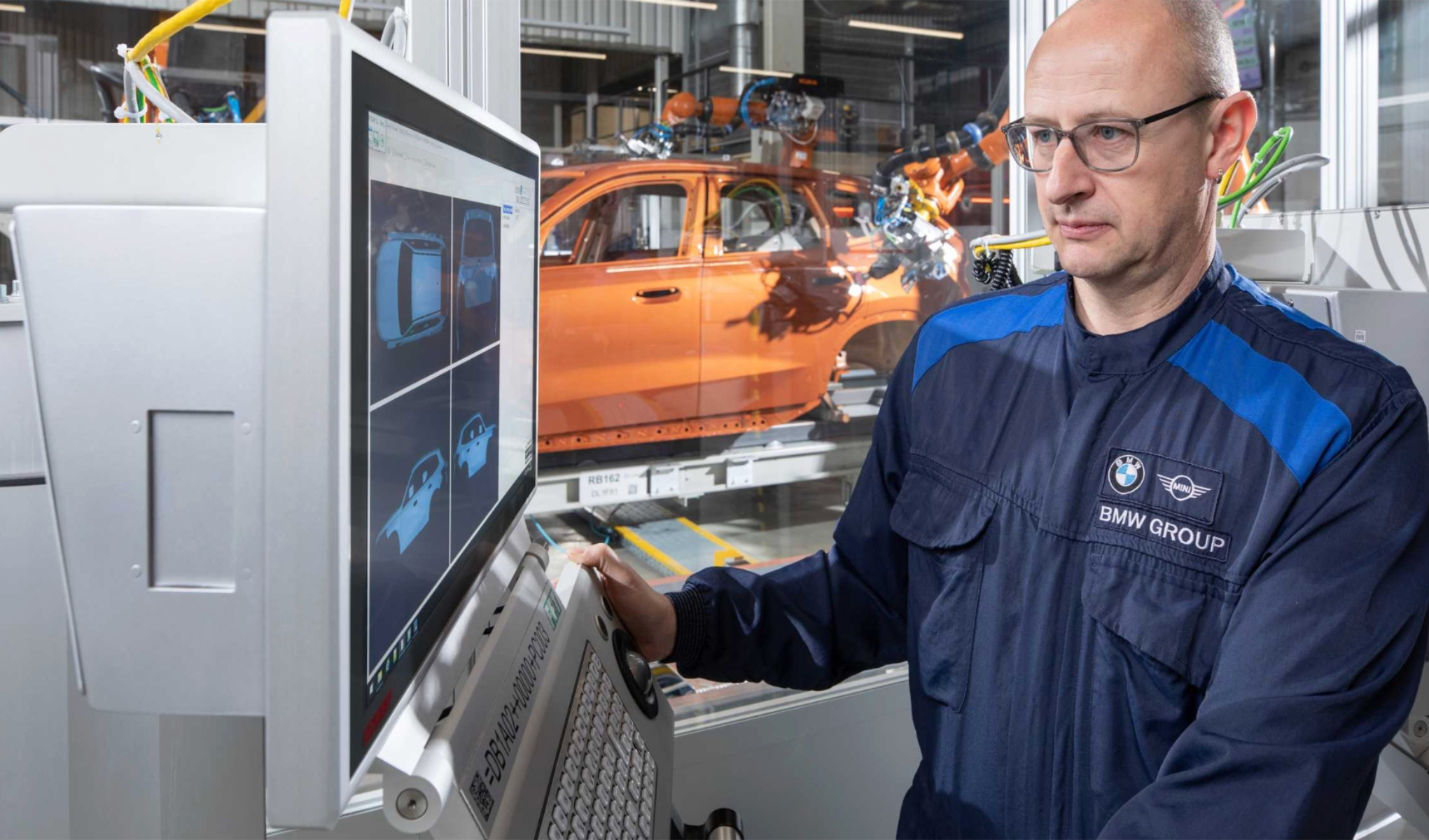
👉🏻 For example, BMW’s Regensburg plant uses automation, analytics, and AI to monitor paint shop robots and instantly flag defects or irregular spray patterns before they compromise quality.
Another critical enabler is predictive maintenance.
Traditional maintenance routines rely on fixed schedules, often resulting in either unnecessary downtime or unexpected breakdowns.
With predictive models powered by machine learning, manufacturers can forecast when a specific component (like a conveyor belt motor or a welding arm) is likely to fail based on real-time sensor data.
👉🏻 Volkswagen Group’s factories, for instance, use predictive algorithms to analyze hundreds of parameters from their production lines before minor problems escalate into full line stoppages, which is one of the most costly and disruptive events in automotive manufacturing.
Digital Twins and Virtual Testing Environments
Digital twins are virtual replicas of physical assets, production lines, or even entire factories.
These twins allow engineers to simulate changes in layout, machine configurations, or robot programming before implementing them in the real environment.
This allows for interventions before breakdowns occur.
👉🏻 For example, Mercedes-Benz uses digital twins of its assembly lines to plan new model rollouts and test robot motion paths in a virtual environment while also considering optimal workflows, adequate aisle widths, short travel distances, and fire safety requirements.
Virtual factories Mercedes-Benz built with NVIDIA Omniverse reduced coordination processes by 50%.

And it’s not just factories, digital twins now extend to vehicles themselves.
Virtual models are used in the testing and prototyping phase to evaluate aerodynamics, battery efficiency, and safety systems under countless digital scenarios, long before physical prototypes are built.
This simulation-driven approach allows for faster iteration and more sustainable design cycles.
Software-Defined Vehicles & OTA (Over-the-Air) Capabilities
As vehicles become increasingly digital, their value now extends far beyond the hardware sold at the dealership.
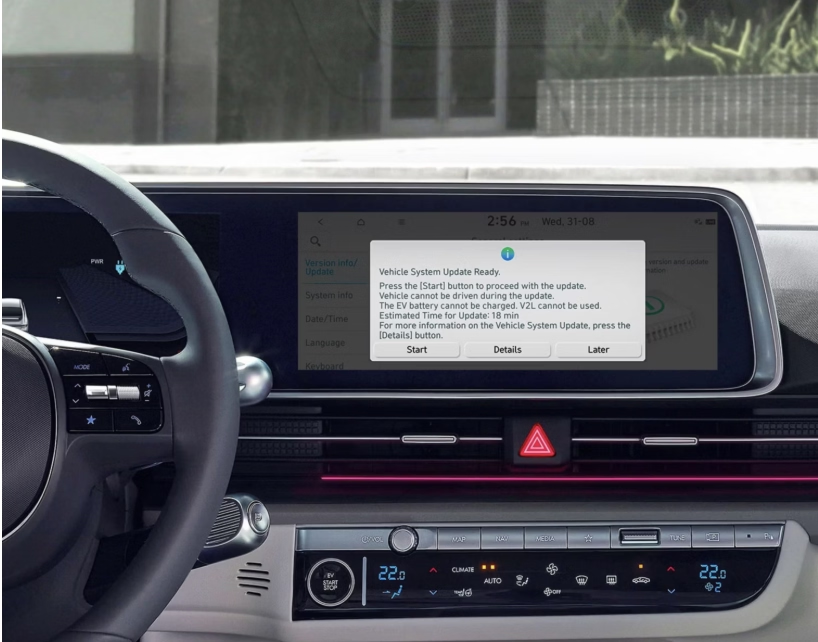
Modern cars are software-defined platforms that are continuously updated, improved, and personalized through cloud connectivity and over-the-air (OTA) updates.
In the traditional model, a vehicle’s features and performance were fixed at the point of sale.
Any update, repair, or calibration required a physical visit to the service center.
Today, manufacturers can deploy software patches, performance upgrades, and new functionalities remotely, in the same way smartphones receive system updates.
Tesla pioneered OTA capabilities in 2012.
However, it took several more years for OTA technology to become widely adopted and nearly standard across the industry.
Many major automakers now use centralized software platforms that allow updates to infotainment systems, driver-assistance modules, and even battery management software.
Connected and Autonomous Driving Functions
ADAS (Advanced Driver Assistance Systems) are powered by sensors, cameras, radar, LiDAR, and artificial intelligence. These systems are designed to assist drivers, enhance safety, and gradually pave the way for fully autonomous vehicles.
⚡ Industry projections suggest that by 2026, more than 85% of new vehicles will include at least one ADAS feature, such as lane-keeping assistance, adaptive cruise control, or automatic emergency braking.
ADAS represents one of the fastest-growing segments in automotive electronics, but it’s also one of the most complex.
There’s no universally accepted naming convention for these features, and automakers often bundle them into proprietary technology packages or enable them through paid software updates.
To better understand the progression toward autonomy, ADAS technologies are generally categorized across six levels (L0–L5):
- L0: Basic assistance: Warning systems such as blind spot detection, lane departure alerts, and forward collision indicators.
- L1: Driver assistance: Adds limited automation like adaptive cruise control or lane keep assist (e.g., Ford’s Co-Pilot360).
- L2: Partial automation: Allows combined control of acceleration, braking, and steering, as seen in Tesla’s Autopilot or GM’s Super Cruise.
- L3: Conditional automation: Vehicles can handle full driving tasks under specific conditions (like highway driving) with limited human intervention; examples include Mercedes Drive Pilot and Audi Traffic Jam Pilot.
- L4: High automation: Cars capable of driving themselves in certain scenarios (“chauffeur mode”) without needing a fallback driver, still in pilot stages, though.
- L5: Full automation: Fully autonomous vehicles that require no human control, expected to emerge closer to 2030–2035.
These features rely heavily on sensor networks and vehicle-to-everything (V2X) communication.
These are systems that enable cars to interact with infrastructure, pedestrians, and other vehicles, basically.
For instance, V2X technology allows a vehicle to receive alerts about traffic congestion, road hazards, or signal changes before the driver can visually detect them.
Digital Commerce & Intelligent Supply Ecosystem
Sales, Marketing & Customer Journey Digitization
The traditional dealership experience, once built around in-person visits, test drives, and long negotiation cycles, is rapidly evolving into a connected, data-driven digital commerce ecosystem.
Car buyers expect convenience, transparency, and personalization at every stage of their journey.
⚡ In fact, 80% of consumers say they prefer using tech-based solutions to interact with dealerships, whether that’s receiving remote assistance from a salesperson during a purchase or connecting with a technician virtually for maintenance and service support.
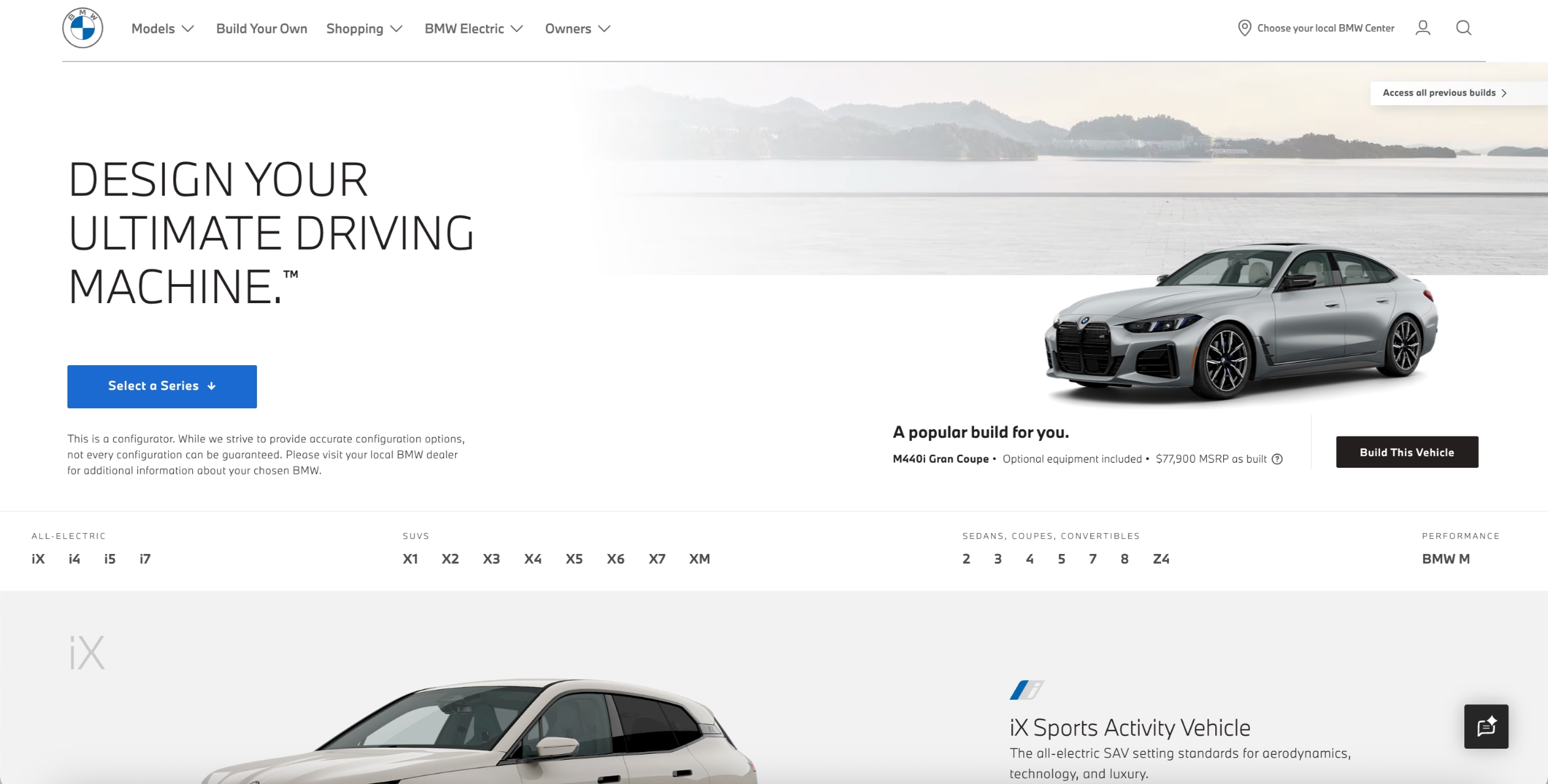
One of the biggest shifts has been the rise of digital showrooms and virtual configurators, allowing customers to explore and customize vehicles online in immersive 3D environments.
Instead of visiting multiple dealerships, potential buyers can visualize different trims, color schemes, and interior options from their laptop or smartphone, often with integrated pricing and financing calculators.
For example, Audi’s Virtual Showroom and BMW’s Digital Car Configurator provide customers with lifelike simulations of their preferred models.
Automotive brands have also been investing heavily in customer relationship management tools that unify data from online interactions, dealership visits, and connected vehicle usage.
This enables omnichannel sales, where a buyer’s journey moves seamlessly from digital browsing to in-person consultation and back again, without losing context or personalization.
One example of this comes from Cox Automotive.
Cox Automotive has recently released an omnichannel digital retailing platform that allows vehicle purchases across online and in-store channels. The platform integrates pricing, financing, trade-ins, and contracting, enabling a more streamlined and consistent car-buying process for consumers.
Supply Chain, Procurement & Logistics 4.0
In automotive supply chains, digital transformation enables real-time visibility across suppliers, production sites, and logistics partners.
With digital supply-chain management platforms, manufacturers can track parts, shipments, and inventory levels from one central platform.
Some of these platforms even allow you to communicate directly with your suppliers and put orders directly through the platform (or contact manufacturers, if you’re on the other side of the supply chain).

Connected Mobility & Customer Experience
In-Vehicle Digital Experience & Infotainment
Modern infotainment systems host app stores, voice assistants, and personalized interfaces that adapt to driver preferences from seat position and lighting to media and route choices.
⚡ With 95% of new vehicles expected to be connected by 2030, drivers today expect their cars to offer seamless integration with their digital lives.
Connectivity also strengthens customer loyalty.
67% of drivers report that connected services increase the perceived value and enjoyment of their cars.
Automakers are responding to these customer expectations and trends by delivering subscription-based experiences, in-car e-commerce, and continuous software improvements that keep vehicles fresh and personalized over time.
After-Sales, Service & Parts Innovation
As customer experience and brand loyalty increasingly depend on post-purchase interactions, after-sales has become a strategic focus in digital transformation, as well.
Some of the digitized and automated after-sales support include:
- Predictive maintenance alerts and proactive service scheduling
- Parts logistics optimization
- Remote servicing and AR-guided repair
- Digital service history and customer portals
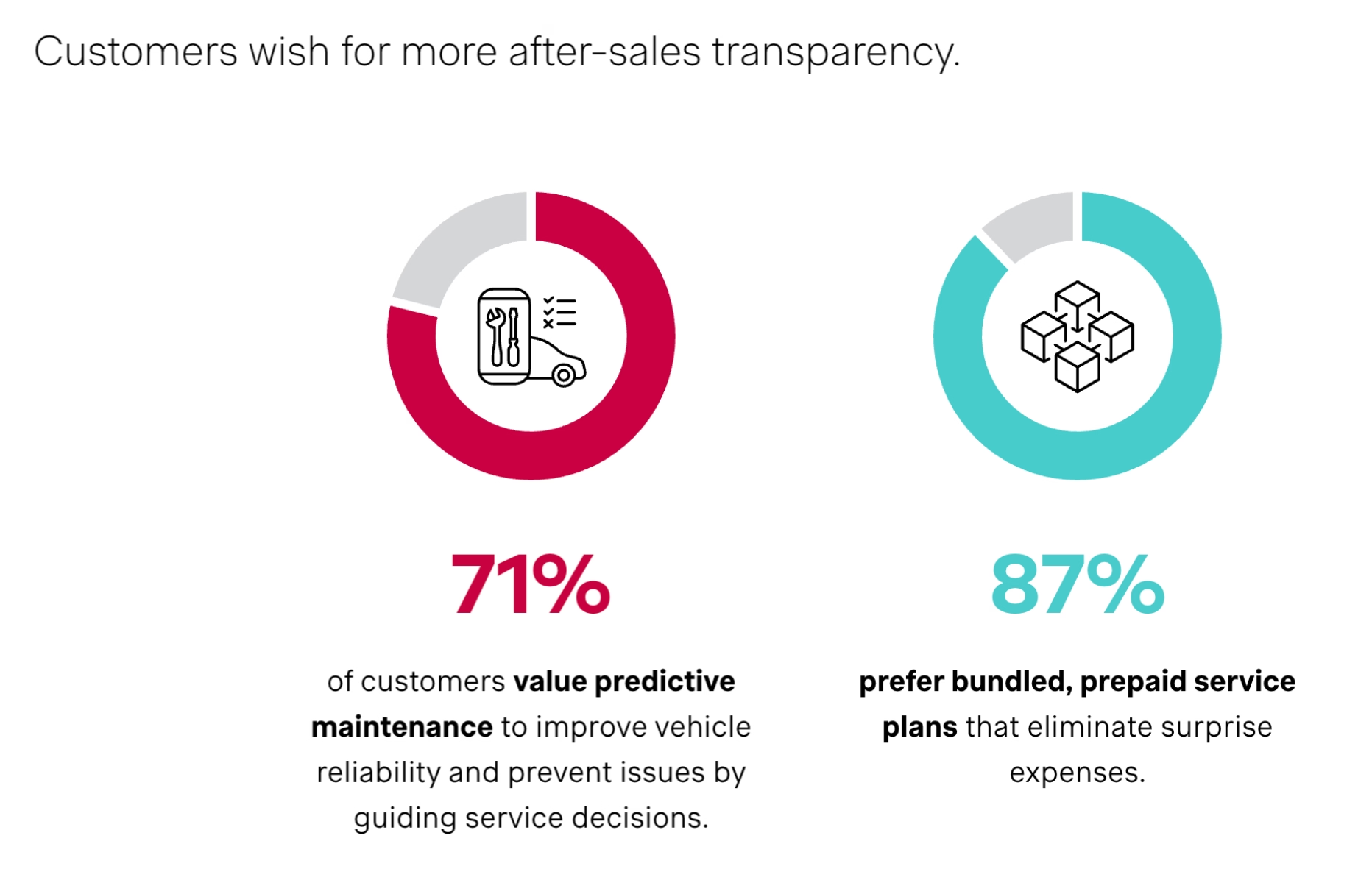
Simon-Kucher’s report also highlights that 71% of drivers value predictive maintenance as a way to improve vehicle reliability and prevent costly issues before they arise.
Mobility-as-a-Service & Subscription Models
The rise of Mobility-as-a-Service (MaaS) and vehicle subscription models marks one of the biggest shifts in how people access and experience transportation.
Instead of traditional ownership, consumers are increasingly embracing on-demand, flexible mobility options that align with digital lifestyles and sustainability goals.
Automakers and mobility providers are adopting fleet-as-a-service platforms, where connected vehicles are managed, maintained, and optimized through centralized digital systems. These platforms use real-time telematics and IoT data to monitor usage, track location, and schedule predictive maintenance.
User Onboarding & Experience Optimization
As vehicles become more connected and software-driven, ensuring that customers can easily understand and make the most of these digital features has become another important task of digital transformation in the automotive industry.
Because, along with digitization, there come usability issues and questions…
- How do you get and install OTA software updates?
- How do you customize or personalize your infotainment system?
- How do you set up your driver profile or activate connected services?
- How do you access real-time diagnostics or schedule maintenance through the app?
- How do you even get the app, and what can you do with it?
These may sound like simple questions, but for many customers, they define how approachable a brand feels.
That’s why automakers now focus heavily on digital onboarding, guided in-app education, and personalized support tools that help drivers explore every new function confidently and intuitively.
Similarly, dealerships and mobility providers are also integrating in-app support and guidance to help both staff and customers navigate tools for sales, servicing, or fleet management.
In some cases, we’ve started to see AI agents and voice assistants being used to onboard and educate users about their vehicles’ digital capabilities.
👉🏻 For example, Mercedes-Benz’s “Hey Mercedes” assistant helps drivers explore in-car features through natural conversation.
The system’s “Explore Me” mode can explain functions, guide users through connecting their smartphone via Bluetooth, or even tell them where the first-aid kit is located.
Supporting 27 languages with advanced natural language understanding (NLU), “Hey Mercedes” allows users to learn about and control their vehicle in an intuitive, human-like way.
But of course, onboarding is not the only use case of the “Hey Mercedes!” assistant.
What are the benefits of digital transformation in automotive?
Digital transformation in the automotive industry delivers value across two major fronts: manufacturing & product development, and the business & customer experience side.
➡️ On the manufacturing and product development side, the impact is tangible:
- Operational efficiency and cost reduction
- Reduced downtime and improved uptime
- Faster product development and time-to-market
➡️ On the business and customer side, transformation fuels stronger relationships and more adaptive organizations:
- Improved customer experience and loyalty
- Differentiation and competitive advantage
- Scalability and agility to respond to market shifts
- Sustainability and resource optimization
And beyond efficiency and customer satisfaction, digital transformation is reshaping business models themselves, too.
Automakers are now earning revenue from software updates, in-car apps, extensive customization/personalization options, and subscription-based services, while Mobility-as-a-Service (MaaS) platforms redefine vehicle ownership entirely.
Examples of technology-driven automotive transformation
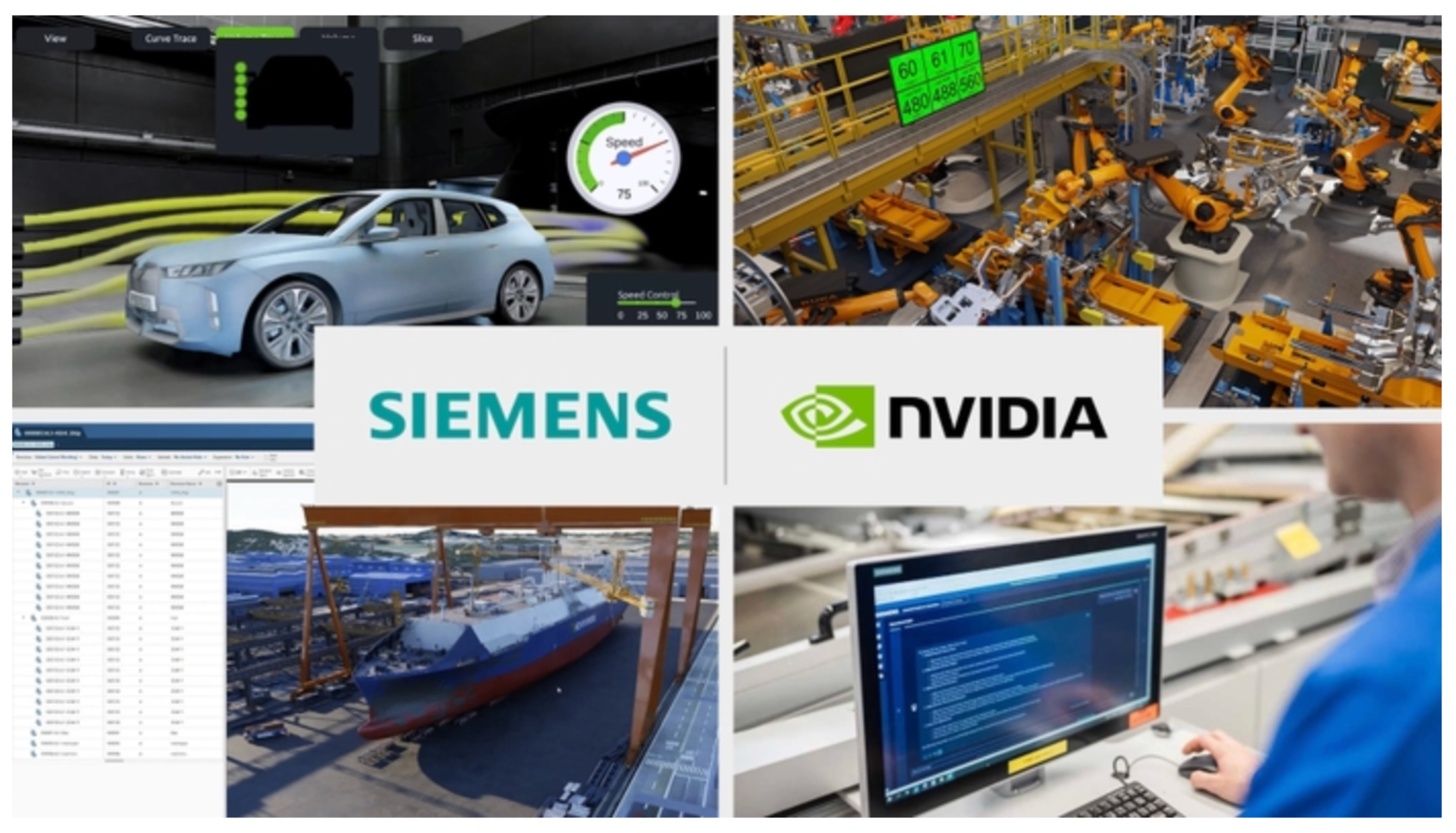
NVIDIA and Siemens' partnership empowers automotive giants like HD Hyundai and BMW Group
By combining Siemens’ Xcelerator platform and industrial automation expertise with NVIDIA’s AI and accelerated computing, the collaboration enables companies to optimize operations, speed up product development, and bring the factory of the future to life.
The partnership empowers manufacturers to leverage AI across the entire product lifecycle from design and simulation to execution on the factory floor.
For instance:
👉🏻 BMW Group used Siemens’ Simcenter Star-CCM+ software powered by NVIDIA Blackwell GPUs to simulate vehicle aerodynamics, achieving a 30x speedup in transient aerodynamics simulations. This drastically reduced design iteration time while lowering energy consumption and costs.
👉🏻 HD Hyundai applies Teamcenter Digital Reality Viewer to visualize hydrogen- and ammonia-powered vessels in real time, managing millions of components and cutting design cycles from days to hours.
What makes this a good DT example?
✅ Demonstrates measurable impact on design speed and operational efficiency.
ZHUOYU digitizes the intelligent driving development chain
ZHUOYU is transforming intelligent driving development with end-to-end, in-house R&D across hardware and software.
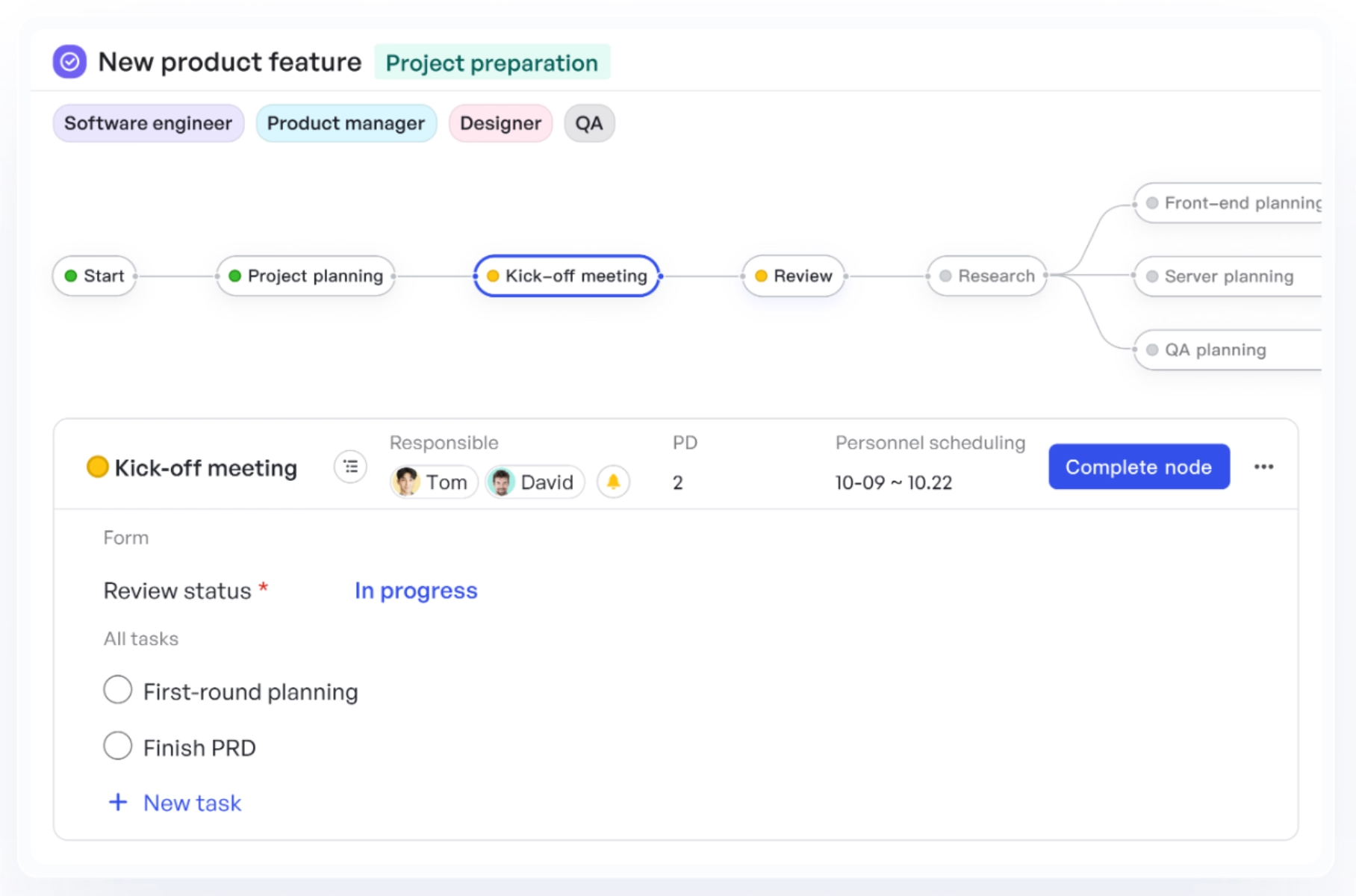
In early 2025, the company integrated Meegle into its development process, creating a connected data asset chain and intelligent milestone tracking. This streamlined workflow cut model development cycles by 32% and improved issue resolution efficiency by 52%.
ZHUOYU also implemented a data-driven closed-loop defect mechanism, where real-world testing data feeds directly into Meegle, automatically generating defect tickets, assigning tasks, and validating fixes.
This reduced average defect resolution time by 52% and minimized recurring issues.
What makes this a good DT example?
✅ Digitizes and connects complex R&D processes for speed and alignment.
✅ Implements automated, traceable defect management to improve product quality.
Daimler uses cloud systems and virtual development environments to onboard new engineers
To accelerate software development and innovation, Daimler implemented Microsoft Azure DevTest Labs, creating cloud-based virtual development environments that onboard new engineers in hours instead of weeks.
Historically, provisioning servers, licenses, and development tools took weeks or even months, slowing project kickoffs and collaboration with external contractors.
By adopting DevTest Labs, Daimler standardized its dev/test environments and integrated open-source tools like Java, Docker, Tomcat, and Linux distributions, creating a reproducible, fully equipped development environment accessible with a single link.
Daimler also collaborated with Microsoft Consulting Services to create Daimler DevCloud, a custom environment bundling DevTest Labs, Azure DevOps, and security/operations tools such as Log Analytics and Application Insights.
Developers can now start coding and building proofs of concept within minutes.
What makes this a good DT example?
✅ Reduces developer onboarding times.
✅ Speeds innovation cycles and time-to-market for new products.
✅ Streamlines development, testing, and deployment in a standardized, reproducible workflow.
BMW Group accelerates ERP transformation with RISE with SAP S/4HANA Cloud
With support from SAP’s migration factory approach and SAP MaxAttention services, BMW Group successfully migrated 30% of its ERP systems and converted 20% to SAP S/4HANA Cloud within just 12 months without disrupting operations.
The structured “factory” model, including build, migration, and conversion subfactories, helped ensure speed, stability, and minimal downtime.
The transformation enables BMW Group to modernize critical areas such as finance, logistics, HR, and global trade, while maintaining the company’s stringent security and performance standards.
The new cloud-based ERP foundation also positions BMW to harness AI, standardize processes, and accelerate innovation across its 30+ global production sites.
The transformation is expected to be completed in 2027.
What makes this a good DT example?
✅ Cloud-based ERP enables higher agility, performance, and security.
✅ Sets a foundation for continuous innovation and AI-driven business processes.
Audi uses product lifecycle management systems (PLM) to manage product data
Audi AG is taking a major step toward fully digital product development by implementing a Product Lifecycle Management (PLM) system across the entire Volkswagen Group.
The new PLM platform will serve as a central hub for managing all product data from the first virtual design sketch to final production on the shop floor.
According to Mark Brosik, Head of Business Services at Audi AG, the goal is to create an architecture-driven, data-consistent environment that connects design, logistics, production planning, and operations.
With tens of thousands of users expected once fully deployed, the system will enable seamless collaboration across departments and brands.
The biggest advantage lies in data continuity and accessibility.
By building a unified data backbone, Audi is paving the way for AI-supported, partially autonomous production planning and next-level systems engineering.
What makes this a good DT example?
✅ Unified data platform connects the full product lifecycle.
✅ Enables AI-driven, autonomous production planning.
Ford boosts factory efficiency and worker safety with collaborative robots (cobots)
At Ford’s manufacturing plants in Germany, humans and robots now work side by side.
The company has deployed KUKA’s LBR iiwa (Intelligent Industrial Work Assistant), a new generation of collaborative robots, or cobots, designed to safely assist human workers in complex assembly tasks.
Equipped with torque sensors in all seven joints, these cobots can “feel” their surroundings, allowing them to perform delicate operations such as lifting and positioning heavy car doors with precision, while human operators handle the fine adjustments and secure the fittings.
This teamwork not only enhances accuracy and consistency but also reduces physical strain and workplace injuries.
Bruce Hettle, Ford’s Vice President of Manufacturing and Labor, says:
The workforce is really helping us define how they can contribute more by using the collaborative robots to do some of the more mundane, simple, heavy-exertion tasks, which in turn allows them to use more of their creativity and their minds to take us to the next level.”
What makes this a good DT example?
✅ Human-robot collaboration enhances safety and ergonomics.
✅ Cobots improve precision and reduce manual workload.
Nissan uses predictive maintenance technologies to keep downtimes minimal
With vehicle manufacturing operations in 20 countries and production exceeding 5.6 million vehicles a year, Nissan faces one of the most complex maintenance challenges in the automotive industry.
Thousands of machines from robots and conveyors to pumps and stamping presseskeep production lines running across plants.
And keeping those machines healthy and productive is essential.
To address this, Nissan partnered with Senseye, a UK-based predictive maintenance specialist.
Using machine learning–driven condition monitoring, Senseye enables Nissan to remotely track over 9,000 connected assets across multiple global sites.
The system automatically detects early signs of wear or malfunction and predicts when a machine is likely to fail, even months in advance.
More than 400 maintenance engineers actively use the Senseye platform to plan interventions before failures occur, minimizing unexpected breakdowns and improving operational efficiency.
Nissan achieves up to 50% reduction in unplanned downtime.
All while extending the life of critical assets.
What makes this a good DT example?
✅ Predictive analytics reduce downtime and maintenance costs.
Jaguar Land Rover develops a data-driven culture with Tableau
JLR aims to deliver a pure electric Jaguar portfolio by 2025 and achieve zero emissions across products, operations, and supply chains by 2039.
Achieving this vision requires not only engineering excellence but also data-driven decision-making at every level of the business.
To support this transformation, JLR turned to Tableau.
Instead of relying solely on centralized data teams, more than 1,300 employees now actively create dashboards while over 5,000 explore and analyze data across functions such as manufacturing, quality, and retail planning.
With Tableau, JLR democratizes data and empowers employees with self-service analytics.
Clive Benford, JLR’s Data Office Director says:
Everyone benefits from being data-driven. It creates momentum, encourages innovation, and drives continual improvement, both from a personal and business perspective.”
What makes this a good DT example?
✅ Empowering employees through self-service analytics.
✅ Cloud scalability and secure data governance.
✅ £250M annual business value driven by data culture.
Tata Motors offers personalized experiences both to their dealers and end customers
As India’s largest automotive manufacturer, Tata Motors set out to deliver smarter, more connected experiences, both for its customers and its vast dealer network.
To do so, it needed a digital foundation capable of supporting agile innovation, real-time data exchange, and the growing demands of connected mobility.
Partnering with Red Hat, Tata Motors adopted an open-source, cloud-ready architecture.
This enabled seamless integration across its internal systems and dealer network, reducing dealer onboarding time from over 30 days to just 7.
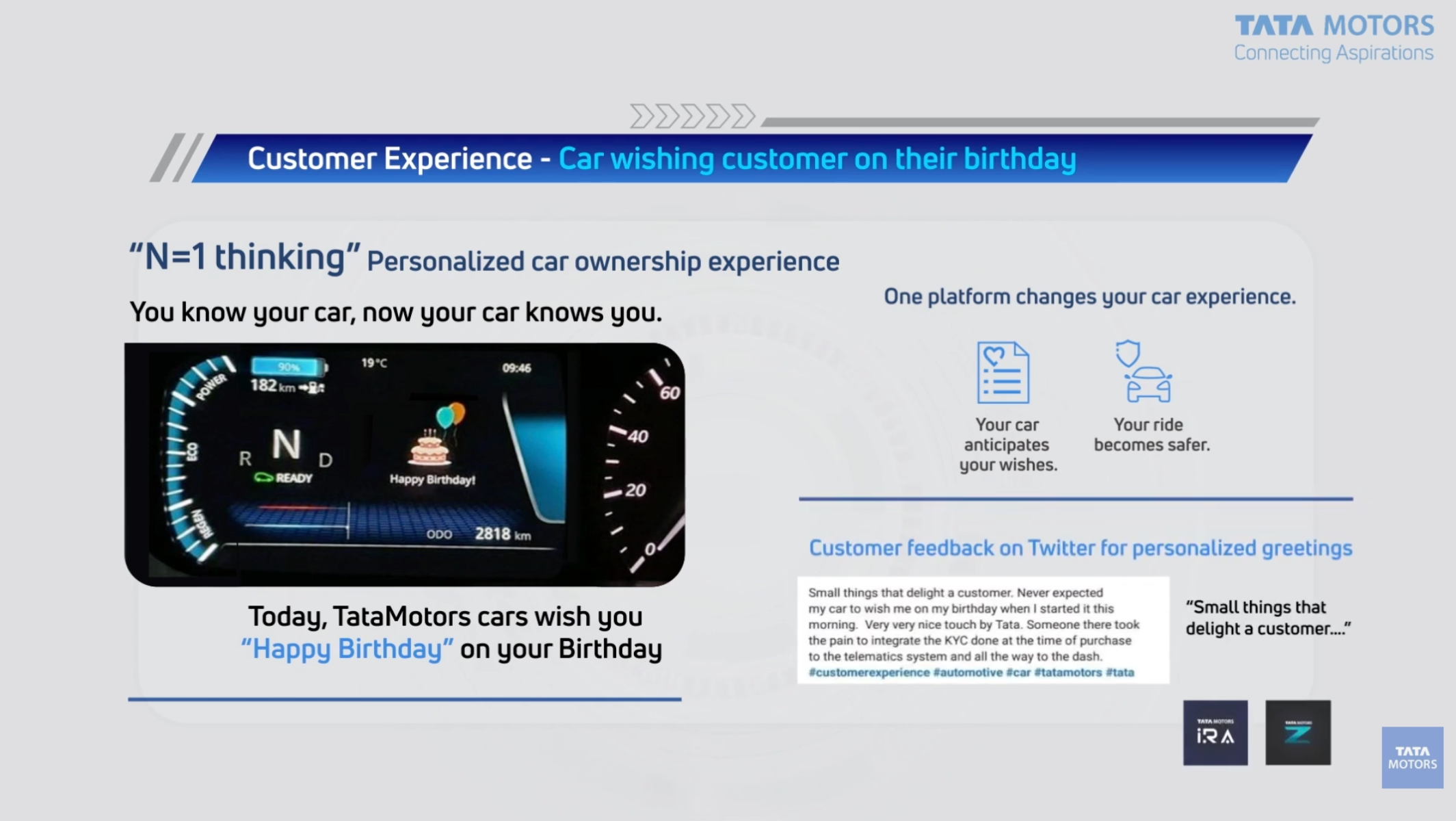
These improvements also power Tata’s connected vehicle ecosystem, enabling personalized driver experiences, like the Nexon EV greeting owners on their birthdays, and ensuring rapid roadside support through real-time data coordination.
What makes this a good DT example?
✅ Open-source architecture enabling agility and scalability.
✅ Dealer onboarding reduced by 75%.
✅ Connected vehicle personalization and predictive support.
Rolls-Royce allows for extensive customization pre-sales
At its Goodwood manufacturing facility, Rolls-Royce enables customers to extensively personalize their vehicles.
Buyers can specify unique paint colors (even ones matched to personal items) and design custom patterns for the wood fascia and interior details.
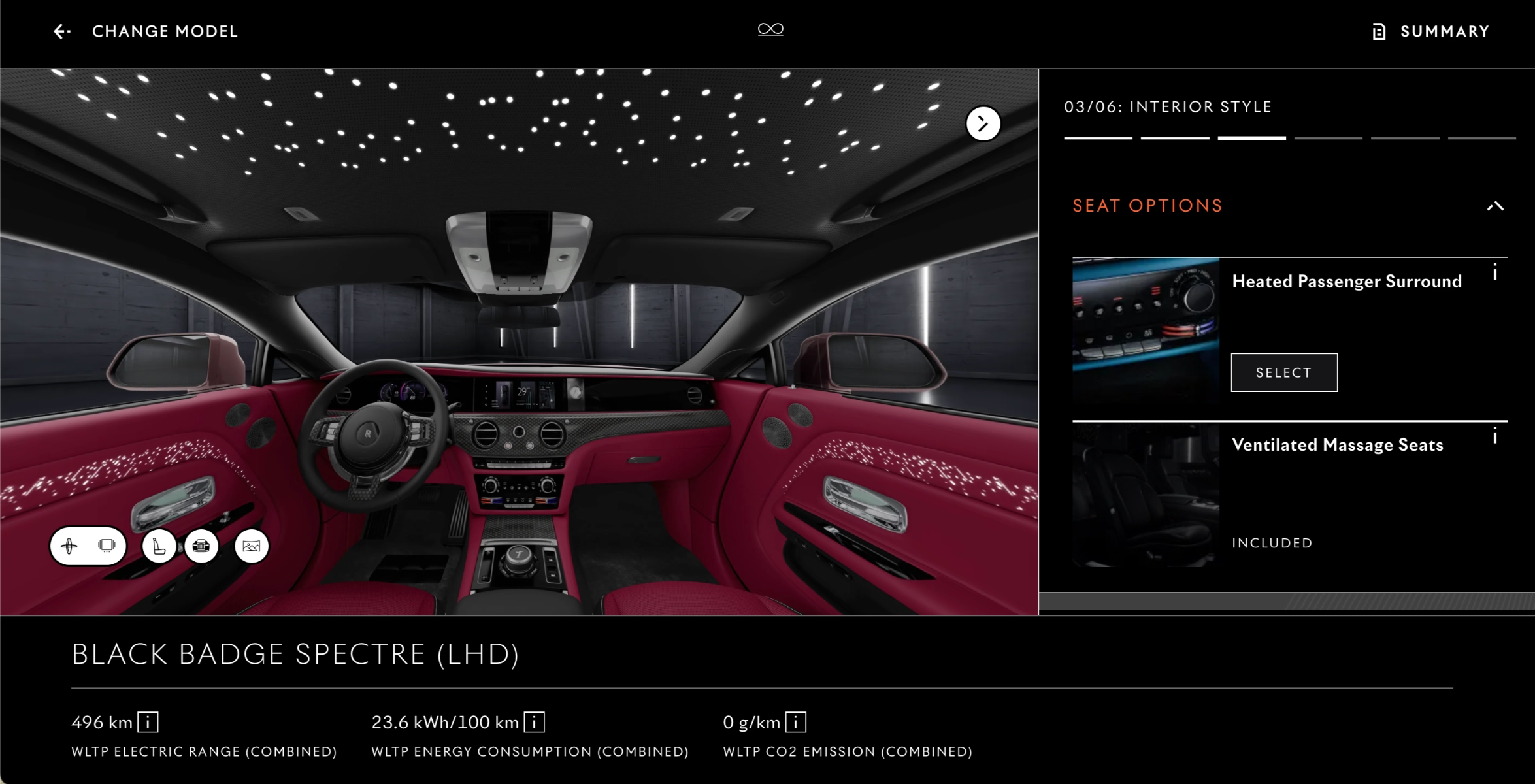
This high level of customization introduces significant complexity into production planning, as each vehicle follows a unique build process.
To manage this, Rolls-Royce operates a fully flexible production line that allows vehicles to be moved in and out of sequence as needed. The system automatically adjusts inventory levels, scheduling, and sequencing to accommodate each bespoke order efficiently.
What makes this a good DT example?
✅ Customer-driven configuration translated directly into manufacturing.
✅ Real-time inventory, sequencing, and scheduling adjustments.
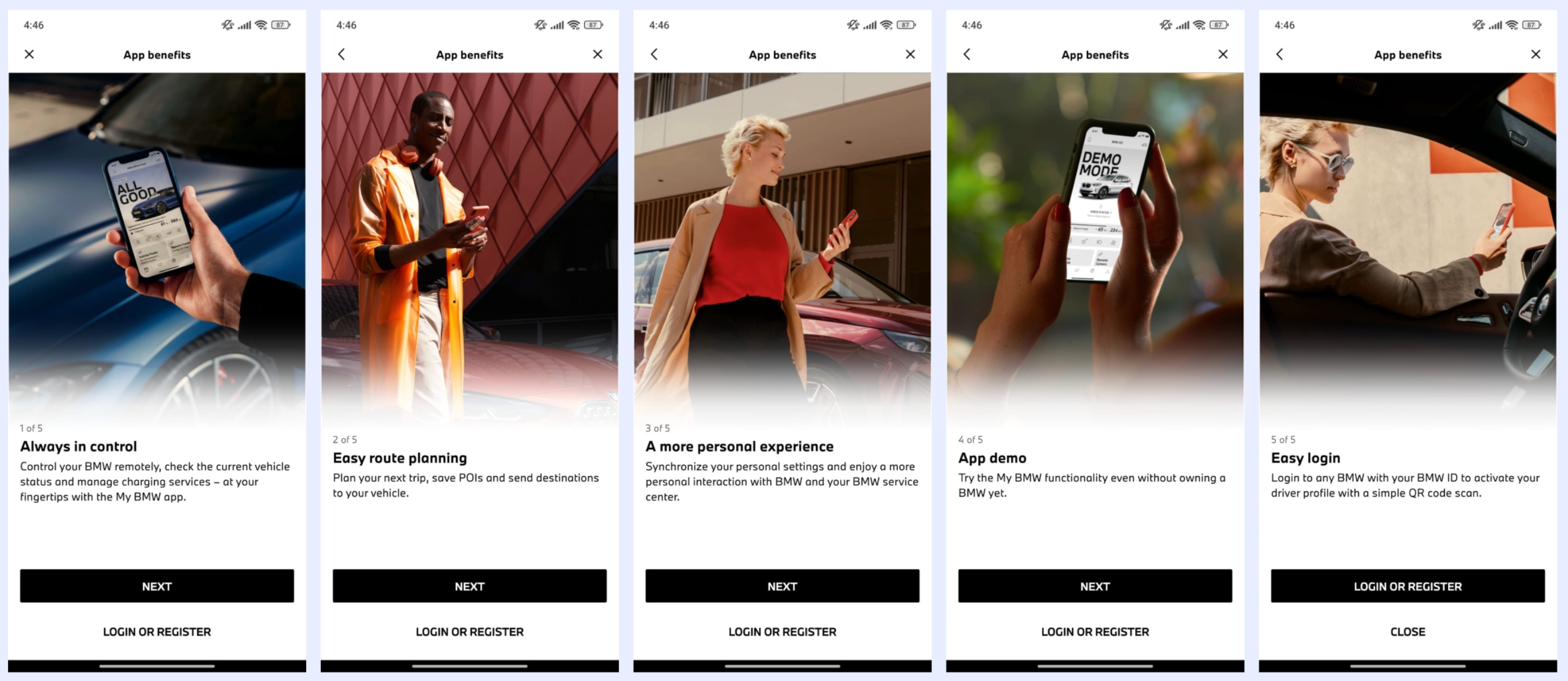
BMW Group offers customer onboarding to educate drivers about the available features and offerings of their vehicles
Through its My BMW app and connected software ecosystem, BMW Group has transformed customer onboarding from a one-time vehicle handover into a continuous, digital-first relationship.
The app serves as the gateway to the BMW ecosystem.
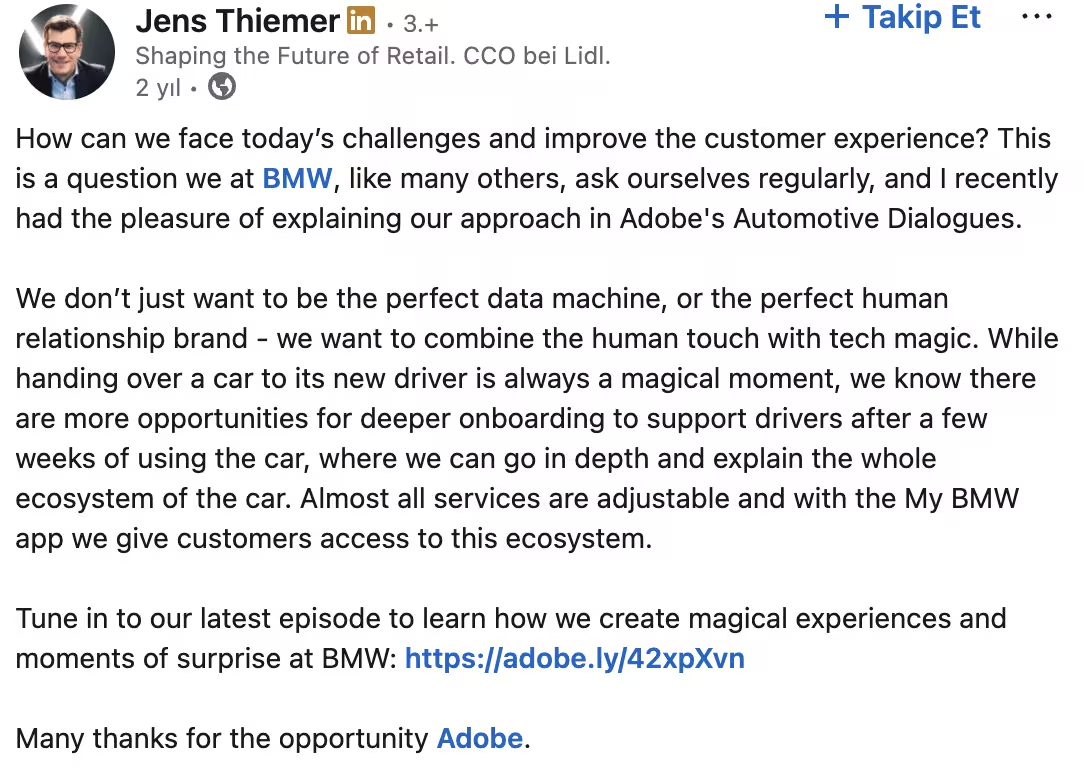
It educates new owners about the full range of vehicle features, connected services, and available upgrades and allows customers to explore their car’s digital possibilities at their own pace, from real-time traffic insights to connected drive upgrades and remote software updates.
Here’s the app’s initial mobile onboarding sequence:
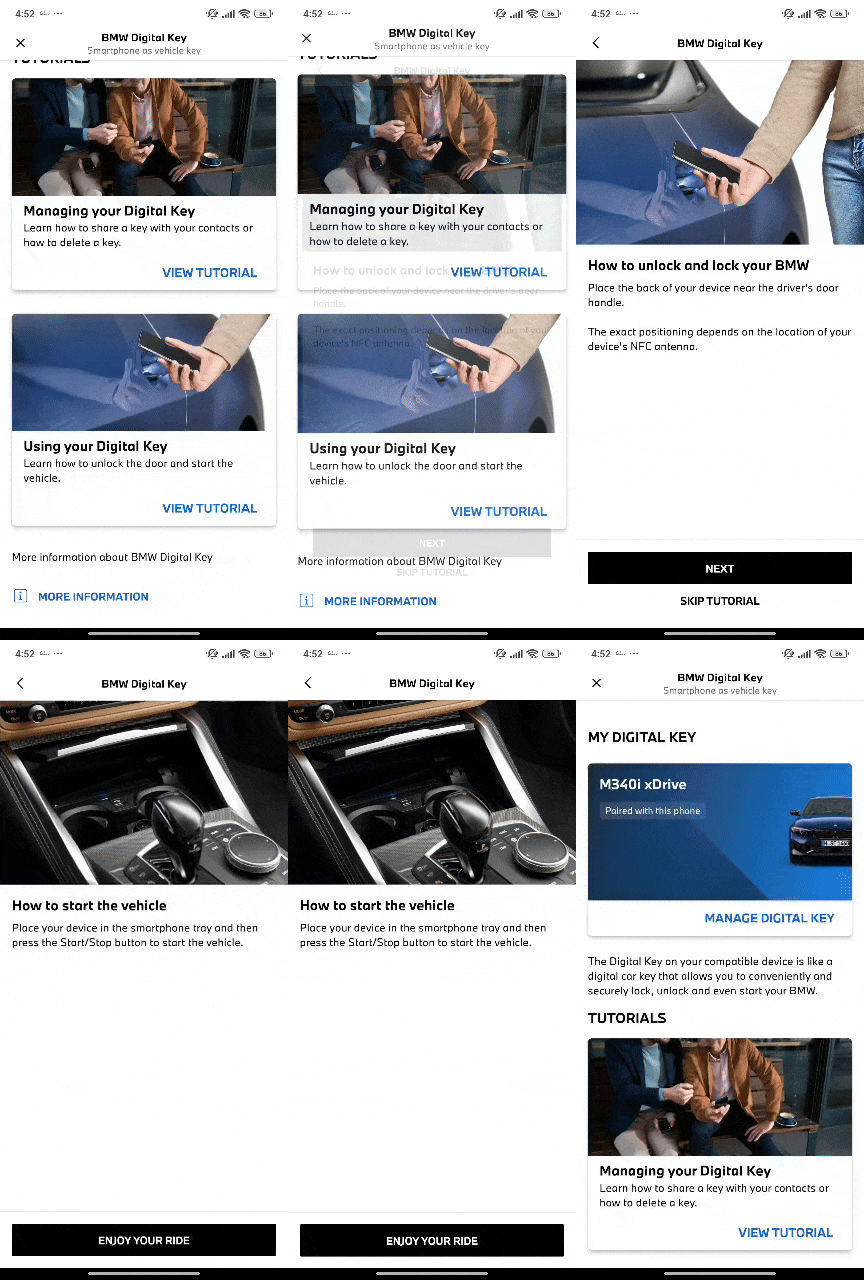
And an example in-app tutorial on how to use the Digital Key feature:
What makes this a good DT example?
✅ Seamless digital onboarding via My BMW app and continuous education about vehicle features and services.
Mercedes-Benz app delivers personalized alerts, reminders, and demo experiences
Similar to the My BMW app, the Mercedes-Benz app allows vehicle owners to stay connected with their cars through a suite of digital tools.
Users receive alerts and reminders for maintenance, service appointments, and key vehicle events.
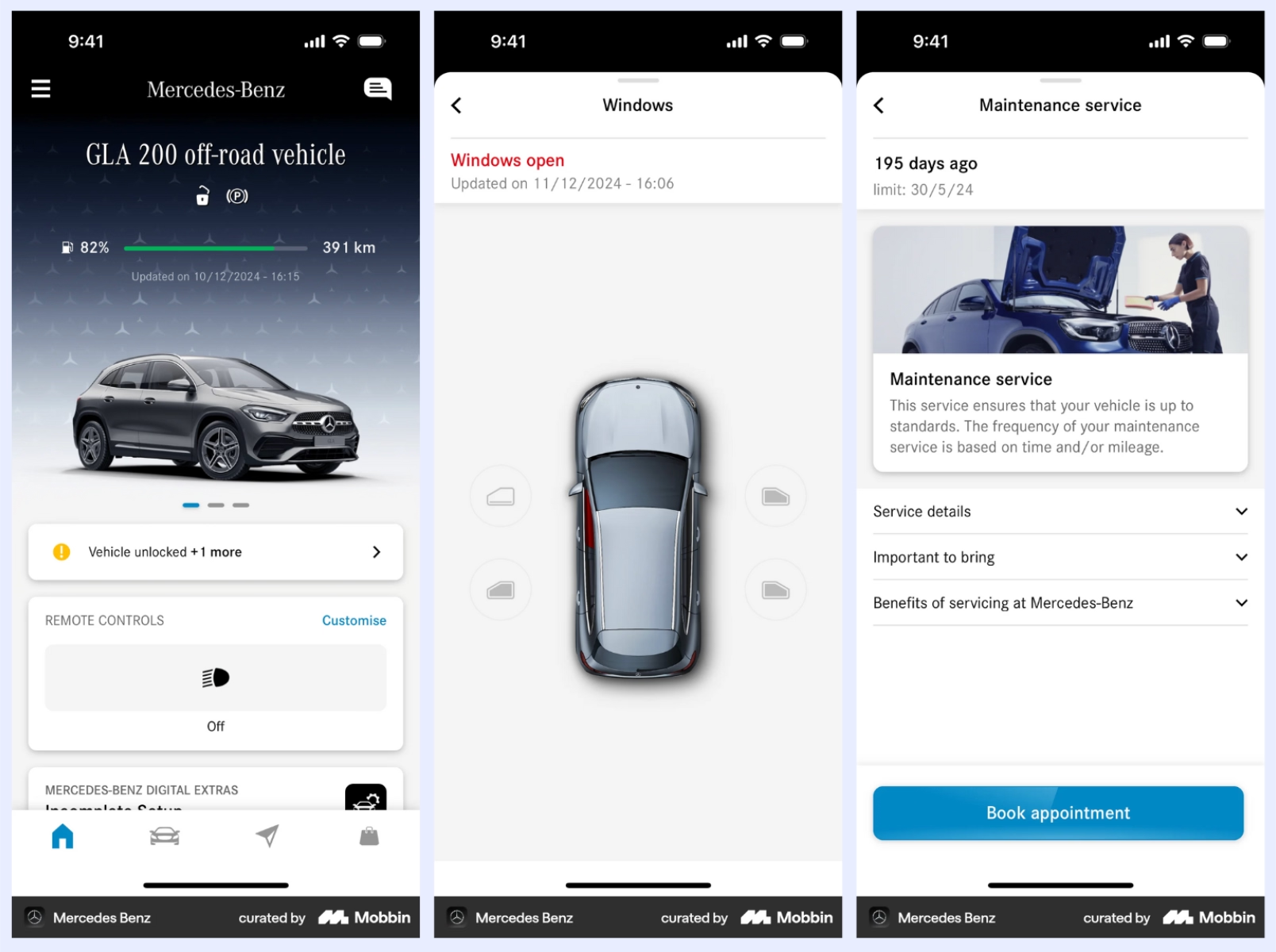
A demo mode also helps potential customers explore the app’s features and understand the full functionality before buying a Mercedes-Benz vehicle (or registering their existing Mercedes-Benz to the app).

What makes this a good DT example?
✅ Personalized notifications and reminders enhancing customer engagement.
✅ Demo mode allowing customers to explore features before use.
✅ Integration with vehicle data for tailored, context-aware experiences.
Tesla app enables seamless onboarding, automation, and rewards programs
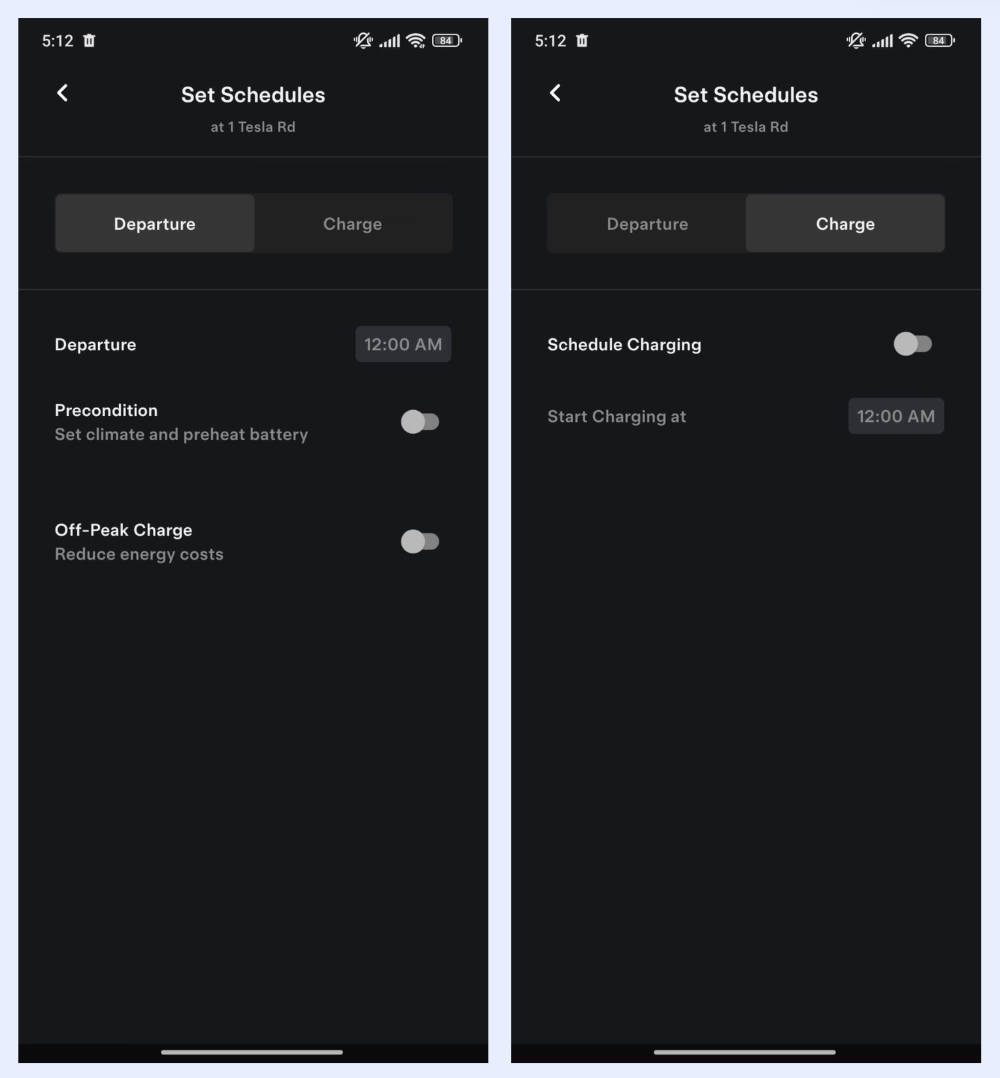
The Tesla app provides customers with end-to-end control over their vehicles from their mobile devices. The app offers a quick mobile onboarding experience similar to that of BMW Group thorough carousels.
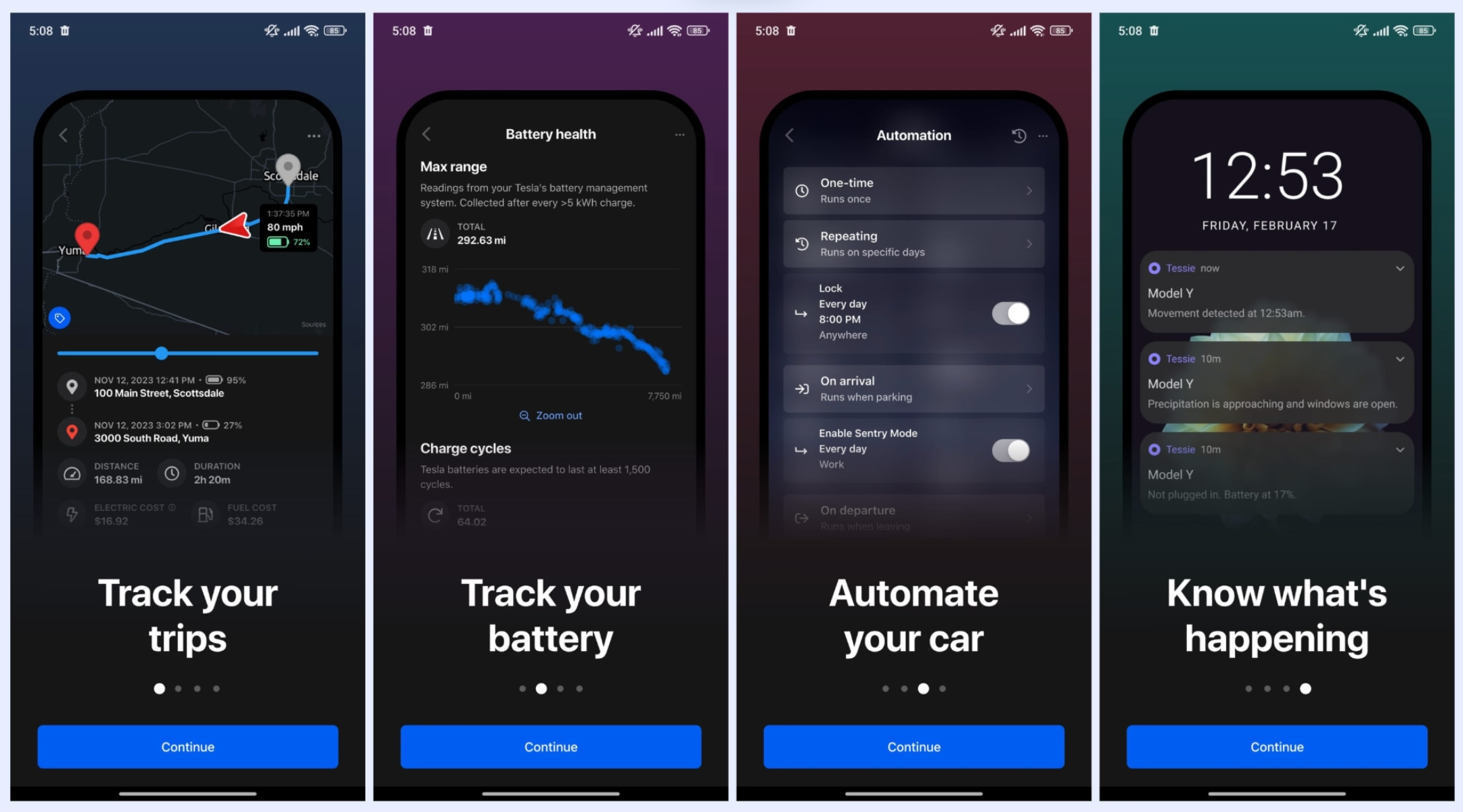
Automation capabilities, such as remote climate control, software updates, and self-parking assistance, are integrated directly into the app.
Customers can also monitor energy usage and charging in real time through the app.
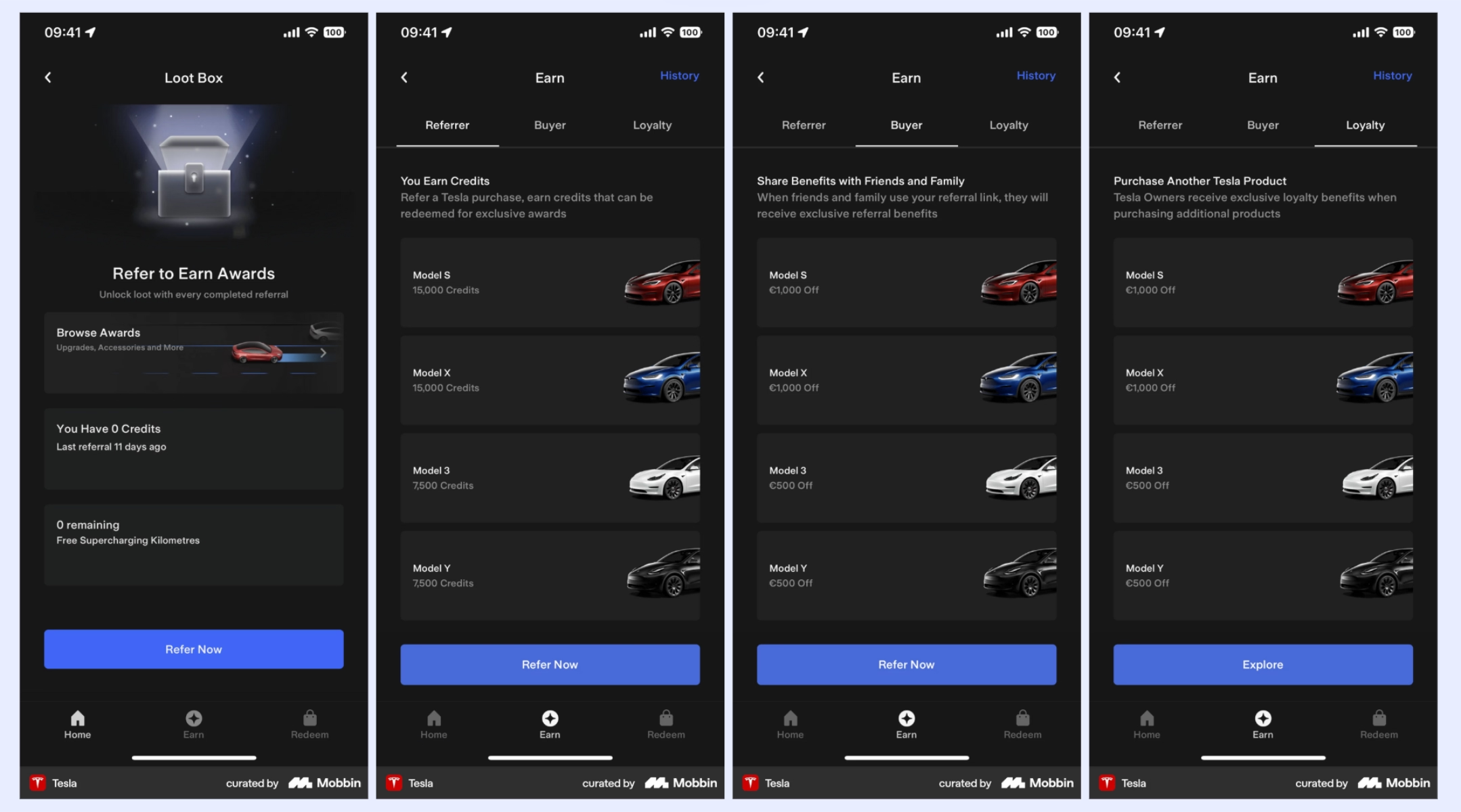
In addition, Tesla offers a loyalty program through the app that rewards referrals and repeat purchases.
What makes this a good DT example?
✅ Automation features enhancing vehicle control and convenience.
✅ Integrated loyalty program rewarding referrals and repeat purchases.
Obstacles in digital transformation in automotive
There are many reasons to embark on a digital transformation journey, but just as many pitfalls along the way, as well.
⚡ In fact, around 70% of digital transformation initiatives fail across industries due to these very challenges.
One of the top reasons, as Dr.-Ing. Markus Friedrich points out, is the reliance on unscalable operating models and short-sighted planning:
Let’s take a closer look at the most common obstacles to successful digital transformation 👇🏻
- Scalability across multiple factories, markets, and geographies: Automakers operate globally, with dozens of vehicle platforms and regional variations. Scaling digital architectures, cloud connectivity, and OTA systems consistently across these markets is complex and costly.
- High integration complexity across tiers & suppliers: Each vehicle depends on a vast, multi-tier supply chain. Integrating digital tools and data systems across OEMs, Tier 1–3 suppliers, and logistics partners is often fragmented, which leads to inefficiencies and compatibility issues.
- Cultural resistance & skills gaps in the sector: It’s not just engineers and factory teams who need to adapt to new technologies and digital developments. Sales staff, service technicians, and dealership employees are all part of the transformation journey.
Each role faces different levels of technical exposure and digital readiness. And this makes it challenging to align the entire workforce around new tools, data systems, and ways of working.
- Safety, regulatory, and liability concerns: Connected and autonomous systems face strict safety validation and regulatory scrutiny. Any software failure could have physical consequences. So, compliance, certification, and testing processes are lengthy and expensive.
- High upfront investment, uncertain ROI: From factory automation to data platforms and connected services, digital transformation requires massive capital. Yet many OEMs struggle to predict clear ROI, especially when new revenue streams like subscriptions are still emerging.
And when the stakeholders are not so clear about the ROI, transformation investments get affected by this uncertainty and unreliability.
Other actors of the automotive industry act in a similar way, too.
Suppliers hesitate to digitize processes without OEM alignment, dealers are cautious about adopting new retail tech, and mobility providers question when their investments in shared or electric fleets will pay off.
- Data privacy, security, and trust: Vehicles now collect vast amounts of personal and operational data. Managing cybersecurity risks and adhering to privacy laws like GDPR or regional data sovereignty rules is a constant balancing act.
- Change management & stakeholder alignment: Automotive organizations are large and hierarchical. Aligning global leadership, engineering, IT, suppliers, and dealers around one transformation roadmap often takes longer than the technology itself.
- Low CX priority or CX Hyperactivity: For decades, most automotive OEMs built their success on what they did best: designing and manufacturing reliable, high-quality vehicles that met customer expectations.
That product-first mindset worked well for a long time, but it also meant that customer experience (CX) rarely became a strategic priority at the leadership level.
Many automakers still lack strong executive ownership of customer experience.
However, as digitalization accelerates and consumer expectations evolve, some automakers are now trying to catch up, and in some cases, overcompensating.
This has led to what experts call “CX hyperactivity”: a surge of parallel, disconnected CX initiatives launched without a clear structure, shared vision, or measurable outcomes.
Instead of driving real improvement, these scattered efforts often dilute focus and create confusion about where the greatest customer impact can actually be achieved.
Automotive digital transformation trends
As digital transformation reshapes the automotive landscape, the focus is shifting from just building smarter vehicles to connecting and learning from them.
In the coming years, several trends will define how this transformation unfolds:
- The smarter use of car data,
- New mobility business models,
- AI-driven manufacturing and maintenance,
- And more immersive digital experiences inside and outside the vehicle.
Let us explain them in more detail 👇🏻
Better and More Structured Use of Car Data Across Every Step of a Car’s Journey
The modern car generates terabytes of information from sensors, cameras, infotainment systems, and connected apps. Yet, much of this data is still underused or siloed between OEMs, suppliers, and partners.
That’s changing quickly, though.
As companies begin to systematically collect, process, and monetize car data, new use cases are emerging across R&D, production, customer experience, and after-sales services.
⚡ McKinsey estimates that leveraging vehicle data could deliver $250–$400 billion in annual value by 2030, not only through new data-driven services and features but also through operational cost reductions.
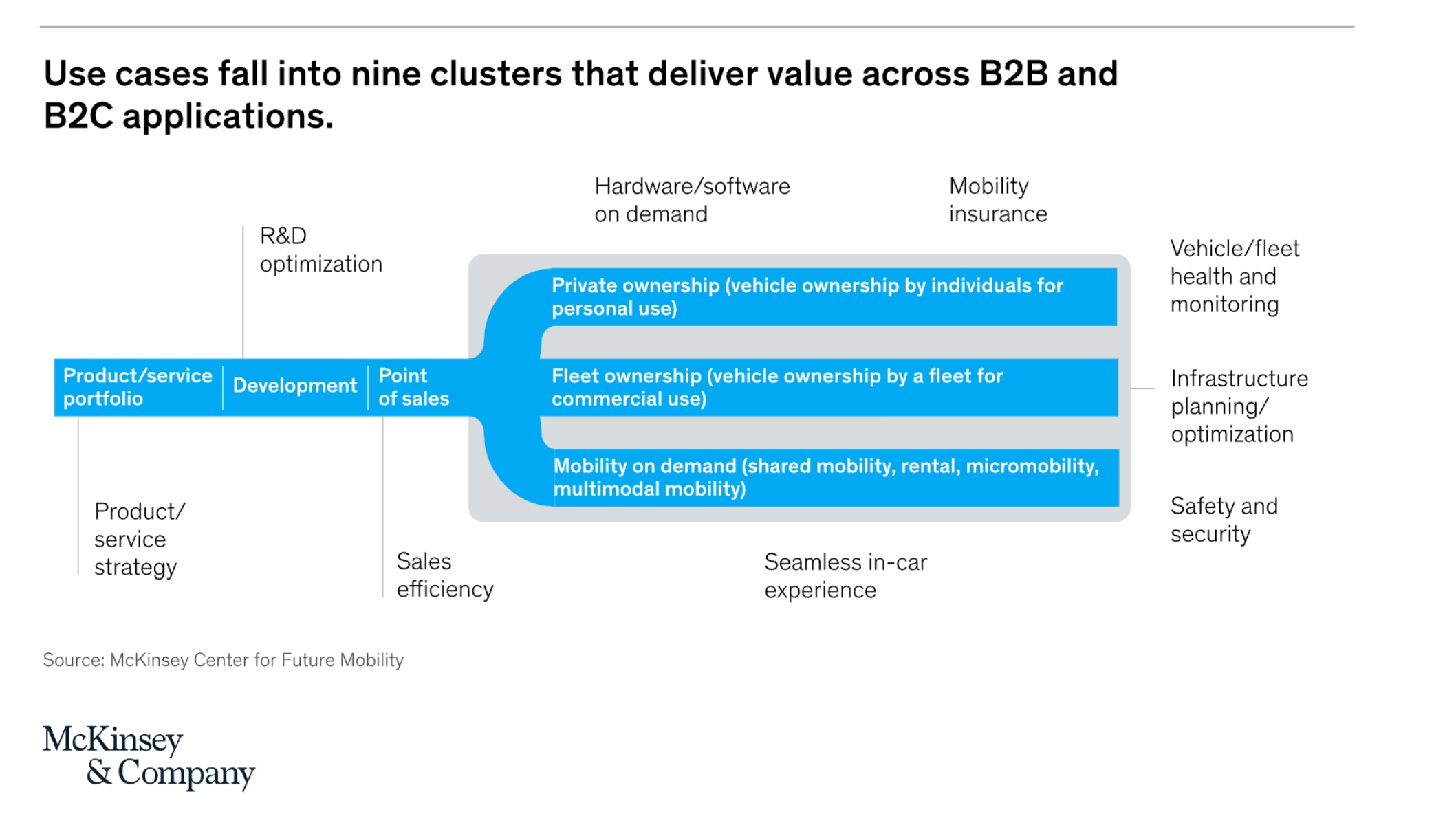
Examples of these emerging data-driven applications include:
- R&D optimization: Using vehicle telemetry to improve design decisions and product testing.
- Enhanced infotainment and connectivity: Offering in-car entertainment and app ecosystems that rival smartphone experiences.
- Infrastructure and fleet management: Sharing aggregated vehicle data with city planners, insurers, or fleet operators to improve traffic management, road maintenance, and predictive servicing.
- Personalized ownership experiences: Using behavioral data to tailor services, upgrades, and offers to each driver.
Still, automakers must balance opportunity with trust.
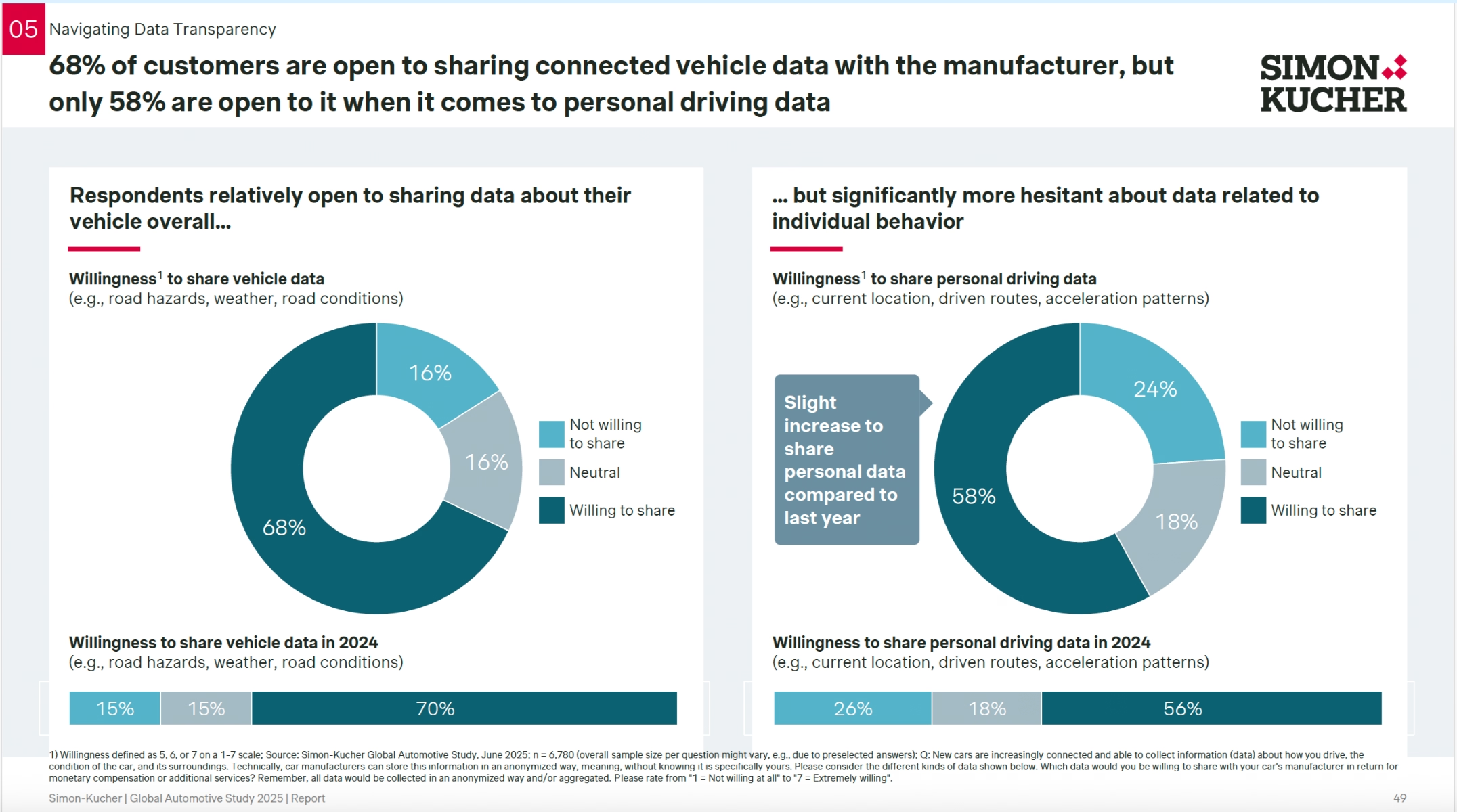
Digital Go-To-Market (GTM) Strategies (and not just for insurance companies)
For decades, the automotive industry’s sales strategy was built around physical touchpoints like dealerships, showrooms, and traditional advertising.
But as vehicles become more connected and services extend far beyond the initial sale, automakers now need digital go-to-market (GTM) strategies that engage customers continuously, across both physical and digital channels.
Some players, like car insurance companies, have already mastered digital sales through apps, data-driven pricing, and online self-service tools.
In contrast, many OEMs are still catching up.
To stay competitive, OEMs and mobility providers must start treating their digital channels as strategic sales engines, not just marketing add-ons for newsletters.
That means…
- Integrating customer data across platforms,
- Aligning brand messaging globally
- Adopting context-driven performance marketing
- Offering drivers the right service, upgrade, or subscription at the right time and place (even inside the vehicle)
Electric and Autonomous Vehicles
The shift toward electrification and autonomy in vehicle design has been an important trend for the last couple of decades.
It impacts the automotive industry from R&D and manufacturing to sales, after-sales, and even infrastructure and city planning.
⚡ McKinsey reports that global EV sales have been growing at nearly 80% per year since 2020, and by 2040, an estimated 33 million autonomous vehicles will be on the road.
This acceleration creates both opportunities and challenges, from rethinking supply chains and production models to retraining the workforce for electric drivetrains and advanced driver-assistance systems (ADAS).
At the same time, customer preferences are shifting rapidly.
Drivers increasingly expect sustainability, connectivity, and autonomy as standard features rather than luxuries.
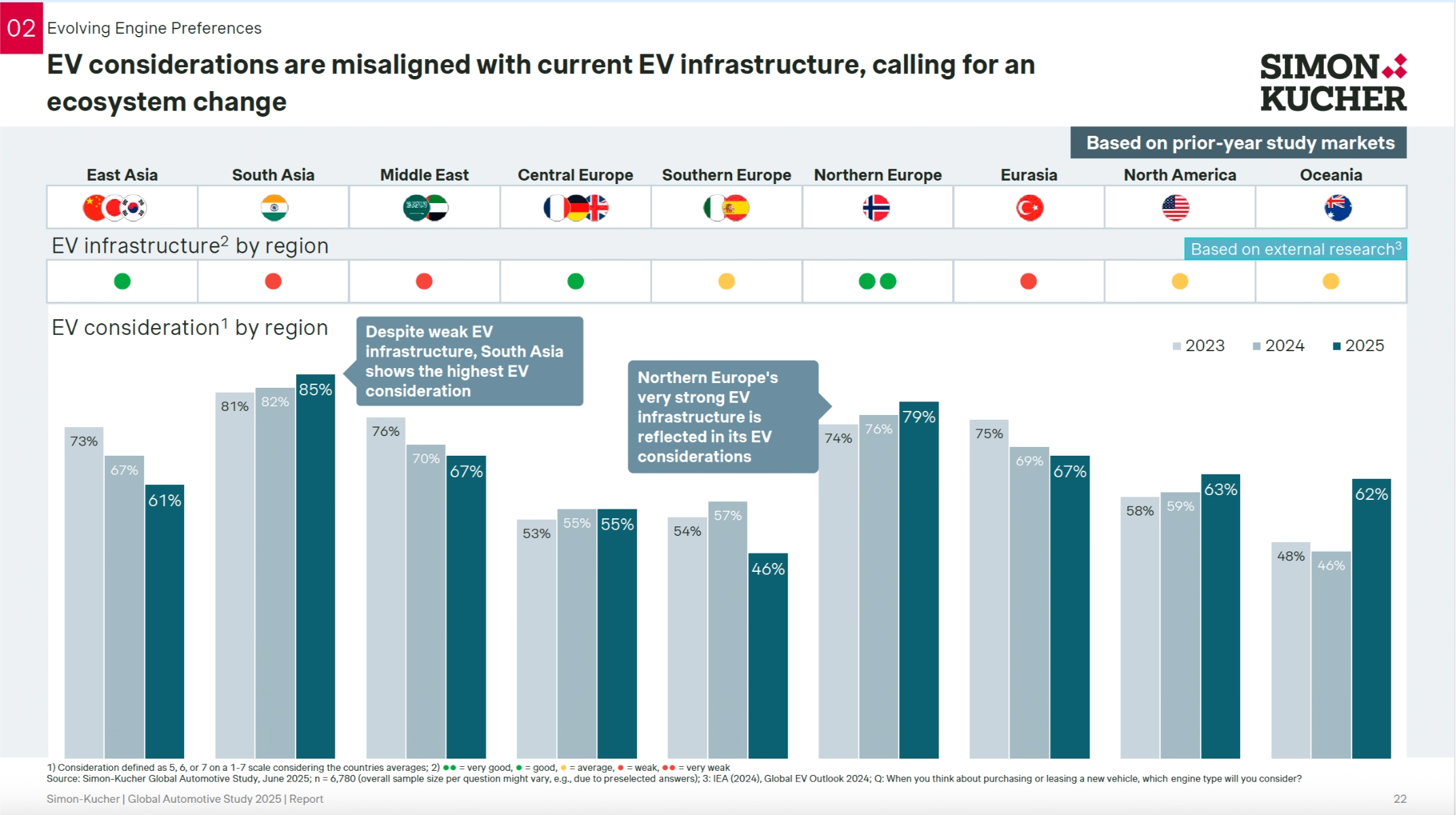
⚠️ Yet the infrastructure hasn’t fully caught up.
EV charging networks remain uneven across regions, and regulations for autonomous vehicles vary widely.
More AI Involvement (especially in CX, sales, and post-sales)
Artificial intelligence is rapidly becoming the driving force behind customer experience transformation in the automotive sector.
While AI already powers design, engineering, and manufacturing optimization, its growing impact on sales, customer interaction, and after-sales services is reshaping how automakers engage with buyers and owners alike.
Car buyers expect AI to make their journey smoother, faster, and more personalized.
- Virtual sales advisors guide potential customers through every step of the car-buying process.
- AI-driven online configurators help customers with customization and configuration.
- AI systems alert drivers and service centers before issues occur, schedule maintenance automatically, and even recommend service packages.

How does UserGuiding help the automotive digital transformation?
UserGuiding is a no-code, all-in-one product adoption platform that enables you to create interactive in-app experiences and guidance materials, such as overlay tutorials, pop-up messages, tooltips, and hotspots.
Whether you’re leading digital transformation at an OEM, a car dealership, a technical service, or a MaaS company, UserGuiding can help bridge the technical skill gap between your non-tech-savvy employees or customers and the software.
🚀 With UserGuiding, you can create:
- Product tours, guides, and feature walkthroughs
- Onboarding checklists
- Tooltips and hotspots
- In-app surveys
- Resource centers
- AI assistants
- Standalone knowledge bases and product updates pages
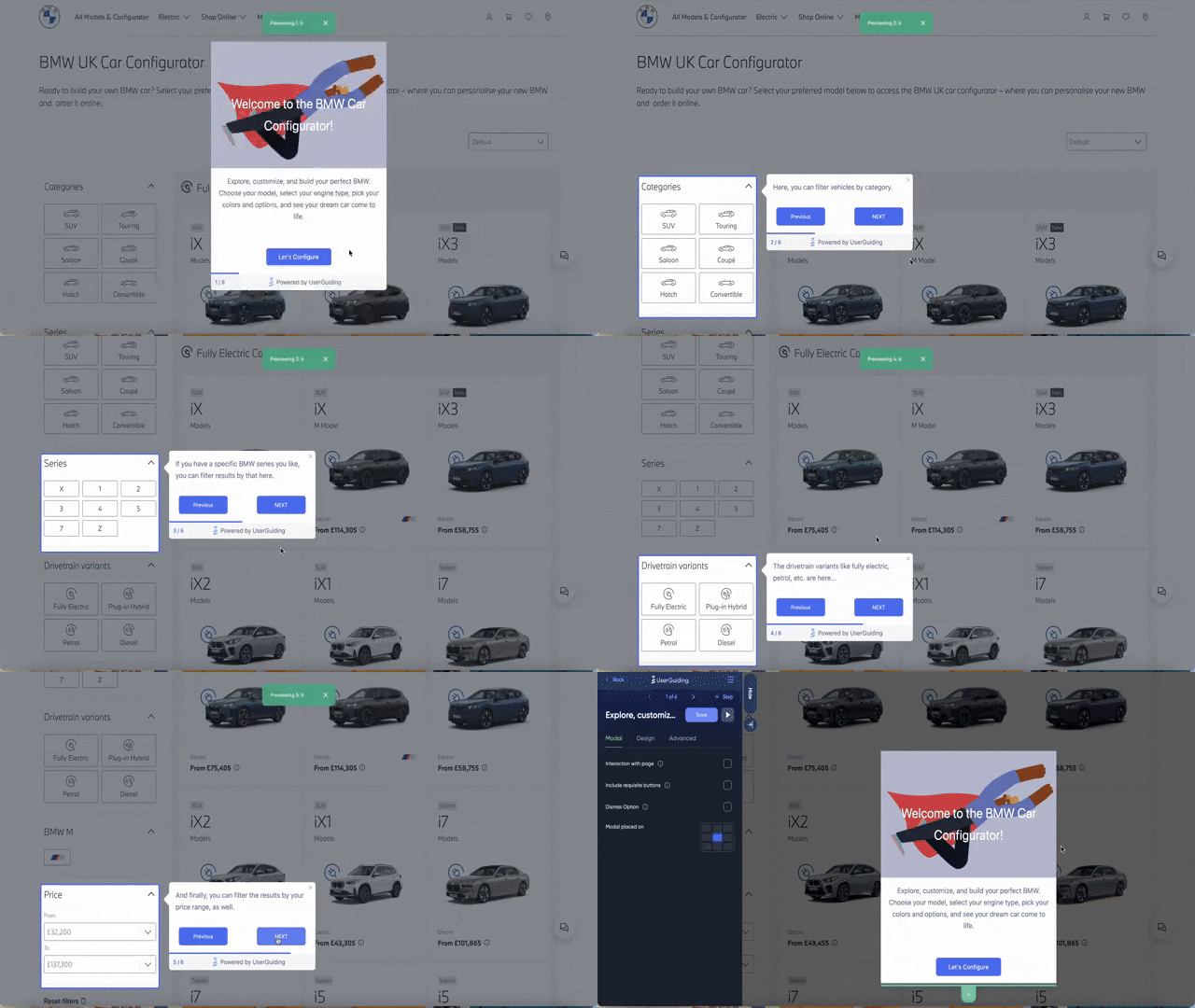
For example, you can create an interactive guide like this to walk users through your online car configurator or digital showroom:
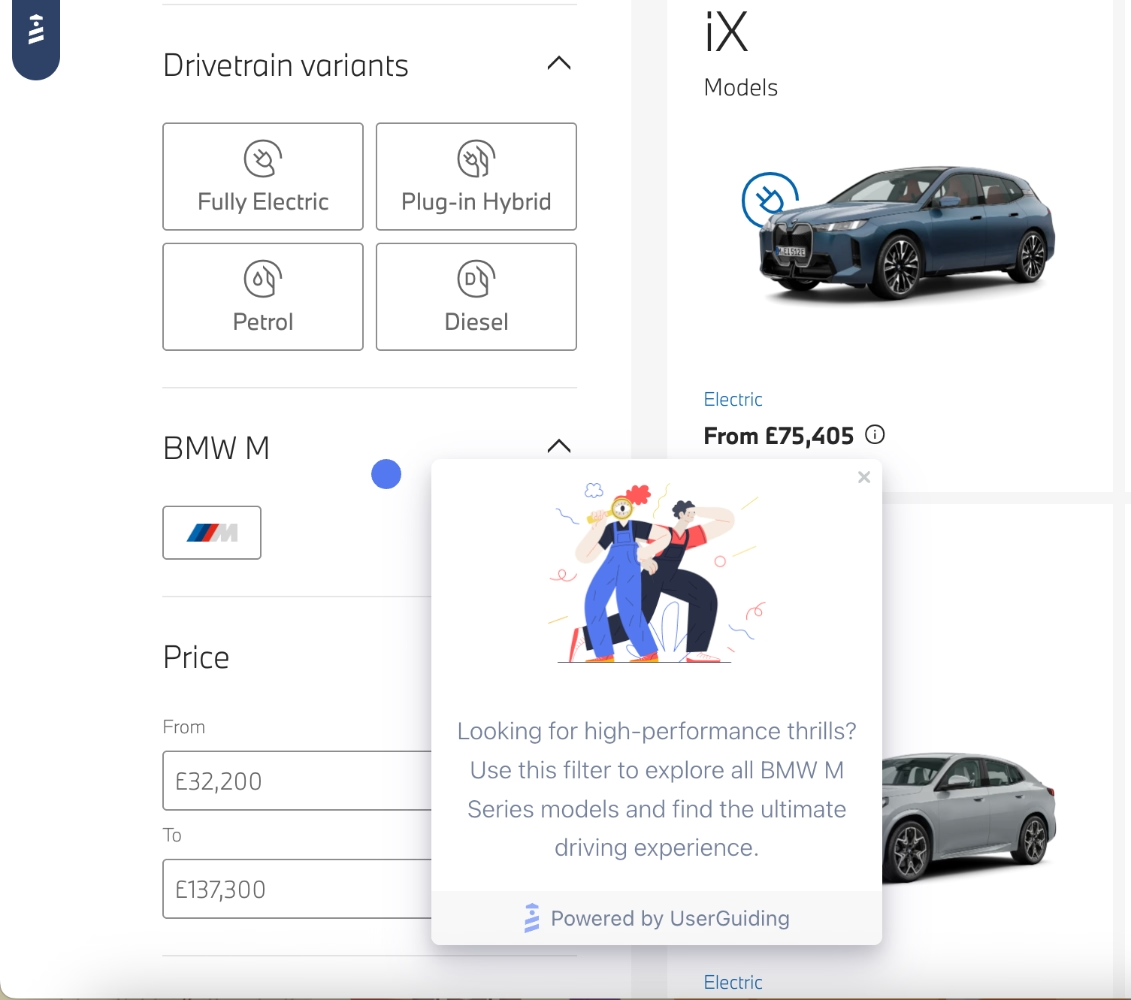
You can create a hotspot like this to drive attention to your less-known and/or underutilized filters:
Or, you can create an in-app survey to gauge customer experience satisfaction and detect friction points that cause confusion or frustration, like this:

Liked what you’ve seen so far?
Start your free trial today and explore UserGuiding’s capabilities on your own!
To wrap up…
Digital transformation is reshaping the automotive industry at every level, from manufacturing and vehicle design to customer experience, sales, and after-sales services.
Connected factories, software-defined vehicles, AI-driven tools, data-centric strategies…
The journey isn’t always simple, but those who embrace these changes are creating smarter, faster, and more personalized automotive experiences for drivers, dealers, and everyone in between.

.png)