


.svg)
.svg)
.svg)
.svg)



.svg)



.svg)
.svg)

Long gone are the days of waiting at a bus stop, hoping your ride shows up on time, or of fleet managers relying on radio calls to track trucks across states. Even deliveries have evolved: You can now follow your package’s journey in real time and get a photo confirmation when it lands at your doorstep.
Across public transit, shared mobility, and freight logistics, digital transformation is reengineering how people and goods flow.
And the gains are already materializing: Many logistics operators are reporting 10–20% performance boosts soon after implementing digital tools, and 20–40% within a few years.
In short, real-time data, automation, and AI are no longer futuristic add-ons; they’re the engines powering a faster, smarter, and more connected transportation ecosystem.
In this article, we’ll break down:
- what digital transformation in transportation means
- real-world examples of technology driving transformation
- key benefits and trends to watch for
- challenges you might face during transformation
If you’re busy, skim this TL;DR section instead👇
TL;DR
- Digital transformation in transportation means integrating digital technologies to create safer roads and make deliveries more efficient for both companies and customers.
- Key areas of digital transformation in transportation include:
- Fleet and asset tracking with telematics
- Dynamic route optimization and traffic management
- Predictive maintenance and remote diagnostics
- Digital twins
- Mobility as a service (MaaS)
- Digital transformation in transportation makes improved customer satisfaction and data-driven decision making possible by providing live updates and integrated data systems.
- Nevertheless, outdated infrastructure, integration complexity, and regulatory compliance issues could put a pressure on digital transformation efforts or completely halt them.
- With a solution like UserGuiding, on the other hand, transportation companies can make their digital tools easy to use both for customers and drivers and other employees.
What is digital transformation in transportation?
Digital transformation (DT) in transportation involves the process of integrating digital technologies into every aspect of how people and goods move: from route planning and traffic management to fleet operations, safety monitoring, and customer experience.
Digital transformation aims to make transportation more efficient, sustainable, and responsive to real-time needs. To achieve that, it connects vehicles, infrastructure, and people into one intelligent mobility network.
For example, in Merida, Mexico, the city introduced a digital monitoring system to regulate bus operations. The result was fewer maintenance issues, improved scheduling, and reduced CO₂ emissions per passenger by 9%. All without adding new buses, too.
This kind of digital oversight shows how data-driven systems can make transportation networks not only smarter but also more equitable and environmentally efficient.
What are the use cases of digital transformation in transportation?
Digital transformation in transportation comes in many forms. It’s also bridging the gap between physical movement and digital intelligence. Let’s take a look at how these concepts translate into real-life use cases 👇
1. Fleet & asset tracking with telematics
Telematics platforms are the connective tissue of modern fleet management.
They connect data from GPS trackers, onboard sensors, and dispatch systems, which gives operators a clear, real-time view of where vehicles are, how they’re performing, and whether routes are being followed.
With that visibility, managers can spot inefficiencies early, adjust schedules on the fly, and keep fleets running smoothly. And the payoff is real: According to McKinsey, predictive techniques powered by telematics can cut maintenance costs by 5–10% and boost asset availability by up to 30%.
2. Dynamic route optimization & traffic management
It’s hard to imagine digital transformation without AI. Think about the last time Google Maps suggested an alternative route because there was an accident on the highway or the traffic congestion was horrible.
An AI algorithm was behind that decision. It adjusted your route in real time based on congestion, incidents, or demand to get you to your destination on time.
These algorithms can also check load-balancing across public transport routes, prioritize emergency or high-demand corridors, and integrate live traffic data into citywide mobility platforms.
Even Google is stepping in: Its Maps and Cloud tools enable fleets to see multimodal transportation choices and adjust routes in real time, improving efficiency and reliability for operators of all sizes.
3. Predictive maintenance & remote diagnostics
In modern transportation, the old “fix‑it‑when‑it‑breaks” rhythm is no longer good enough. With predictive maintenance and remote diagnostics, vehicles and infrastructure become connected systems by continuously transmitting data (everything from vibration and brake wear to engine performance) into platforms that spot early warning signs.
Take Stratio for example: As part of their partnership with Freeway Fleet Systems in South Africa, Stratio provides real-time information to minimize breakdowns and optimize planned downtime. This allows operators to plan servicing during off‑peak periods.
Here’s what Patrick Sandy, MD of Freeway Fleet Systems, says about this partnership (and DT in transportation in general):
In the future, all transport operators will have access to a fully digitised, integrated maintenance management system that incorporates live data from vehicles on the road … improving maintenance productivity, saving costs, and helping them guarantee an even more reliable service.”
4. Digital twins for transport networks and infrastructure
Digital twins are virtual replicas of transportation systems that let cities and operators simulate traffic flows, test urban mobility scenarios, and plan infrastructure maintenance without disrupting real-world operations.
By creating real-time feedback loops between the physical and digital networks, operators can monitor performance, spot bottlenecks, and respond proactively.
For example, digital twins are being used in urban transport planning to model and optimize traffic, fleet deployment, and pedestrian flow. Nag et al. found that digital twins provide a powerful framework for evaluating scenarios and supporting decision-making in complex transport networks.
The city of Aachen in Germany is building a digital twin of its transport network and infrastructure that spans road‑and‑below‑ground assets.

The city’s digital twin integrates traffic signs, road conditions and live sensor data to run advanced traffic simulations, helping optimize mobility flows and infrastructure maintenance.
Dr. Michael Pielen explains the project’s goal:
We have two major goals. The first is to build an urban data platform where we can bundle all the data we have in Aachen. And the second is the digital twin, which takes data from this data platform. We want to make the digital twin on, above and below the road.”
5. Mobility-as-a-Service (MaaS) & shared transport
Imagine planning a trip across town without juggling multiple apps, tickets, or payment methods. That’s what Mobility-as-a-Service (MaaS) promises.
By bringing ride-sharing, e-scooters, and public transit together on a single platform, MaaS lets users seamlessly plan, book, and pay for an entire journey in one go.
It also supports subscription and on‑demand transport models, and enables simple multi‑modal trip planning and payments, encouraging sustainable and user‑centric mobility choices across cities.
👉 Read how Helsinki’s MaaS system aims to make cars redundant by 2030.
6. Digital user experience & rider engagement
Making a transit app feel easy and smart can turn a routine trip into something you actually enjoy.
Take a look at Bay Area Rapid Transit (BART)’s redesigned mobile app: It now lets riders plan trips across bike, bus and train, get real‑time updates, and even report station issues directly.
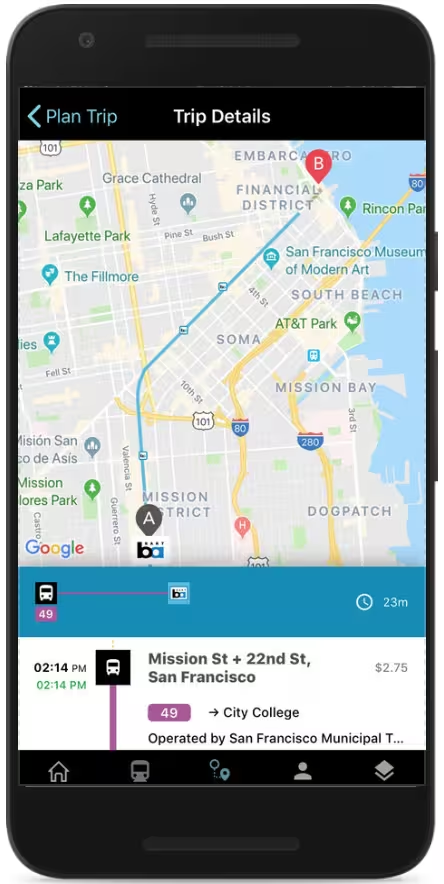
With easy onboarding, real-time alerts, and smooth transitions between buses, trains, and bikes, riders feel more confident, use transit more often, and actually enjoy the experience.
7. Integrated multimodal coordination
Ever missed a connection because your train was late or the bus schedule didn’t line up? Integrated multimodal coordination fixes that.
By sharing real-time data between rail, bus, metro, and even air systems, cities can automate schedules and optimize connections so passengers spend less time waiting and more time moving.
Take Singapore’s Smart Mobility 2030 initiative, for example: Its integrated transport platform links buses, trains, and ride-hailing services in real time, giving commuters live updates, smoother transfers, and more reliable trip planning.
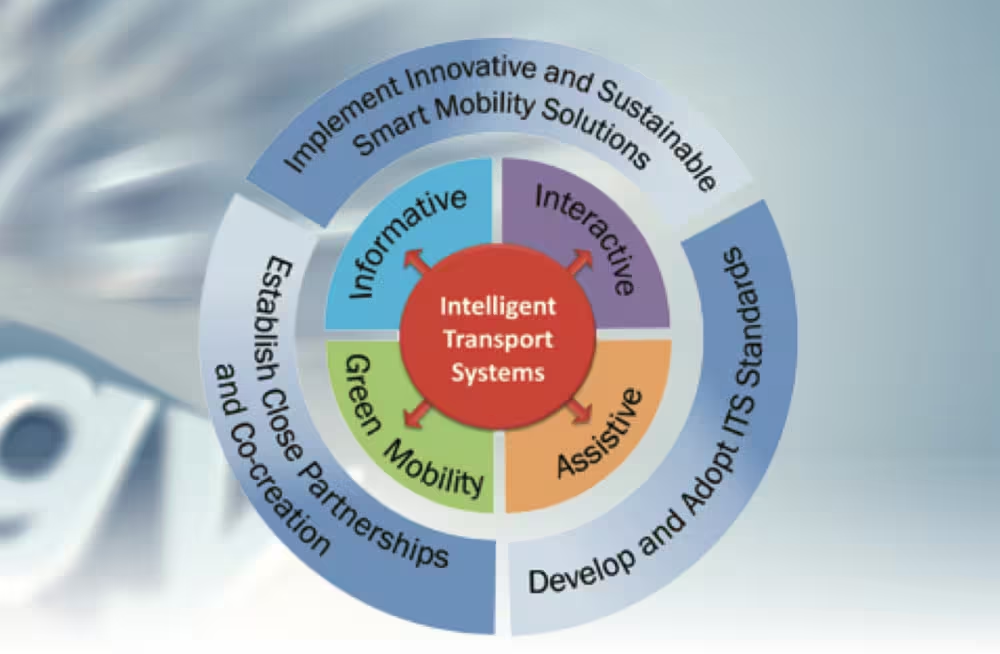
The result? A city where hopping between transport modes feels as easy as pie rather than stressful.
What are the benefits of digital transformation in transportation?
- Improved asset utilization and fleet efficiency: Let’s be honest. No one likes seeing expensive trucks sitting idle in a lot. With digital tools and real-time analytics, transportation companies can finally squeeze every drop of value from their fleets. Smarter routing, predictive maintenance, and live tracking mean fewer breakdowns, less fuel waste, and vehicles that spend more time doing what they’re meant to do: move.
- Enhanced customer satisfaction through transparency: Ever nervously refreshed a tracking page wondering, “Where on earth is my package?” Yeah, your customers have too. With digital transformation, you can give them the transparency they crave (live updates, accurate ETAs, and instant alerts) when plans change. It gives them a peace of mind wrapped in a push notification.
- Data-driven decision making across operations: With integrated data systems, transportation leaders can spot trends, predict problems, and make quick, confident decisions. Think of it as having a GPS for your entire operation, not just pointing where to go, but warning you when traffic’s about to hit.
8 examples of technology driving transportation transformation
1. Uber’s in-app onboarding
Uber is a transportation company that provides ride-hailing, food delivery, and freight services.
Through its app, it connects drivers with users so they can request a ride, track their arrival, record conversation in the vehicle for safety, pay electronically, and see an estimated cost before scheduling a service.
Here’s how Uber onboards users to its app👇
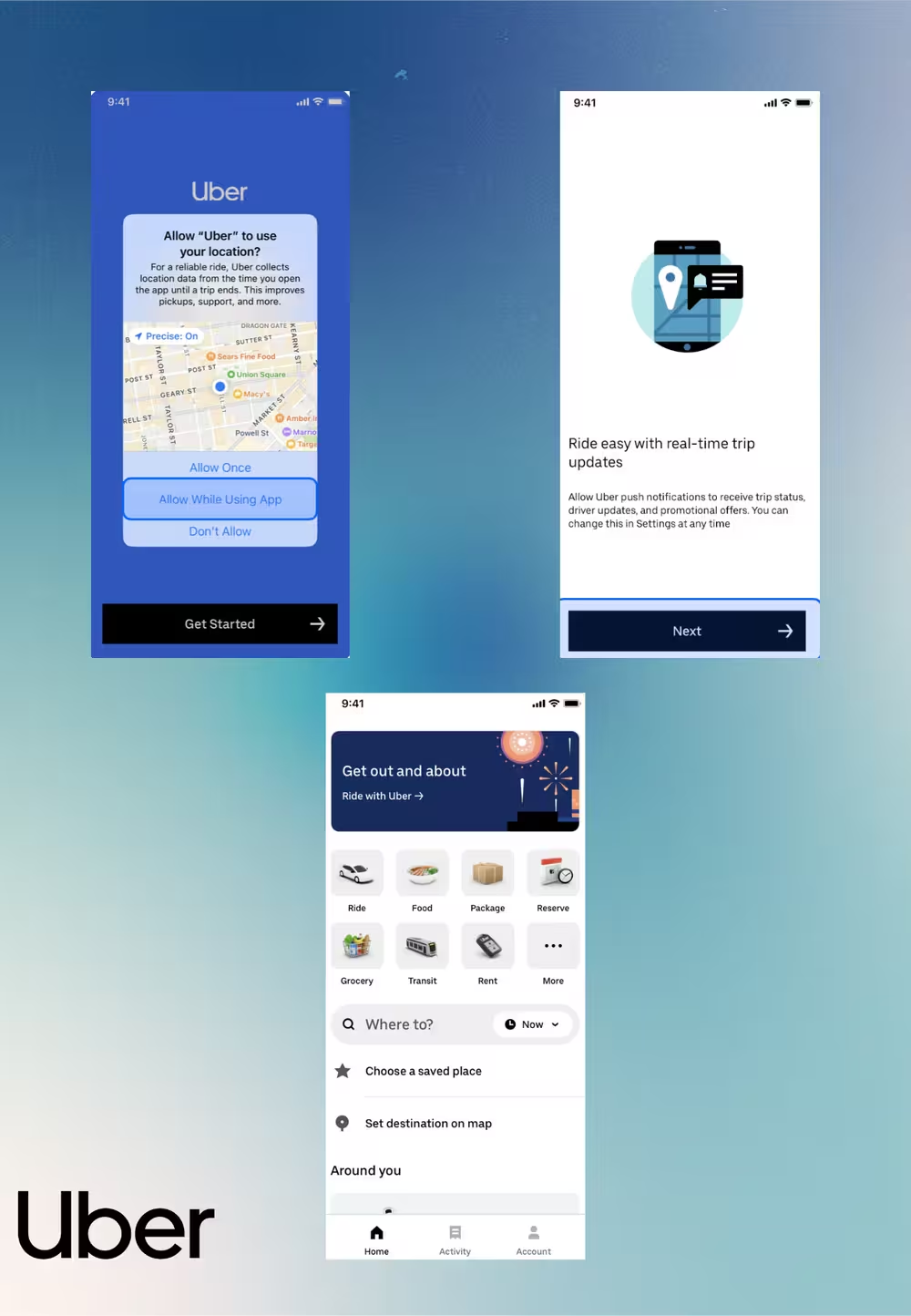
Each step of the onboarding flow helps users to set preferences, get real-time updates, and share their location for accurate transportation.
What makes this a good DT example?
✅ Demonstrates how a digital platform can unify the entire user journey (from onboarding to payment) making transportation more accessible, transparent, and personalized
2. DHL’s dedicated Accelerated Digitalization unit
DHL, a global leader in logistics and shipping, is launching a new digitalization structure. To improve their AI-integrated solutions and fast-track their digitization, DHL will revamp its DHL Global Forwarding service for back-office operations, deploy AI-powered customs clearance globally, and launch a new digital concept to support its small-to-mid-sized customers.
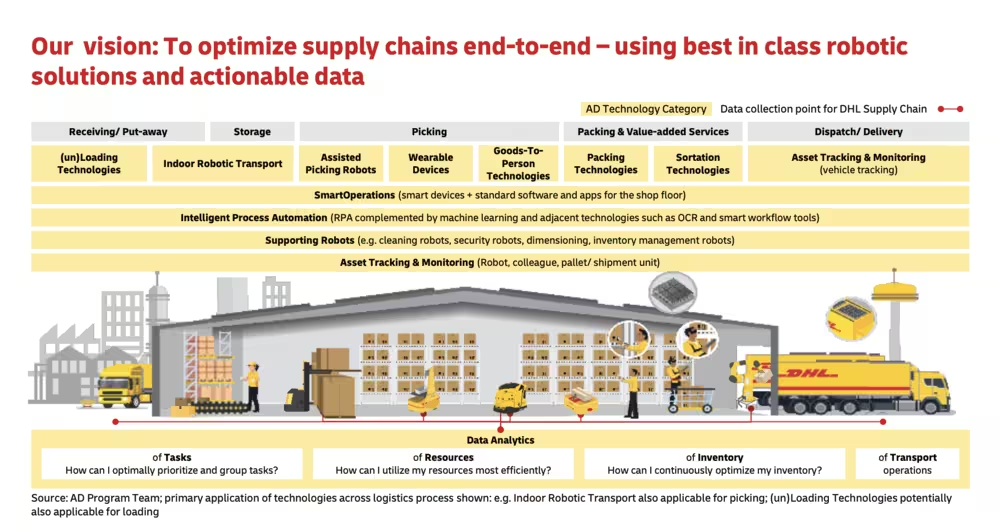
Dispatch and delivery of goods are monitored by asset tracking with robots, human colleagues, and pallet/shipment units. Before dispatching, goods are also transported by indoor and goods-to-person robots.
What makes this a good DT example?
✅ Shows how large transport and logistics organizations can modernize legacy operations with AI-driven automation and data integration to improve speed, visibility, and efficiency
3. Foley’s automated driver files
In collaboration with Foley, Torc–a growing trucking company–reduced nearly 50% of Torc’s time usually spent on Excel.
The solution was simple: Instead of manually entering and tracking data, Torc trusted Foley’s expertise (and digitization efforts) to remain compliant, monitor driver safety, and be audit-ready every day.
The team at Foley worked closely with Keith Johnson, Torc’s Compliance Manager, who needed a custom software stack that would meet their exact compliance needs and grow with them as the number of drivers and trucks added to their fleet grows.
As Torc takes driver safety and compliance seriously, even when testing advanced self-driving systems, they decided to use Foley’s continual MVR monitoring to flag any driver violations in real time and ensure all safety drivers stay within strict driving limits and rest requirements.
Here’s what Johnson had to say👇
We were able to take all of our Torc driver files and easily incorporate them into the Foley system. It has made my life a whole lot simpler. My mantra is always ARE: Audit Ready Everyday. We hold ourselves to a higher standard.”
What makes this a good DT example?
✅ Illustrates how automating compliance and safety monitoring transforms daily operations, reducing manual work while ensuring continuous audit readiness
4. Transport Consortium of the Principality of Astrurias’ KYC technology
The Transport Consortium of the Principality of Astrurias wasn’t a stranger to digitalization. The Consortium had a mobile transportation app for visitors and residents to make the ticket purchasing easier.
However, the app would navigate users to a form on the Consortium’s website or to visit its facilities to be able to apply and recharge a smart card. Not only did it make access difficult for some people, but it also lengthened the time needed to get a single ticket.
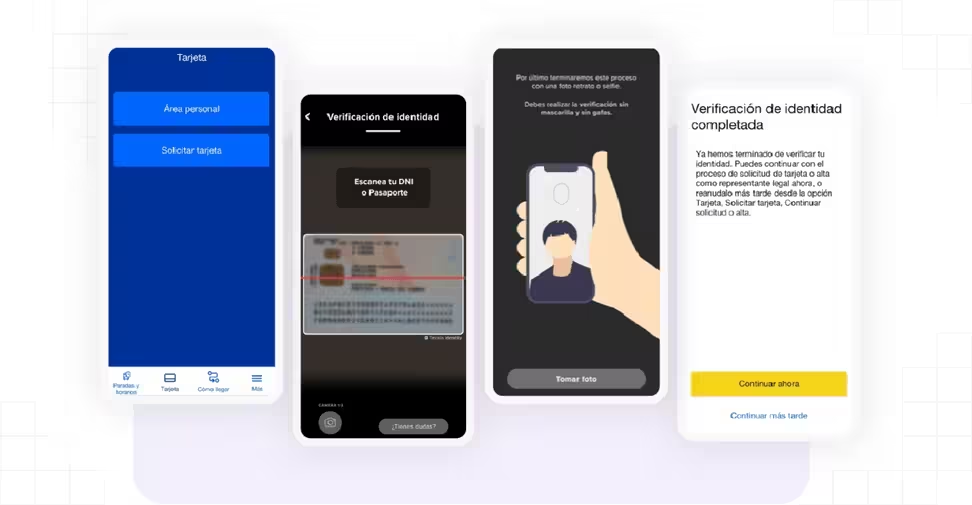
After integrating the KYC (Know Your Customer) technology into its system, the Consortium was able to improve its user onboarding, registration, and access to services and the smart card application.
What makes this a good DT example?
✅ Highlights how integrating digital ID and KYC verification can streamline public transit access, improving inclusion and user convenience
5. Seaboard Transport Group’s driver training
If you’re serving a large area, one of the challenges is to complete drivers’ training without compromising on the quality of your customer service. It’s a challenge that Seaboard Transport Group knows all too well.
With drivers across North America, in-person onboarding and training soon proved to be expensive and time-consuming.
But onboarding and training aren’t something you can throw to the wind, especially if drivers are transporting petroleum, chemicals, food, and refrigerated freight as Seaboard Transport Group does.
To reduce training costs but maintain high standards of safety, Seaboard Transport Group adopted a digital solution as its learning management system. The company no longer needs to schedule training days, book conference rooms and hotels, and spend multiple days on location.
Instead, all drivers now need is a computer and internet connection. Training progress is possible whenever drivers have free time, and the flexibility actually helps them engage more.
Digitalization also made Seaboard Transport Group’s onboarding more structured and repeatable.
Here’s how eLearning changed Andrew Steeves’ job as a Seaboard Group driver👇
What makes this a good DT example?
✅ Proves that digital learning systems can cut costs, boost engagement, and standardize safety training across a dispersed, on-the-road workforce
6. TFS Express Logistics’ digital compliance management
“Digitalization takes most of the worry away. It empowers our drivers and helps the operational team manage the fleet effectively,” Jim Jackson, Director at TFS Express Logistics, says.
Before digitalization, TFS Express Logistics handled everything manually. They had their own spreadsheet system, relied on phone calls and emails to report defects. Not only were these options less reliable, but it was easy for details to fall through the cracks.
Now, TFS Express Logistics gets personal support to make the switch to their new digital system. The company can easily generate and access reports, see at-a-glance the defects and whether the cost is justifiable, and manage the fleet effectively.
What makes this a good DT example?
✅ Demonstrates how digitizing fleet compliance and maintenance workflows reduces errors, improves visibility, and empowers both drivers and managers
7. Bonjour RATP’s multi-modal transportation design
Bonjour RATP app navigates more than public transportation in Paris, or Île-de-France region. It’s a one-stop hub for all tourists and residents: Do you want to rent a bike through Lime, Dott, Vélib, or Voi? Just open Bonjour RATP on your device and locate the nearest one.
Here’s a step-by-step instruction (in French)👇
The app’s design makes it easy for travelers to:
- find transportation options (bike, bus, métro, etc.)
- load fares onto the app and validate using your phone
- purchase weekly or monthly passes without going to an in-person store
- find out which lines you need to use to get to your destination quickly
- get real-time updates
- make payments with a few clicks
After all, a city that never sleeps also needs a digitalized app that doesn’t miss anything.
What makes this a good DT example?
✅ Exemplifies multimodal mobility done right: one digital hub connecting bikes, metros, and buses for seamless, real-time urban travel
8. Lyft’s solution to identity confusion
Similar to Uber, Lyft offers a ride-hailing app that connects users with drivers for on-demand transportation. Before 2020, users could easily request rides for themselves, get real-time updates, and make online payments.
However, they weren’t able to request rides for other people, like friends and family.
To be able to do that, they needed to manually edit the address to match the pickup location you wanted to order a ride for.
That’s where the identity confusion began: Drivers would pick up the rider only to realize the photo and name in the system didn’t match with the person getting into the car. The rider doesn’t have any information about the status of their ride, while drivers would ask about the pickup location to the person who ordered the ride.
The man behind the “Change rider” feature on Lyft, Kyo Kim, explains the impact of such confusion:
How many people do this? Does it make a good or bad impact? We worked with the data scientists to figure out the amount of people impacted. And my researcher and I captured all the bad impacts: higher cancellation rates, longer pickup time, more phone calls from the driver.”
Based on research and collaboration with data scientists, Kim found out that a large percentage of rides requested were actually for other people. After many presentations, ideation stages, and long collaboration, Kim designed the feature which would later be known as the “Change rider” option.
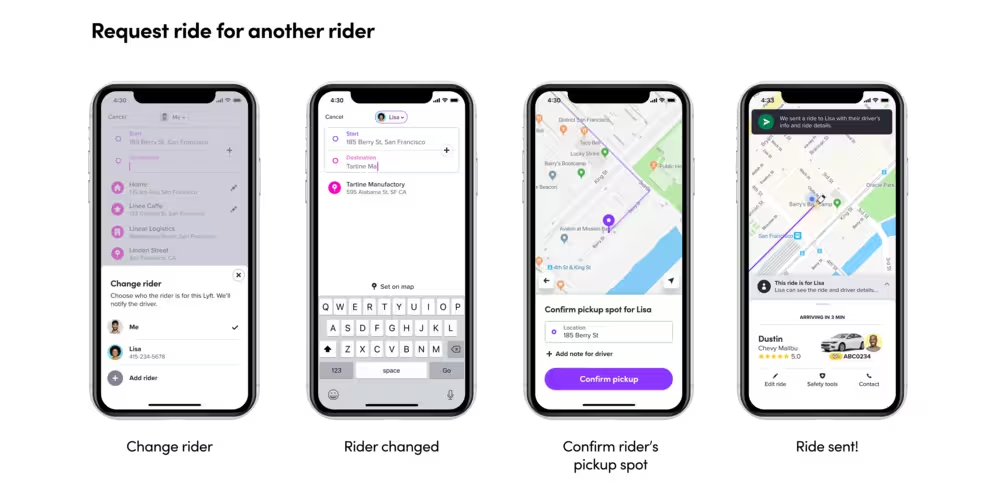
What makes this a good DT example?
✅ Shows how data-driven UX design and research can solve real customer pain points, creating a safer, more intuitive ride-sharing experience
Obstacles to digital transformation in transportation
Industry barriers are blurring, new innovations are emerging almost daily. Such a high speed of change comes with its own set of challenges👇
- Outdated infrastructure and siloed data: You can’t build a smart transport network on yesterday’s systems. Many agencies still rely on legacy hardware and disconnected databases, making it nearly impossible to access or share real-time insights. Until this digital foundation is modernized, every other innovation hits a wall.
- Integration complexity and interoperability gaps: Even the best ideas fall apart without connection. Getting rail, bus, and micro-mobility systems (not to mention private platforms) to communicate in real time is a massive lift. True interoperability demands shared standards and trust between players who haven’t traditionally collaborated.
- Regulatory and safety compliance pressures: Transport is one of the most regulated industries in the world and for good reason. But as automation, AI, and data analytics enter the mix, compliance becomes a moving target. Teams must find a way to innovate fast without crossing the lines drawn by evolving safety frameworks.
- Cultural resistance and skills gaps: Technology can move faster than people. Many transport agencies still operate with hierarchical cultures and paper-based workflows that resist digital change. Without buy-in, upskilling, and a shared vision, even the smartest systems struggle to take root.
➡️ “It is fair to say that digital transformation is way more about people than it is about technology,” says Daniele Capasso, Vice President Digital Transformation at Volvo Group. Just as Capasso explains, digital transformation requires that organizations must invest in culture, mindset shift and upskilling, not just hardware and software.
- High costs and unpredictable ROI: Digital transformation isn’t cheap and its benefits rarely show up overnight. From integrating new software to retraining entire teams, the upfront costs can be daunting. The challenge lies in proving value early while keeping long-term payoffs in sight.
Transportation digital transformation trends
From streamlining traffic management to cutting emissions and elevating passenger experiences, transportation leaders are turning to digital innovation to redefine mobility.
The biggest trends steering this evolution?
Think last-mile delivery innovations, data-powered infrastructure management, the rise of Mobility as a Service (MaaS), and the collective push toward greener, low-emission transportation.
Let’s explore how each of these trends is redefining the future of transport 👇🏻
Last mile delivery
You wake up a day before Halloween to check your order status and the “Track your order” button reveals that your package has already arrived and left the carrier facility for delivery. This is “last mile delivery,” the last leg of moving passengers or goods from a transportation hub to a final destination (usually your home address).
With 20 to 25% customers wanting same-day or instant delivery if it were available at lower prices, last mile delivery becomes even more important, but also more challenging.
Road closures, heavy traffic, and weather changes can lead drivers to tackle more than just packages, and turn a simple route into a puzzle. As MIT researcher Matthias Winkenbach puts it,
No city is the same and within a city we don’t see two areas that are the same—you have to learn from previous delivery processes to become more efficient. We can build fancy models but if policy makers and companies don’t understand them, they have no impact.”
That’s why the latest trends are moving towards full digitalization: live routing, drones and robots delivering packages, and personalized delivery options.
Infrastructure and traffic management
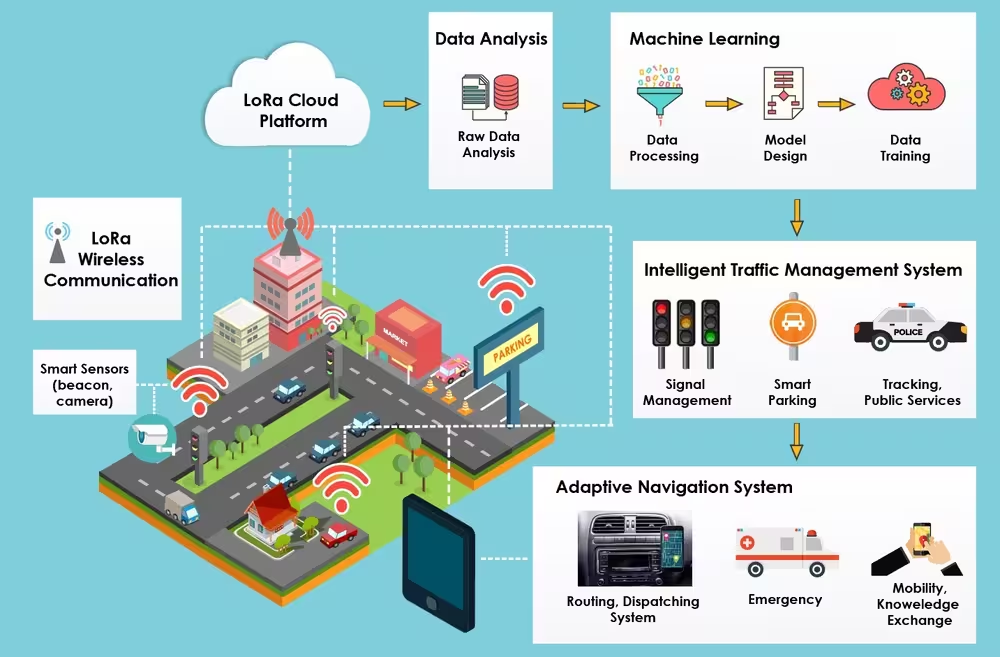
Digital transformation in transportation starts on the road. And smart infrastructure and traffic management are the driving forces behind it.
To be able to do that, industry leaders rely on intelligent transportation systems.
These systems improve road safety and optimize traffic flow by integrating GPS-enabled devices, adaptive traffic signals, as well as vehicle-to-infrastructure communication and incident detection.
Mobility as a Service (MaaS)
Mobility as a Service (MaaS) refers to a transportation model that enables users to plan, book, and pay for multiple travel options in a single digital platform. Its promise is simple: create “smart cities” by simplifying transportation and make urban mobility more sustainable.
Remember Bonjour RATP we’ve discussed a bit earlier? That’s a great example of MaaS. You can start with a bike-rental, then switch to métro, and end your journey by bus. All within a single app.
McKinsey estimates that consumers’ yearly spending on shared mobility will be $0.5-1 trillion by 2030, which makes MaaS all the more important for easy access. MaaS will also be more convenient (one app for multiple functions) and save costs for users (choose the cheapest option on the app).
Reducing carbon emissions
Though the legitimacy of the Paris Agreement has been challenged by the public perception, sustainability has remained a consistent trend and point of criticism for large corporations as well as the rich (Remember when Twitter accounts tracking celebrities’ jet usage became viral?).
According to research, digital transformation in transportation reduces the industry’s carbon intensity. From electric cars to automated order confirmation and non-delivery reports, digital transformation could amount to $4 benefit for every dollar invested and reduce expected emissions in 2030 by 25%.
How does UserGuiding help the digital transformation in transportation?
With a no-code digital adoption platform like UserGuiding, you can create and localize in-app experiences and onboarding journeys.
Specifically, UserGuiding aims to help companies make their digital tools easier to use, including transportation companies. By guiding employees and passengers through new systems step by step, adoption feels simple, not overwhelming.
To help you achieve that, UserGuiding offers:
- Step-by-step product walkthroughs and onboarding guides
- Tooltips, hotspots, modals
- In-app surveys
- Onboarding checklists
- Resource centers and knowledge bases
- AI assistants
- Product update pages
- User segmentation
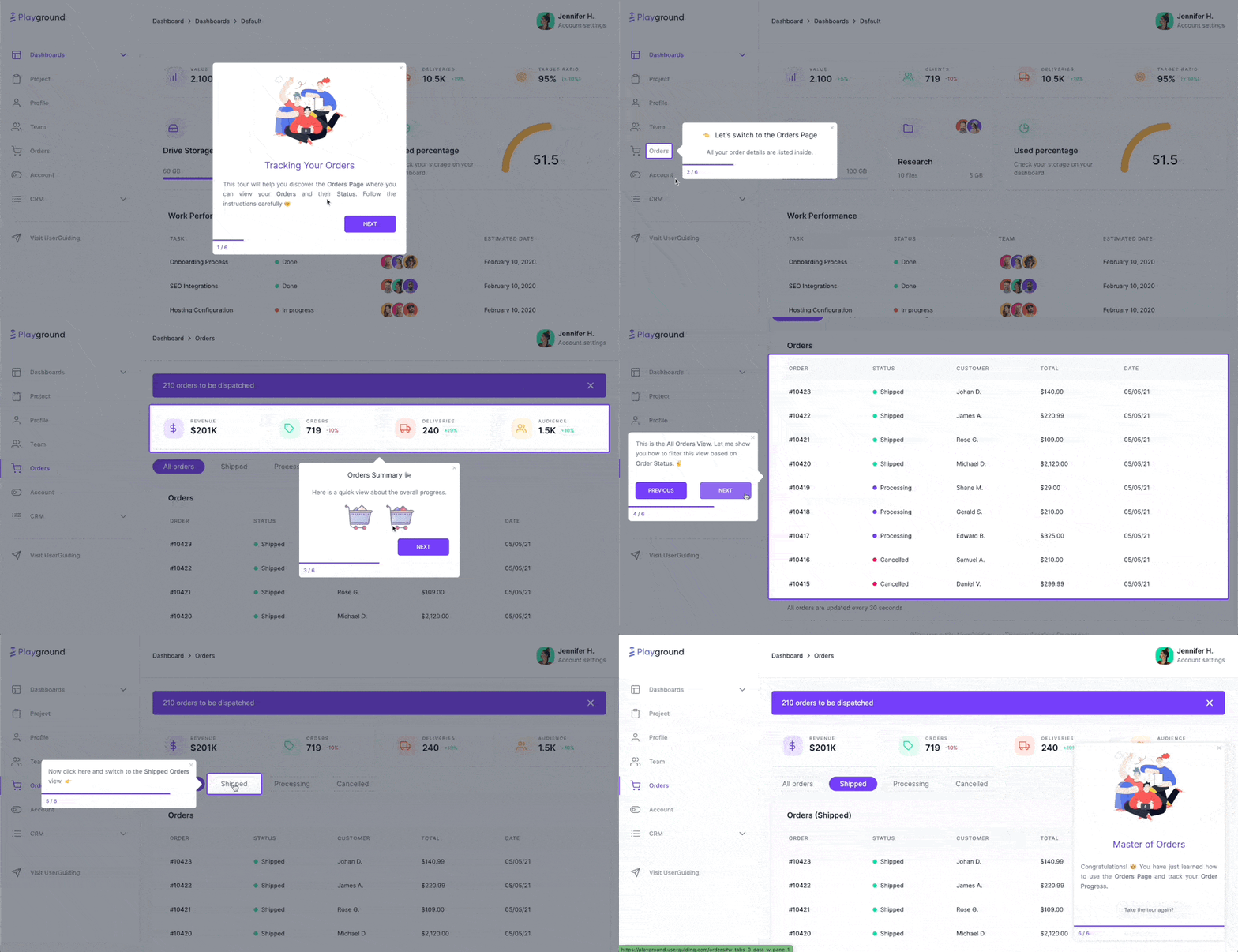
For example, you can add tooltips, hotspots, and modals to highlight specific sections of your dashboard or web app, like this 👇
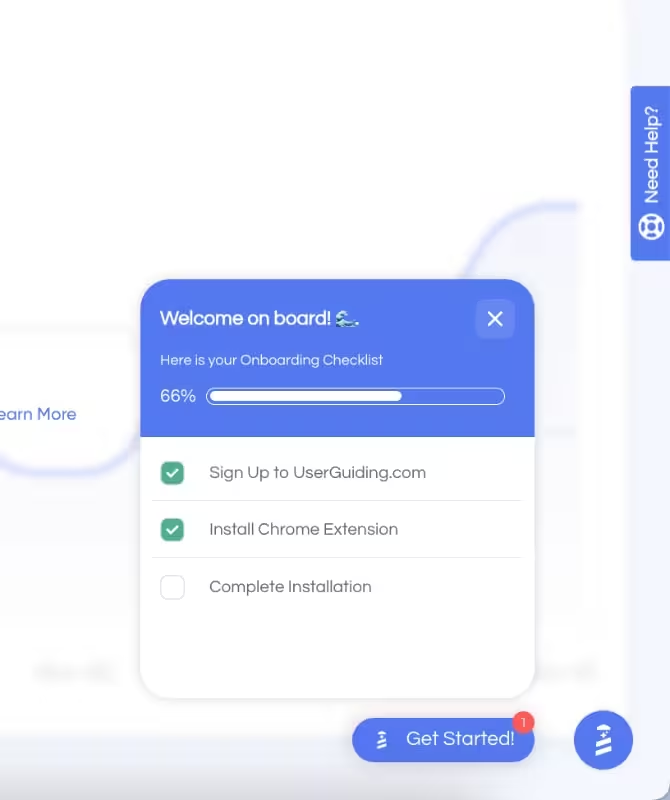
Similarly, you can create onboarding checklists for drivers that go over the key tasks and educational materials, like this👇
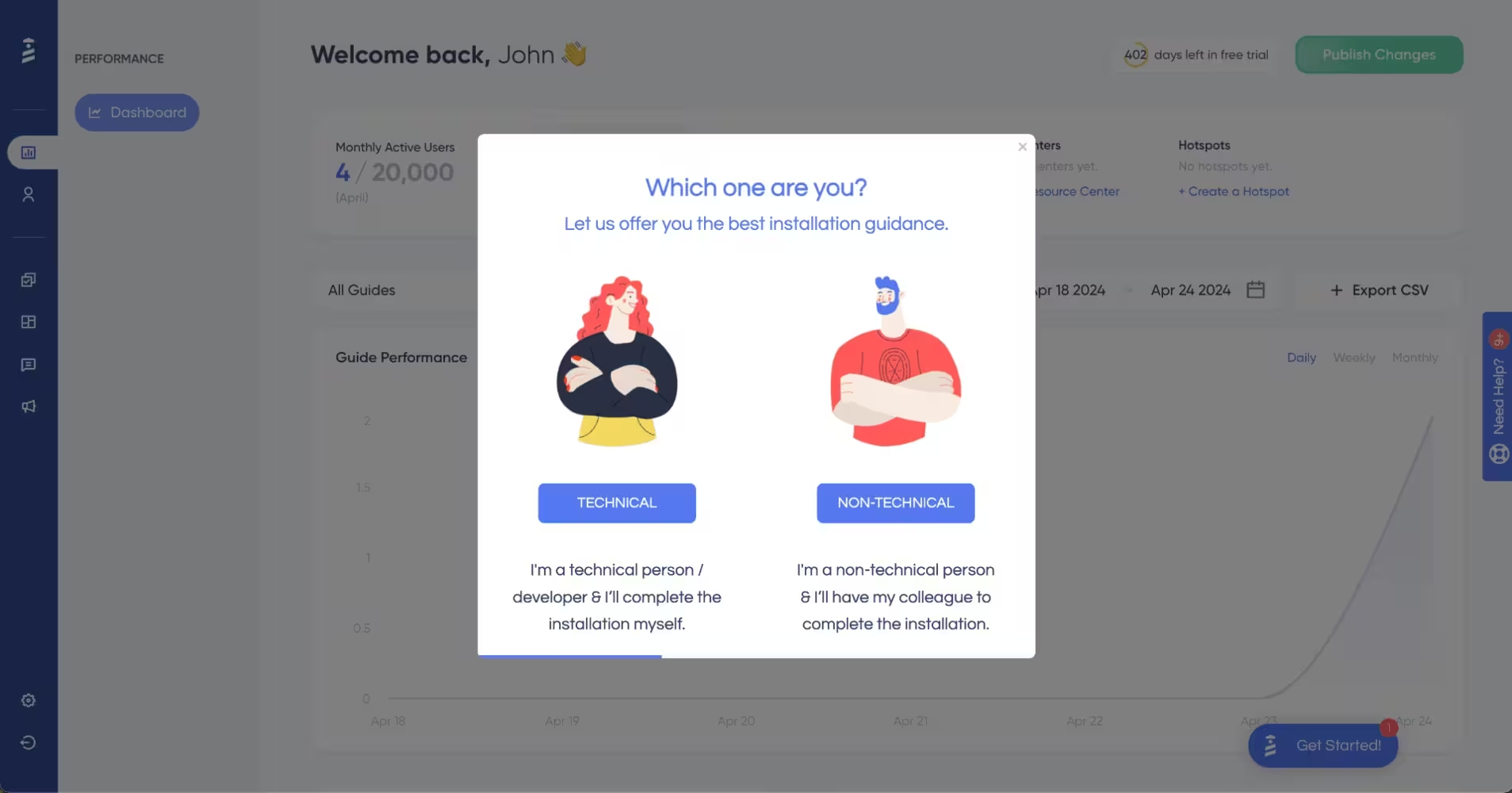
Or, you can segment your user onboarding by user role. In other words, drivers on the mobile app would see different content from, let’s say, dispatchers or customers on the portal. It would have a similar look to this (and can be customized to your brand as well)👇
To start your custom digital transformation journey, start a free trial with UserGuiding today!
Conclusion
It’s no surprise that digital transformation improves the transportation industry by smoothing over the traffic issues, improving last mile delivery, and enabling real-time data for better decisions.
But it’s not easy to convince stakeholders for investment or getting employees to adopt a new technology. With the right digital adoption tool (like UserGuiding, *wink wink*), clear roadmap, and funding, you can stay ahead.

.png&w=3840&q=75)