

.svg)
.svg)
.svg)
.svg)



.svg)



.svg)
.svg)

From smarter patient care to more efficient hospital workflows, the future of healthcare is looking more connected, personalized, and tech-driven than ever.
In this article, we cover:
- How digital transformation is shaping healthcare today
- Real-life examples of healthcare organizations embracing technology
- Common obstacles that slow down tech adoption in healthcare
- How you can start your digital transformation journey with UserGuiding
Ready when you are!
TL;DR
- Healthcare is going digital fast, from how patients book appointments to how doctors perform surgery. We’ve seen inspiring examples of tech adoption improving care, reducing staff stress, and making systems run more smoothly.
- Most popular use cases of digital transformation in healthcare include:
- Telemedicine and remote patient monitoring
- Electronic health records (EHR) and data management
- AI-powered diagnostics and clinical decision support
- Personalized treatment and precision medicine
- Robotic and minimally invasive surgeries
- Patient apps and digital front doors
- Big data and predictive analytics for population health
- Automated and digital billing, insurance, and inventory management
- Staff training/onboarding through e-learning and MOOCs
- Of course, it’s not all easy. Data silos, compliance rules, usability issues, increased by technical skill gaps, and resistance to change, still slow things down.
- However, tools like UserGuiding can help both patients and healthcare workers actually use all this new tech and software, through simple onboarding flows, guides, and support hubs.
What is digital transformation in healthcare?
Digital transformation in healthcare is the use of digital technologies to improve how care is delivered, managed, and experienced. It involves reshaping processes, systems, and interactions to create more connected, efficient, and patient-centered healthcare.
This shift takes many forms.
- Hospitals digitize administrative workflows to cut down on paperwork and errors.
- Doctors use electronic health records that can move seamlessly across providers and care settings.
- Patients receive education, monitoring, and treatment remotely through mobile apps, wearable devices, and telemedicine platforms.
- Artificial intelligence and data analytics support faster diagnoses, predict health risks, and guide better decisions.
Transformation also extends into operations and workforce development.
Healthcare employees can also be onboarded with digital tools, and some parts of the new employee onboarding process can be automated.
What are the use cases of digital transformation in healthcare?
Digital transformation in healthcare becomes easier to understand when you look at where it creates impact. Most use cases fall into 2 main areas:
- the relationship between doctors and patients,
- and the systems that keep hospitals running
✅ On the doctor-patient side, digital tools and software make care more accessible, more personalized, and more continuous.
✅ On the hospital side, digital practices streamline administration, automate billing, secure patient data, and even optimize supply chains.
With these two frameworks in mind, let’s explore the individual use cases that bring digital transformation to life in healthcare.
Digital-first patient onboarding and education
Patient onboarding is the first impression patients have of a healthcare provider, and digital tools are changing how this process works.
Instead of filling out stacks of paperwork at the reception desk, patients can now go through digital check-in processes where they register, share their medical history, and verify insurance online before their first visit.
Here’s an example digital intake form and a check-in reminder email from CarePortals:

This shift saves time for both patients and staff.
⚡ In fact, implementing a digital pre-registration system in a healthcare setting can cut patient time at the front desk by over 75%.
But registration is only the beginning.
A complete onboarding experience typically follows several steps.
After initial verification, patients move on to consent and compliance, where they review privacy notices and sign consent forms. Providing these digitally, with multilingual options, makes it easier for patients of different backgrounds to understand what they are agreeing to.
Orientation comes next, where patients receive clear instructions about what to expect, sometimes through emails, SMS messages, or even short videos.
There are also digital follow-ups, aftercare instructions, feedback surveys…
Electronic health records (EHR) and interoperability
Electronic health records (EHRs) are digital versions of a patient’s medical history. Unlike paper charts, they bring together information such as diagnoses, lab results, prescriptions, allergies, and imaging reports in one place.
Some widely used EHR systems include Epic, Oracle Health, Veradigm, and Meditech, which are adopted by hospitals and clinics worldwide.
Besides patient record storing, modern EHR platforms also allow you to:
- Share patient data across healthcare teams, departments, and hospitals
- Integrate with other diagnostic tools and systems
- Provide patient portals where individuals can access their own records
They create a foundation for safer, more coordinated care.
👉🏻 When clinicians can see a complete patient history, they make better decisions, avoid redundant tests, and reduce the risk of medical errors.
👉🏻 For patients, EHRs mean fewer forms to fill out repeatedly, easier access to personal health data, and a more consistent care experience across different providers.
As Henning Schneider, CIO of Asklepios Hospital Group in Germany, puts it:
Digital maturity is so important to get all the data together, to combine the data, to deliver the right information to the doctors, to the ones who are running the healthcare delivery.”
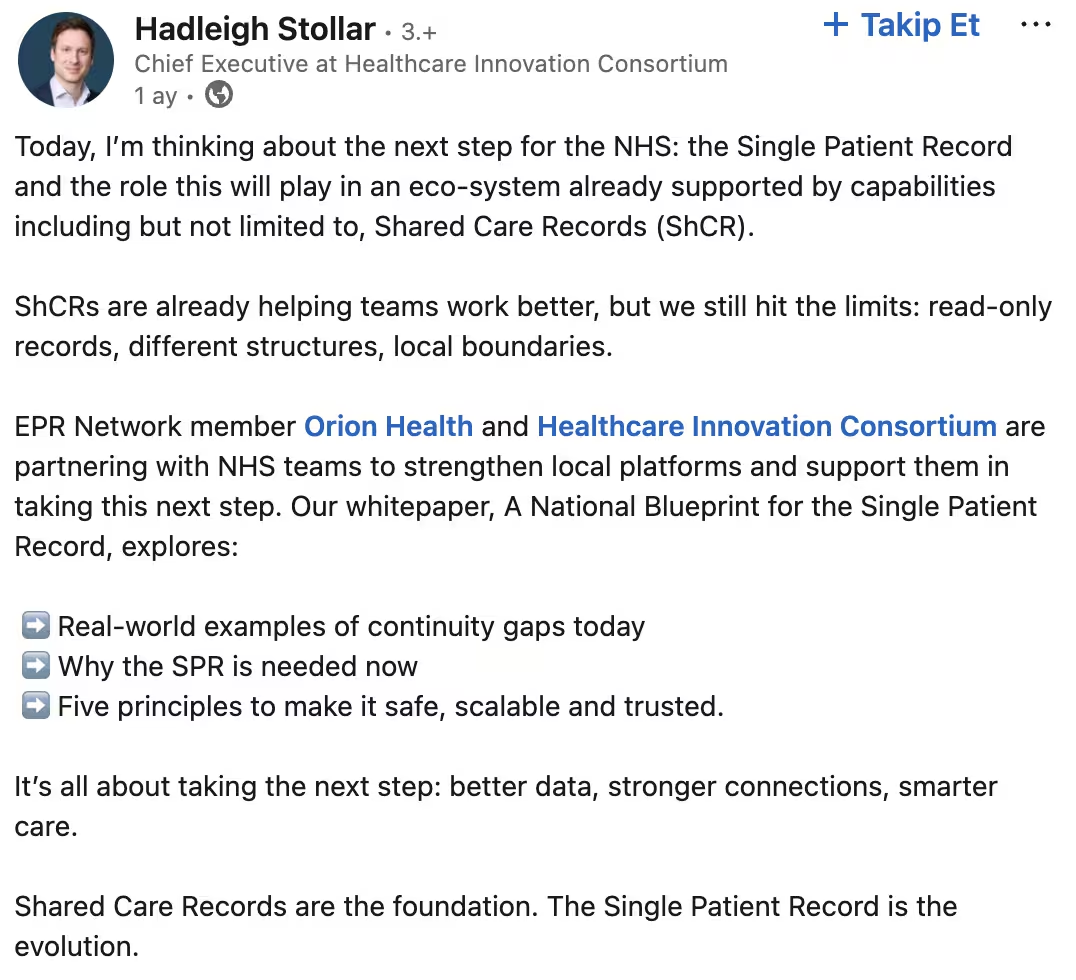
A strong example of this vision is NHS England’s move toward a Single Patient Record (SPR). The SPR is designed to give clinicians a unified view of each patient’s history, no matter where they received care.
Patients can read, update, and even share joint care plans, while clinicians gain seamless access across primary, acute, and community care.
Importantly, the SPR builds on existing systems like Electronic Patient Records (EHRs) and Shared Care Records (ShCRs), connecting them rather than replacing them.
Telemedicine and virtual care
Telemedicine is the practice of delivering healthcare remotely through digital communication technologies such as video calls and phone consultations. Instead of visiting a clinic in person, patients can connect with doctors from their homes (or wherever they are, really).
This makes care more accessible, especially for people in rural or underserved regions where medical services may be limited.
⚡ According to research, telemedicine adoption has grown at an extraordinary pace over the past decade.
From 2015 to 2019, the number of providers offering telehealth services rose by more than 300%. The pandemic accelerated this shift, making virtual visits a routine part of healthcare delivery.
By 2021, telemedicine was recognized as the leading trend in the healthcare industry, and projections show the global market is on track to surpass $130 billion by 2025.
Besides improving accessibility, telemedicine lowers costs and boosts efficiency.
For example, a study conducted in Japan after COVID-19 showed significant cost savings after the wide adoption of telemedicine practices.
AI-driven diagnostics and triage
Artificial intelligence is increasingly used to support diagnostics and triage in healthcare. These tools analyze medical data, such as imaging, lab results, or patient-reported symptoms, and provide clinicians with faster, more accurate insights.
With AI-driven diagnostics tools, doctors can:
- Detect anomalies in radiology scans,
- Identify cancer cells in pathology slides, and
- Flag potential complications earlier than traditional methods.
AI has started to play an important role in triage, as well.
Chatbots and symptom-checker applications guide patients through structured questions and direct them to the appropriate level of care, whether that means self-care, a primary care appointment, or urgent treatment.
Here’s an example symptom-checker app, Symptomate:

Clinical decision support systems (CDSS)
Clinical decision support systems (CDSS) are digital tools that assist clinicians by combining patient-specific information with medical knowledge to provide recommendations at the point of care.
They are often integrated with electronic health records (EHRs) and computerized provider order entry (CPOE) systems; and they can run on desktops in hospitals, tablets in clinics, or even mobile apps connected to wearable devices and biometric monitors.
Now, CDSS do not replace medical judgment.
But rather, act as an extra layer of support, offering alerts, reminders, or treatment suggestions that help clinicians make more informed choices.
A CDSS might, for example, flag a dangerous drug interaction during prescribing or suggest further tests when certain symptoms align with a potential diagnosis.
Broadly, CDSS come in 2 forms.
- Knowledge-based systems rely on programmed medical rules (think “if X, then Y”), often drawn from research or clinical guidelines.
- Non-knowledge-based systems use AI and machine learning to detect patterns in large datasets and generate recommendations without relying on pre-set rules.
⚡ According to market research, the global CDSS market was valued at around $1.6 billion in 2023 and is expected to more than double by 2032, with a growth rate of about 10% annually.
Remote patient monitoring (RPM)
Remote patient monitoring (RPM) uses connected devices to track patients’ health outside of hospitals and clinics.
With tools like blood pressure cuffs, glucose meters, smart inhalers, and sleep monitors, clinicians can keep an eye on chronic and acute conditions such as heart disease, diabetes, asthma, or even high-risk pregnancies.
👉🏻 For patients, RPM reduces the need for frequent office visits and gives them more control over their own care.
👉🏻 For providers, it offers a steady stream of real-world data, making it easier to respond quickly to changes and spot long-term health trends.
A good example of RPM comes from Mayo Clinic’s approach to cardiac monitoring.
Traditionally, patients had to wear harnesses for weeks, return the device for data uploads, and often repeat the whole process if no abnormalities were detected.
In 2023, Mayo Clinic started to mail patients a compact MoMe Kardia device that tracks ECG and motion data continuously. The data flows in real time to rhythm analysis technicians, who can spot irregularities as they happen and coordinate care immediately.
Healthcare mobile apps (mHealth) and patient portals
As healthcare shifts toward person-centered care (PCC), digital tools that put patients at the heart of decision-making are becoming essential. PCC emphasizes active patient participation in treatment planning, often in close cooperation with healthcare professionals and, at times, family members.
In this model, patients need both information and practical tools.
- Patient portals provide access to medical records, test results, and direct communication with care teams, ensuring transparency and continuity.
- Mobile health (mHealth) apps, meanwhile, give patients hands-on support to monitor symptoms, track vital signs, and manage their treatment plans daily.
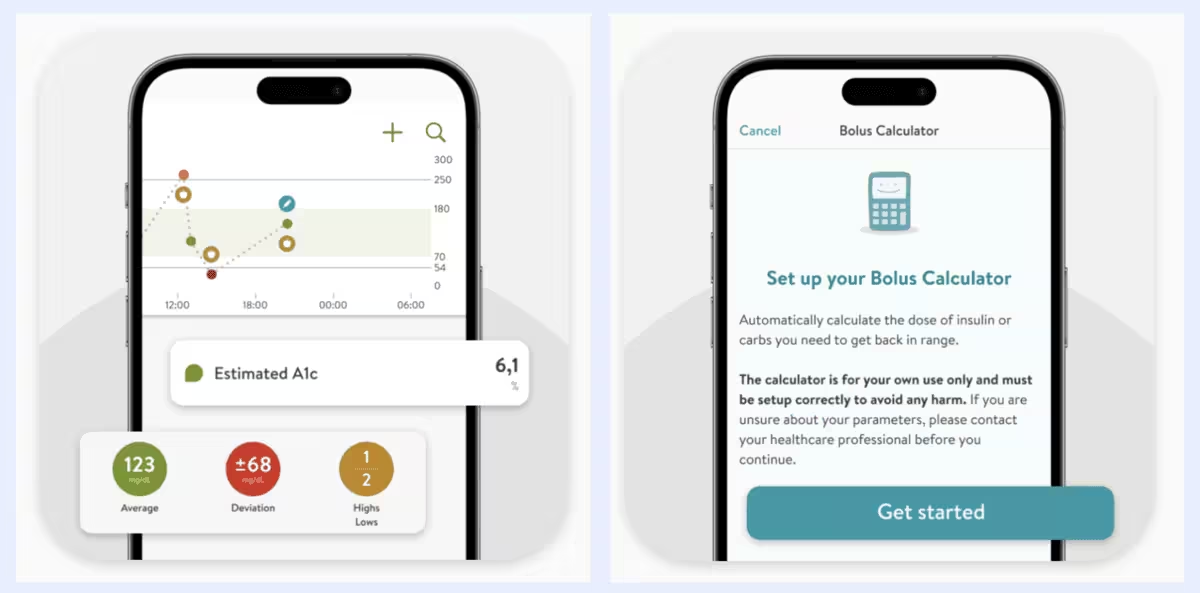
Here’s an example diabetes monitoring and management app, mySugr:
IoT devices and wearable health tech
Talking about mHealth apps without including wearable health technology would be incomplete.
The two go hand in hand.
While apps provide the interface for patients to track, record, and interpret data, wearables and other IoT devices generate the real-time health information that makes this possible.
From smartwatches measuring heart rate and sleep patterns to connected inhalers, glucose monitors, or even pregnancy trackers, wearable health tech has become a cornerstone of proactive healthcare.
These devices extend monitoring beyond the clinic and allow patients to:
- ✅ Track vital signs, symptoms, and lifestyle data.
- ✅ Receive personalized feedback and alerts that support self-care.
- ✅ Share continuous health information with providers.
According to The Better Health Report 2025, people are willing to spend a lot of money on wearables and/or subscription-based health apps if the value of the tech is clear, proven, and tangible.

Supply chain and inventory management in hospitals
Up until now, we’ve focused on how new technologies are transforming doctor-patient interactions and care delivery.
From here, the focus shifts to the operational side of healthcare.
Hospitals and care organizations are adopting digital tools to streamline management, optimize resources, and improve efficiency.
Supply chains and inventory are often where these changes first appear.
Manual supply tracking (counting stock, reordering items, and storing equipment) can be slow and prone to mistakes. Digital tools allow you to fix this by providing real-time updates and automating many tasks.
- RFID tags and barcodes show exactly where equipment, medications, or instruments are.
- IoT-enabled storage units monitor temperature-sensitive items like vaccines and alert staff if something is off.
- Software platforms analyze usage patterns to forecast supply needs to help hospitals avoid shortages and overstocking.
Dr. Madhav Madhusudan Singh explains how hospital warehouses and stock units are prone to the bullwhip effect, and how adopting digital technologies can ensure continuous inventory availability with minimal waste.
Automating administrative and billing processes
While patients spend time handling forms and insurance claims, hospitals lose time too.
The registration and online check-in tools we discussed earlier can also be viewed from an administrative perspective. By digitizing these steps, hospitals streamline workflows, reduce errors, and accelerate billing.
Systems can now verify insurance coverage, generate bills, and process payments without constant manual input.
Plus, they ensure better records and smoother compliance.
As health tech & AI innovator Robert Stewart says, resources should be directed towards what matters most, which is patient care, not towards repetitive admin tasks.
Data security, privacy, and compliance with digital systems
As healthcare goes digital, protecting sensitive patient information becomes more important than ever.
Electronic health records, mobile apps, and connected devices create new ways to store and share data, but they also introduce risks if not properly managed.
Digital systems help hospitals and clinics maintain security through encryption, access controls, and audit trails. They also make it easier to comply with regulations such as HIPAA, GDPR, or local data protection laws.
Hospitals and other healthcare organizations are also adopting cybersecurity frameworks more and more and utilizing services and systems for cybersecurity purposes.
⚡ Because, according to an analysis of the Privacy Rights database, between 2015 and 2022, nearly one-third (32%) of all recorded data breaches occurred in the healthcare sector.
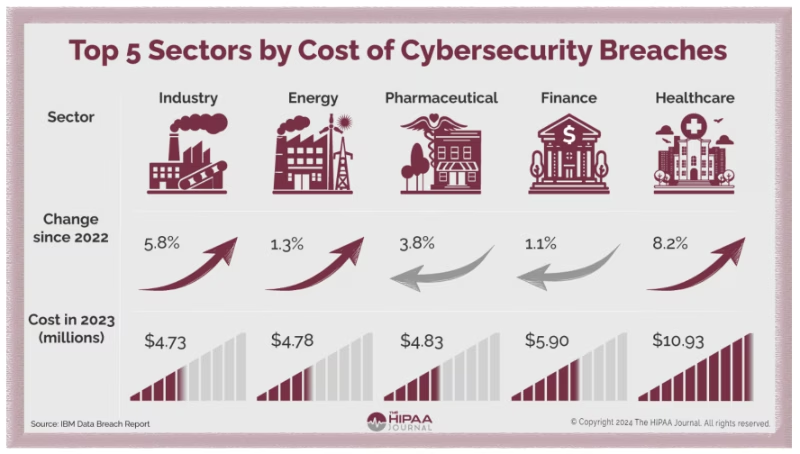
Healthcare data is among the most valuable targets for cybercriminals.
IBM’s report states that while a stolen credit card might sell for just a few dollars, a complete healthcare record can fetch around $250 on the dark web.
Training and upskilling healthcare staff with digital tools
We started with patient onboarding, and now we’re wrapping up with employee onboarding in healthcare settings.
Just as patients benefit from clear guidance and digital support, healthcare staff need proper training to use new technologies effectively.
Digital tools help streamline this process.
Whether you onboard new hires or train your existing staff to adopt new technologies, interactive e-learning platforms, virtual simulations, and step-by-step software guides allow staff to learn at their own pace and practice skills in a safe environment.
✅ Utilizing digital platforms for staff training also allows you to…
- Track progress,
- Identify skill gaps, and
- Provide targeted support where it’s needed most.
Upskilling also improves patient care.
When staff are confident using electronic health records, telemedicine platforms, remote monitoring systems, and other digital tools, they provide better service and feel more empowered in their roles.
What are the benefits of digital transformation in healthcare?
⚡ According to the BMJ Future Health Commission’s survey, 76% of healthcare professionals are optimistic about the future of digital transformation, and 59% trust digital health technologies.
The benefits of tech adoption in healthcare settings that make both healthcare professionals and patients happier include 👇🏻
- ➡️ Improved Patient Outcomes and Quality of Care
Clinical decision support systems, EHRs, and AI-driven diagnostics give doctors the right insights at the right time.
Instead of piecing together incomplete records, clinicians can access a unified patient history, run AI-powered assessments, and receive tailored recommendations that reduce the risk of error.
For example, an oncologist reviewing a patient’s history in an integrated EHR can instantly see lab results, medication history, and imaging data, then use a CDSS to choose the safest treatment path.
- ➡️ Scalability to Meet Growing Patient Demands
Telemedicine and digital-first onboarding allow you to reach more patients, manage higher volumes, and still keep care accessible and responsive.
For example, when follow-ups are handled virtually through telemedicine, remote monitoring systems, or even mHealth apps, patients who are recovering well don’t need to travel to the hospital, freeing up appointments for those who need in-person care.
Telemedicine and remote monitoring systems also allow you to offer regular and personalized care to the elderly population.
As one Reddit user exemplifies:
Some innovations that are changing things [in healthcare] are related to remote care. Specifically for elders, they call it aging in place. Basically, they have internet-connected devices that monitor the homes and the biometrics of the patients. The nurse or doctor can establish a video chat if the numbers look off.”
- ➡️ Increased Operational Efficiency and Reduced Costs
Inventory management software, automated billing systems, and digital check-in tools take a huge burden off hospital staff. Supplies can be tracked in real time, claims can be processed automatically, and patients can check in online without clogging front desks.
Efficiency also extends to people, both patients and staff.
With streamlined onboarding, patients move through the system faster, and employees adopt new processes more confidently.
For instance, some hospitals now use digital onboarding platforms to train staff on new equipment or updated compliance protocols. Instead of scheduling long, in-person sessions, employees can complete interactive modules online.
- ➡️ Stronger Data Security and Compliance Management
Compliance software and advanced cybersecurity tools protect sensitive patient data and help hospitals meet strict regulations. With secure access controls and monitoring, providers can share information across departments without compromising privacy.
For example, digital compliance systems keep detailed audit trails, making it easy for hospitals to prove adherence to regulations during inspections.
Examples of technology-driven healthcare transformation
NHS’ digital transformation with patient portal app
The NHS App is the UK’s official digital gateway to healthcare services.
Through it, patients can manage a wide range of needs from booking GP appointments, ordering repeat prescriptions, and registering with a GP surgery, to viewing their health records, receiving secure messages from their GP, managing hospital referrals, and even accessing care for someone they look after.
It’s designed to give citizens a single, simple place to stay connected to their healthcare providers and services.
Here’ how the app looks:

In early 2021, demand for the NHS App skyrocketed when the NHS Covid Pass was introduced for travel and events.
Usage jumped from 800,000 to 29 million users.
While many downloaded it initially for vaccine records, they soon discovered its other features, like managing prescriptions or checking referrals.
This surge, however, created a new challenge: NHS Digital’s support channels were overwhelmed with patient enquiries, which jumped from 1,000 to 70,000 a month.
To cope, NHS Digital turned to Zendesk and Route 101, rapidly rolling out new tools for ticketing, automation, and knowledge sharing in just four weeks.
These changes not only helped them handle a 20,000% increase in enquiries but also ensured faster resolution times, reduced staff stress, and a smoother, more patient-friendly digital experience.
EON Dental’s segmented onboarding for healthcare professionals
EON Dental is a digital orthodontics company that develops advanced clear aligner solutions supported by a software platform.
Their tools are used by a wide range of professionals, from general practitioners (GPs) who may be new to dental software, to orthodontists who are usually more experienced with digital tools and often want to compare features with other platforms they’ve tried.
To make adoption smoother for all types of users, EON Dental offers segmented onboarding.
Instead of a one-size-fits-all approach, GPs, orthodontists, hygienists, and even admin staff are guided through tailored experiences based on their role, expertise, and needs.
For example, GPs get a more guided, simplified walkthrough, while orthodontists are given opportunities to explore advanced features and dive deeper with optional checklists.
Since EON Dental serves professionals across continents and in multiple languages, onboarding is also localized to fit different markets.
This way, every user (regardless of their background) can get comfortable with the platform at their own pace, which ensures smoother adoption and better integration into daily workflows.
And they do all of these with UserGuiding!
Here’s what Yazan, a product manager at EON Dental, says about UserGuiding’s role in simplifying the task of creating such personalized and helpful onboarding experiences
Interested in creating interactive and personalized onboarding experiences with UserGuiding?
You can start your free trial right now and check out its capabilities.
Or, you can stay in the article and learn about UserGuiding a little bit more, first. (But we have a lot more examples to cover and just as many topics to discuss before that.)
So, let’s continue.
Healthie’s onboarding flow for practitioners
Healthie is a SaaS healthtech platform that provides tools for scheduling appointments, managing patients, creating and standardizing forms, and offering telehealth services.
In other words, it’s a comprehensive practice management platform for healthcare professionals.
So, simply by existing, it helps organizations and practitioners rethink how they deliver care.
On top of that, to help less tech-savvy or more traditional doctors and healthcare staff transition smoothly into the digital healthcare era, Healthie offers a detailed in-app onboarding experience.
Here’s the onboarding checklist:

There seems to be 5 items on the checklist, mostly focusing on features of the platform, however, some of the items on the checklist actually have subtasks that become visible when you click on them.
So, for example, the Appointments item on the checklist has 2 subtasks: Set Up Appointments and Add Availability.
Each of these tasks triggers interactive tutorials with tooltips that walk you through the steps of completing the action.
Here’s an example:
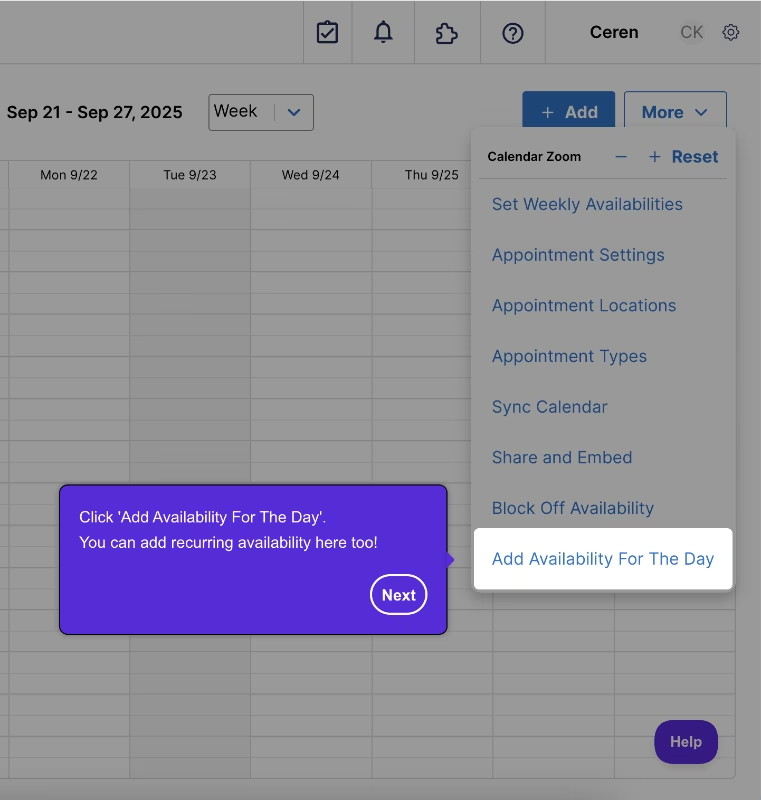
These onboarding practices (interactive guides and checklists) decrease the learning curve of the platform, prevent frictions that might turn into adoption barriers from the very beginning, and also increase feature engagement and activation.
All of these advantages influence how healthcare practitioners feel about digital transformation, of course, and whether or not they adopt new/more technologies.
Hospital Sant Pau’s digital transformation in collaboration with Huawei
Hospital de Sant Pau in Barcelona is a good example that showcases how digital transformation can make healthcare smarter and more efficient.
In partnership with Huawei, the hospital has adopted advanced AI and data storage technologies to support areas like medical imaging, predictive modeling, and precision medicine.
These tools allow the hospital’s clinicians to process patient data faster, spot risks earlier, and design treatment plans that are more tailored to individual needs.
The hospital is also exploring innovations such as 3D modeling, digital twins, and custom-printed medical devices to improve surgical planning and safety.
GenesisCare’s digital transformation with data management systems
GenesisCare is a private cancer care, diagnosis, and treatment provider with centers in the UK, U.S., Australia, and Spain.
In the U.S. alone, GenesisCare operates 113 care centers.
That means a lot of centers, a lot of patients, and a lot of data to process and analyze.
To stay accountable, improve processes, and deliver higher-quality care to patients worldwide, GenesisCare uses Radar Healthcare, a risk, quality, and compliance management platform built for healthcare.
They primarily use the platform to centralize their data, which makes it easier to share relevant reports and insights across departments.
This shift from a scattered, less centralized system to a unified platform has streamlined their workflows and, ultimately, improved the care patients receive.
Ada’s patient onboarding (mHealth app)
Ada is a health management and symptom tracking app that enables patients to conduct symptom assessments and learn more about their possible conditions, as well as common health conditions in general.
Before you access the app, it walks you through the process with mobile carousels and highlights the app’s capabilities one more time during the onboarding.
Here are some example carousels:
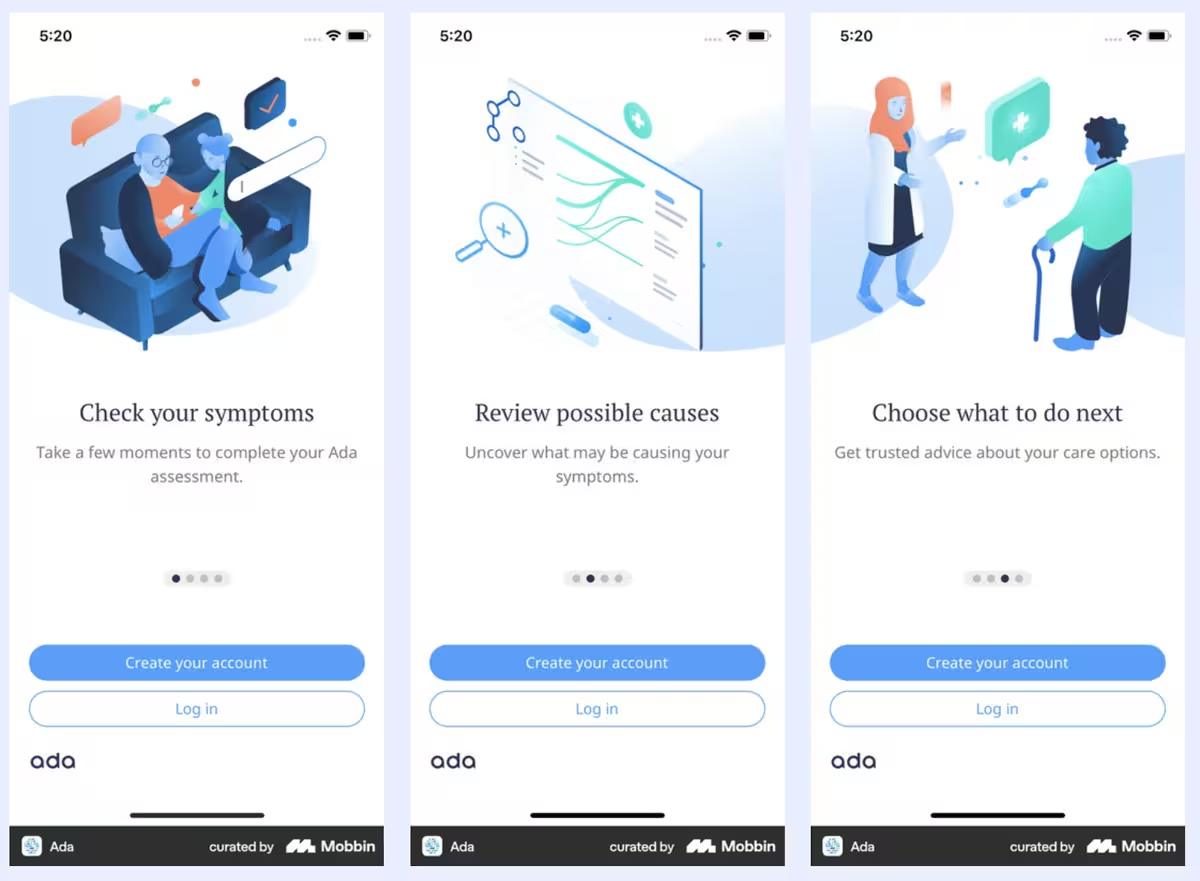
The app is pretty intuitive and there are not many sub pages or screens within the app so this level of onboarding is pretty enough.
The purpose of this onboarding is to set the expectations for the experience right for the user, so they know what the app is for and what are its limitations.
Your Health House Calls uses remote patient monitoring technologies
Your Health House Calls (formerly South Carolina House Calls) is a healthcare organization that delivers primary care with a strong focus on prevention.
While anyone can request a house call, most of their patients are elderly, aligning closely with the “aging in place” concept we discussed earlier under telemedicine and remote monitoring.
However, sending doctors and nurses to every patient’s home on a regular basis would be both costly and inefficient.
That’s why they rely on remote patient monitoring (RPM) technology to keep track of patients’ health without unnecessary visits.
According to David Teachey, the VP of acute care services at Your Health House Calls, their use of VitalTech’s RPM platform has dramatically lowered hospital readmissions. While the national average readmission rate for patients under remote care is about 16%, their system has reduced it to just 1%.
That is a 94% reduction in hospital readmissions, if you couldn’t calculate.
Apple’s COVID-19 screening app
Shortly after the pandemic began and lockdowns were introduced, several COVID-19 screening apps and protocols emerged.
One of them was Apple’s COVID-19 screening app.
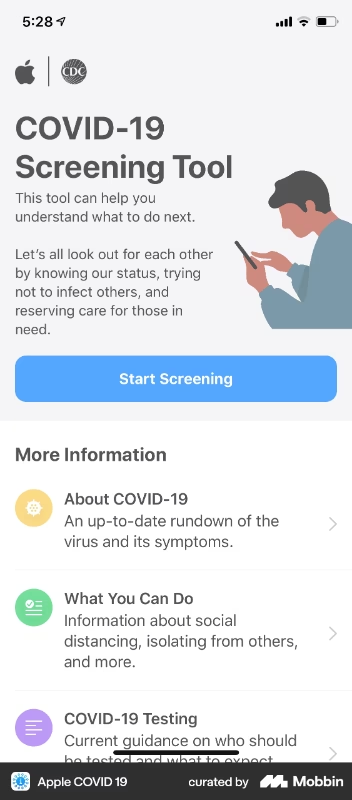
The app was developed in cooperation with the CDC (U.S. Centers for Disease Control and Prevention), making it a nationwide initiative.
It provided users with up-to-date information on emerging symptoms, prevention tips, and recovery recommendations.
As a screening tool, it also allowed people to check their symptoms and guided them on the next steps, whether to contact health authorities or simply continue monitoring themselves.

Zocdoc’s patient app
Zocdoc is a two-sided health marketplace that connects practitioners with patients. The platform allows patients to schedule doctor appointments, both in-person and through telemedicine.
For doctors and health practitioners, it functions as a scheduling and telemedicine tool, while for patients, it also tracks appointments and sends reminders.
Patients can even enter doctor visits manually, so the app helps ensure they don’t miss regular check-ups and follow-ups.
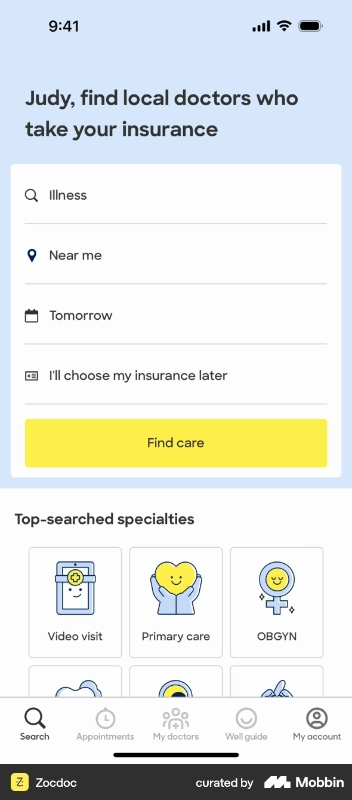
Patients can also add their insurance information and search for practitioners that accept their insurance type, which saves time both for patients and doctors.
Obstacles in digital transformation in healthcare
Globalisation, Industry 4.0, growing populations, needs, and expectations, the aftereffects of Covid-19, rapid adoption of new technologies in other industries and sectors, the AI…
To be honest, there are many, many reasons for healthcare organizations and workflows to undergo digital transformation.
However, there are also several reasons why it’s happening at the pace it’s happening, and not faster.
While the healthcare industry is known to produce many new technologies and innovations that save many lives, it’s rarely the pioneer adopters of digital technologies and systems that are shaped by other industries and brought to healthcare settings.
That doesn’t mean healthcare professionals and workers don’t adopt new technologies and persist in the old ways, no matter what…
It just means they tend to trail a little bit.
And here are the most popular reasons why this is the case:
- Problems with interoperability and data integration: Health data often lives in fragmented systems that don’t talk to each other.
Without seamless integration, implementing new digital tools becomes complex and risks creating even more silos.
And that’s a risk most healthcare organizations are not willing to take.
- Resource constraints: Budget limitations, staffing shortages, and competing priorities make it difficult for healthcare organizations to invest in new technologies, even when the benefits are clear.
In many cases, leaders must make tough trade-offs between immediate patient care needs and longer-term digital infrastructure investments.
- Resistance to change (but not in the sense you’re thinking): Healthcare professionals don’t resist innovation out of stubbornness but out of responsibility. New tools and workflows must be proven to be safe, reliable, and trustworthy before they’re widely adopted.
Doctors, for instance, are trained to scrutinize innovations carefully; asking whether they’re truly better than existing methods, whether they guarantee patient safety, and whether they can be trusted long term.
This cautious approach, while sometimes perceived as resistance, is largely about protecting patients and maintaining standards of care.
[An innovation] has to go through a number of test questions, the cynical older questions: ‘Why is that better than what we're using now? Is it as safe?’ […]. So our role is [to ensure] safety, scrutiny, reliability, confidentiality, all the things that [make us (doctors)] known as conservative.”
- Healthcare professional skill gaps: Digital transformation demands new competencies in data management, analytics, AI, and digital communication.
Not all healthcare staff are trained in these areas.
And that can create uneven adoption across teams/departments.
Bridging this skills gap requires structured training, cultural shifts, and long-term investment in digital literacy.
- Regulatory and compliance challenges: Healthcare is heavily regulated to protect patient safety and privacy. While essential, navigating compliance requirements can make it harder to implement new digital solutions quickly.
Balancing innovation with the need for strict regulatory oversight often slows down transformation projects.
- Issues with user experience and usability: If digital tools aren’t intuitive and aligned with clinical workflows, adoption drops significantly. Overly complex systems might add to the workload rather than easing it, especially when role-focused onboarding/training is not offered.
Frictions during the user experience might cause user frustration and discourage people from adopting new technologies.
Healthcare digital transformation trends
If there’s one thing we know for sure, it’s that healthcare never really stands still. New tech, new data, and new patient expectations keep reshaping the way hospitals, clinics, and practices operate.
Some of these changes happen slowly in the background, while others (like telemedicine during Covid) completely transform workflows almost overnight.
Let’s take a look at some of the biggest digital trends shaping healthcare currently:
Big data analytics in patient treatment
You can think of big data in healthcare as the sum of everything from your lab results and genetic tests, to what your smartwatch records, to the research happening in clinical labs worldwide.
According to Batko and Ślęzak’s 2022 study on the adoption of big data analytics in medical facilities, healthcare organizations are now gathering and analyzing:
- clinical data
- biometric data from devices
- genomic data
- financial records
- patient-reported data
- results of scientific research
- even social media activity related to health
That’s a lot of information.
But when this data is pulled together and analyzed with the right tools, it becomes incredibly powerful.
✅ Big data analytics can help doctors…
- Spot patterns that aren’t obvious at first glance.
- Support faster and more accurate diagnoses.
- And even predict potential health risks before they become serious.
For patients, this can mean earlier interventions, more personalized treatment plans, and fewer “trial-and-error” approaches in care.
And talking about personalized treatment plans…
That’s another healthcare trend that digital transformation has made possible.
Personalized treatment and precision medicine
Precision medicine is an approach to healthcare that tailors treatments to an individual’s unique genetic makeup, lifestyle, and medical history.
By analyzing genomic data, biomarkers, and other patient-specific information, clinicians can choose therapies that are more effective and have fewer side effects.
Predictive analytics for population health management
Predictive analytics uses data from large populations to anticipate health risks and guide preventive care.
By examining patterns in hospital admissions, lab results, wearable devices, and social determinants of health, healthcare providers can identify patients at higher risk before problems arise.
- This enables early interventions,
- Reduces hospital readmissions, and
- Helps public health agencies plan for seasonal illness spikes.
Primary care teams can also use predictive models to spot patients likely to develop chronic conditions.
Massive open online courses (MOOCs) to educate healthcare workers
Massive open online courses, or MOOCs, are becoming an increasingly popular way for healthcare professionals to continue learning and stay up to date with medical advancements.
These courses support self-directed learning, allowing learners to set their own goals, choose content that fits their needs, and manage their time.
Platforms like OpenWHO, the World Health Organization’s hub for health emergency training, show how MOOCs can scale knowledge rapidly across the healthcare sector.
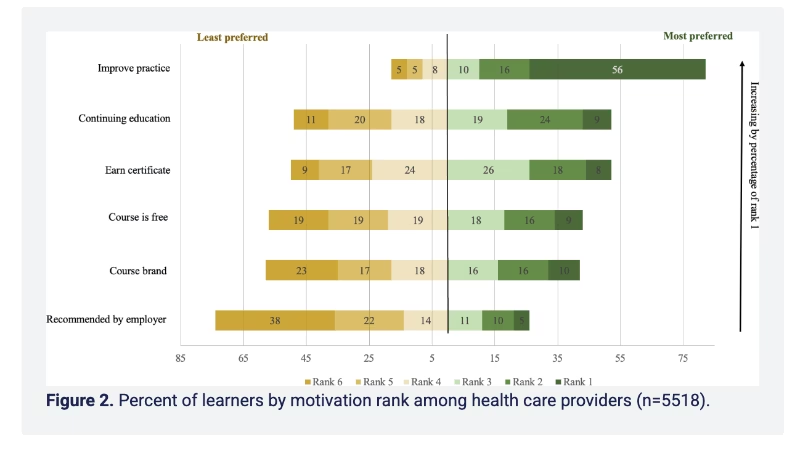
Here are popular motivations ranked by healthcare providers to enroll in MOOCs:
Surgical digitalization
Surgical digitalization refers to the integration of digital technologies into surgical practice to enhance precision, safety, and efficiency.
It covers a wide range of innovations, from preoperative 3D imaging and virtual surgical planning to AI-assisted monitoring and intraoperative guidance systems.
Robotic surgeries are a major driver of surgical digitalization.
By combining robotic precision with advanced imaging and AI support, surgeons can perform complex procedures with minimal invasiveness.
- This improves surgery outcomes.
- Shortens hospital stays.
- And also reduces overall recovery time.
Here’s an example of a successful robotic surgery in Saudi Arabia where a complete heart transplant was performed entirely by robotic systems:
GenAI for preventive health advice
GenAI is becoming more and more present in our daily lives, and surprisingly, preventive healthcare advice is one area where it’s starting to show up too.
While the debate about whether GenAI is truly democratizing healthcare and empowering patients with personalized guidance, or creating new risks and ethical concerns is still very much alive, many people are turning to AI chatbots for tips on staying healthy.
According to The Better Health Report 2025, 55% of consumers now use AI in prevention-related decision-making, among 18–28-year-olds the share is above 80%.

Digital tools and online content are also shaping awareness.
Among all mentions made by 18-28-year-olds, 39% referenced online health content or digital health tools as drivers of prevention awareness, highlighting the growing influence of digital media in shaping their health habits.
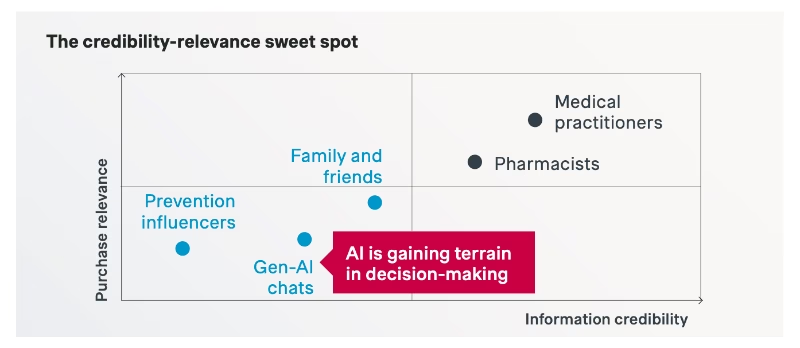
One important point to keep in mind is that GenAI chatbots don’t have the credibility of actual healthcare professionals. They can’t replace the expertise of doctors, nurses, or other trained practitioners.
Here’s how different actors compare to one another in terms of credibility and relevance:
How does UserGuiding help the healthcare digital transformation?
Now, UserGuiding isn’t an EHR system, a telemedicine platform, or a company building surgical robots.
Yet, it still can play a huge role in helping you embrace digital transformation in healthcare by creating personalized, segmented, and interactive in-app training and onboarding flows for both patients and healthcare employees.
But before we dive into the “how,” let us officially introduce UserGuiding.
UserGuiding is a no-code, all-in-one product adoption platform that gives you the tools to design engaging in-app experiences, AI support bots, and standalone knowledge hubs.
Whether you’re a product manager at a healthtech company or a healthcare professional running a small clinic, UserGuiding helps you integrate smoothly into the digital world.
With UserGuiding, you can create:
- Product tours, guides, and feature walkthroughs
- Onboarding checklists
- Tooltips and hotspots
- In-app surveys
- Resource centers
- AI assistants
- Standalone knowledge bases and product updates pages
For example, if you’re a healthcare worker offering online appointment scheduling, you can create an interactive guide to make sure patients complete the process correctly and don’t get lost along the way.

If you’re a product manager at a healthtech company, you can design structured, segmented onboarding experiences for your different user groups, just like Eon Dental does for GPs, orthodontists, and supporting staff.
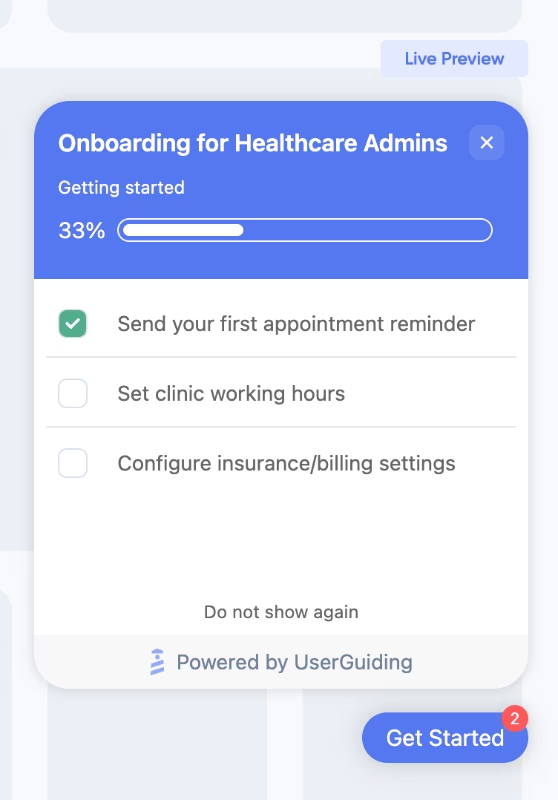
You can create checklists that look like this, for example:
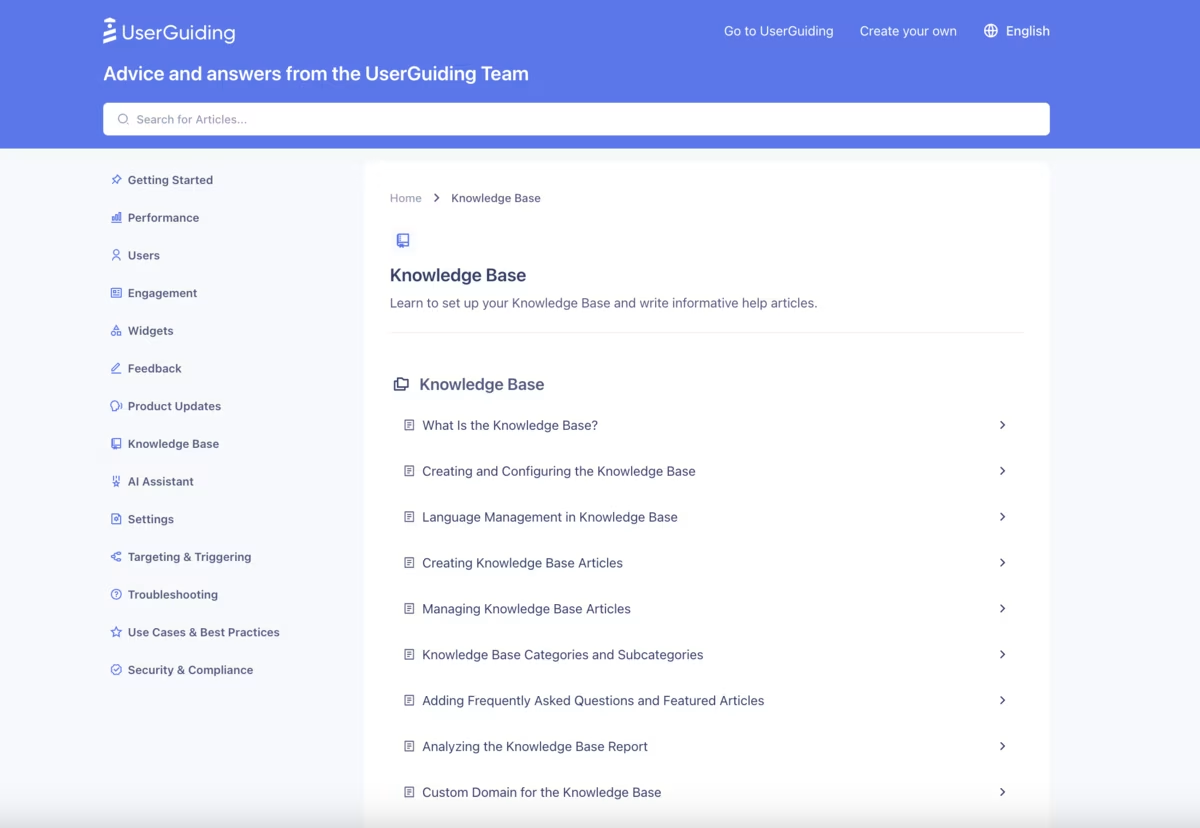
And no matter your role, you can build a full-featured help center for users or patients, with articles, videos, and other materials, which looks like this:
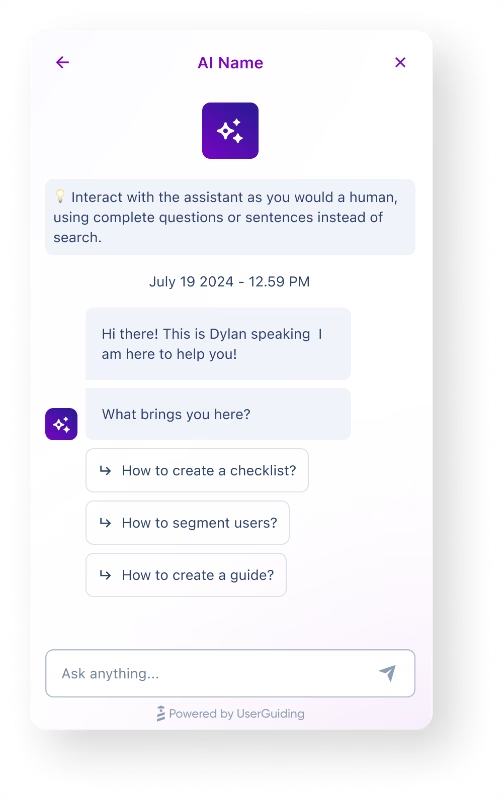
Plus, you can utilize UserGuiding’s AI chatbots to give automated, context-aware guidance, again, tailored to patients or internal staff depending on your needs.
With all these tools UserGuiding offers…
✅ Healthcare organizations and professionals adopt digital systems faster,
✅ Tech adoption barriers and possible friction get eliminated,
✅ And everyone (patients, practitioners, and healthcare staff) gets the most out of the technology available to them.
Ready to start your free trial?
In Conclusion…
Digital transformation is reshaping every corner of healthcare, including how patients reach out for help, how doctors deliver care, how surgeries are performed, and how organizations are run.
Everything is evolving with new technologies.
The pace may vary, and the challenges are real, but the shift is already underway.
The question isn’t if healthcare will go digital; it’s how ready you are to be part of it.

.png)