

.svg)
.svg)
.svg)
.svg)



.svg)




.svg)
.svg)

You’ve tried eLearning, presentations, workshops (even long PDFs), and still wonder why the training isn’t sticking.
Or maybe you’re stuck in decision paralysis because your training subject matter feels too important to risk on an ineffective training program…
Maybe what you need is some inspiration, or a little reminder of your options.
Don’t worry, we've got your back.
In this article, we cover:
- Different types of employee training and why they matter
- Different formats and methods to offer these types of training
- Some real-life examples across different industries
- An actionable checklist of steps you can take to create your own training program
Let’s get started.
TL;DR
- Employee training is any structured activity that helps people learn new skills, strengthen existing ones, or adapt to new tools, roles, and processes.
- Because it supports so many different subjects and use cases, its benefits are broad. Some of the advantages include:
- Faster ramp-up for new hires
- More consistent processes and fewer errors
- Higher productivity and performance
- Stronger customer and user experiences
- Better knowledge retention across teams
- Increased employee engagement and motivation
- Greater adaptability during change
- Reduced compliance and security risks
- Clearer career paths and internal mobility
- Depending on your training subject (and your team’s structure), you can deliver training in several formats, such as…
- Instructor-led or workshop-based sessions
- Self-paced e-learning modules
- Microlearning bites inside daily workflows
- Mentorship, shadowing, and on-the-job training
- In-app, contextual product guidance
- Simulations, role-play, and hands-on practice
- Blended learning programs that combine multiple formats
What is employee training?
Employee training refers to any structured activity that helps people learn how to do their work more effectively. You introduce new knowledge, strengthen existing skills, or guide someone through responsibilities that are new to them.
Several types of training fit under this umbrella, and each serves a different purpose.
For example…
➡️ New employee training and onboarding: These help new hires understand their role, company processes, culture, and expectations. Onboarding goes beyond initial training to include the full ramp-up period so employees can integrate smoothly with teams and workflows.
➡️ Upskilling and leadership training programs: Upskilling programs focus on improving current skills or learning new ones to keep pace with evolving job requirements. Leadership training develops skills like communication, coaching, and delegation to prepare employees for management or higher-responsibility roles.
➡️ Compliance, security, and safety training programs: These ensure employees understand and follow legal regulations, industry standards, and workplace safety protocols. They help reduce risk for both the employee and the organization.
Here are some other common employee training types listed by an HR professional:
In a successful business environment, training is not a check-the-box exercise.
Instead, teams undergo regular training programs for different purposes, and learning becomes a continuous process. This approach helps employees stay current, adapt to changes, and contribute effectively to the organization’s goals over time.
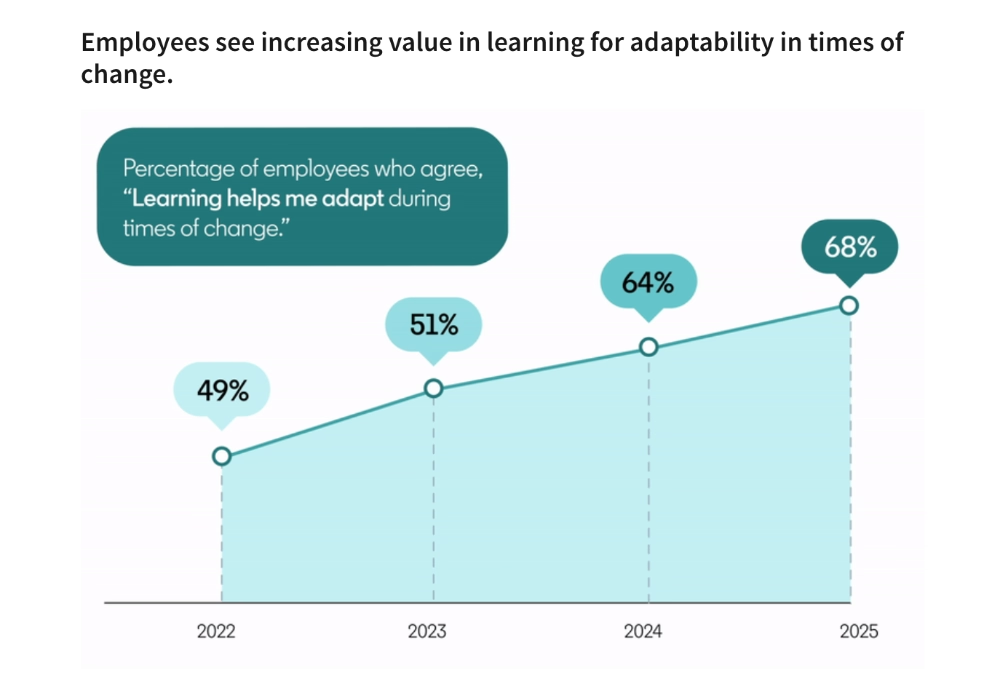
⚡ According to LinkedIn’s 2025 Workplace Learning Report, 68% of employees believe that learning helps them adapt during times of change.
What are the common goals of employee training?
Employee training serves multiple purposes, all aimed at helping teams perform better and grow professionally. Some of the most common goals include:
✅ Faster employee ramp-up: Training helps new hires get up to speed quickly so they can contribute confidently and efficiently.
✅ Consistency in how work is done: Structured learning ensures everyone follows the same processes and standards, reducing errors and miscommunication.
✅ Higher productivity: By improving skills and knowledge, training allows employees to complete tasks more effectively and with less frustration.
✅ Better customer or user experience: Well-trained employees interact more confidently and competently, leading to smoother service and happier clients.
✅ Knowledge retention and reduced dependency on senior staff: Training spreads expertise across the team, so critical knowledge isn’t limited to a few individuals.
✅ Employee engagement and motivation: Learning opportunities show that the organization invests in people, boosting morale and retention.
✅ Adaptability to change: Training prepares teams to handle new technologies, processes, or market shifts more confidently.
✅ Improved collaboration and teamwork: Programs that emphasize shared processes and communication enhance how teams work together.
✅ Compliance and risk reduction: Training in regulations, safety, and security minimizes costly mistakes and legal issues.
✅ Career growth and succession planning: Development programs help employees progress into higher-level roles, supporting long-term organizational health.
Training formats to deliver these programs
As much as training materials and subjects matter, the way you deliver them shapes the learning experience. A well-designed topic can still fall flat if the delivery format overwhelms people or pulls them away from their flow of work at the wrong time.
Let’s talk about different formats you can use for different training needs. 📖
Instructor-led training
Instructor-led training refers to live sessions delivered by a trainer in person or over video conference.These sessions create a structured environment where employees can ask questions, share experiences, and practice real scenarios with immediate feedback.
This format works especially well when the topic requires nuance, discussion, or hands-on guidance. You build a shared learning moment that helps teams align on expectations and apply what they learn more confidently.
You can opt for ILT for training programs like:
- Compliance or regulatory updates
- Security awareness sessions
- Leadership and communication workshops
E-learning modules
E-learning modules are self-paced lessons employees complete online through a learning platform. They can include videos, quizzes, interactive scenarios, or simple step-by-step explanations.
This format works well when you want consistent training across a distributed team or when the material doesn’t require real-time discussion.
Because employees learn on their own schedule with e-learning modules, you reduce coordination challenges.
You can use e-learning modules for training programs like:
- Introductory technical skills
- HR policies and benefits
- Basic software processes
- Cybersecurity fundamentals
Microlearning bites
Microlearning delivers short training content focused on one specific skill, step, or concept at a time. These pieces usually take only a few minutes to complete and often live inside tools employees already use or a mobile app of a learning management platform.
You can use microlearning bites for training programs like:
- Feature updates in software tools
- Customer service reminders
- Sales enablement moments
- Safety reminders
Mentorship and shadowing
Mentorship and shadowing programs pair employees with experienced colleagues who guide them through real tasks. The mentor demonstrates workflows, explains decisions, and shares practical insights that are difficult to capture in formal training.
Shadowing is especially effective for tacit knowledge, the kind you usually learn by watching someone work rather than reading a procedure.
Mentorship programs also have a great impact on employee engagement and job satisfaction (both for mentors and mentees), according to recent studies. 👇🏻
You can use mentorship and shadowing for training programs like:
- Field or frontline work
- Role-specific onboarding
In-app contextual guidance
In-app guidance gives employees support directly inside the software they’re using.
This format reduces the gap between training and application, because the instructions appear exactly when and where employees need them.
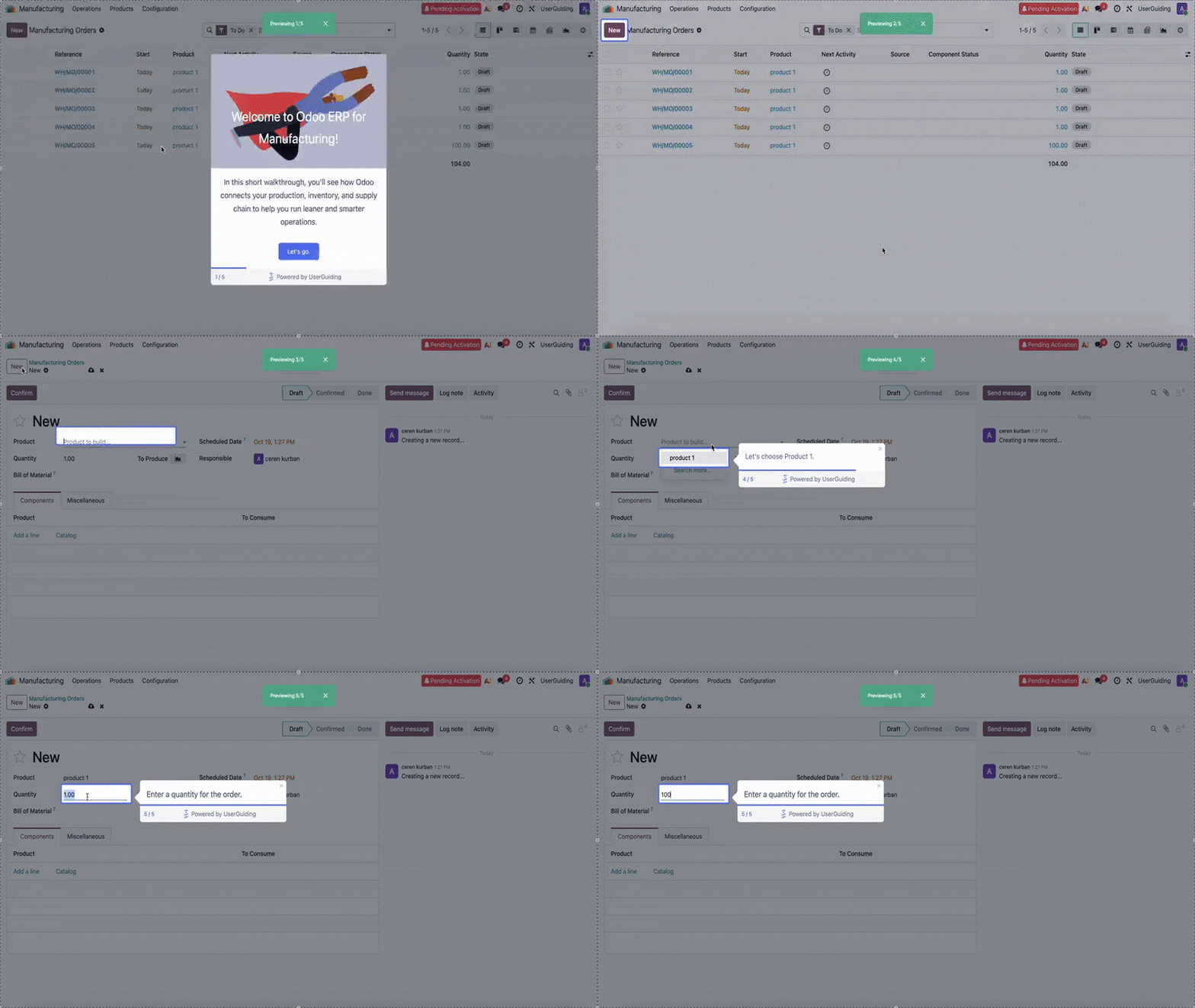
Product adoption solutions like UserGuiding empower you to create interactive walkthroughs, tooltips, checklists, and embedded resources (like resource centers and AI agents).
Here’s an example interactive tutorial created with UserGuiding:
You can use in-app contextual guidance for training programs like:
- Internal systems
- Process updates inside tools
- New software rollouts
Workshops and practice simulations
Workshops and simulations create interactive environments where employees actively practice skills in realistic scenarios. They can work in groups, solve problems, role-play conversations, or test workflows in a safe setting.
Now, that might sound similar to instructor-led training.
However, workshops shift the focus from listening to doing, so employees spend most of the session practicing, experimenting, and solving problems rather than following a structured lecture.
You can use workshops and simulations for training programs like:
- Conflict resolution
- Sales demos and objection-handling practice
- Technical troubleshooting labs
Industry-specific employee training examples
Logistics: RAM uses in-app training materials
When RAM, a South African courier service, undertook a major digital transformation, training thousands of couriers and branch employees quickly became a challenge. In-person sessions weren’t feasible due to the geographic dispersion of teams and operational constraints.
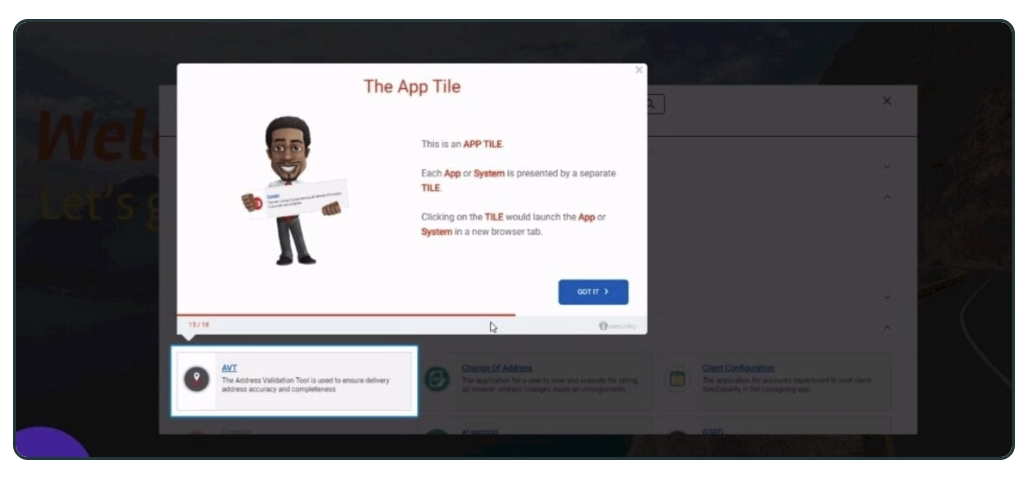
RAM partnered with UserGuiding to create interactive, in-app onboarding and training guides.
Employees learned through a character named Sam, who walked them through the platform, introduced key features, and guided them step by step. Progression was tracked via onboarding checklists, and employees received certification upon completing the training.
Here’s an example step from one of the walkthroughs:
What makes this a standout example?
✅ Uses in-app, interactive guides to train a distributed workforce efficiently.
✅ Creates an engaging, conversational learning experience with a relatable guide.
✅ Automates onboarding and training, reducing the need for in-person sessions.
🎁 Start your free trial to check UserGuiding out for yourself!
Aerospace and security: Marshall offers software training to their employees
When Marshall prepared to deploy Workday, training was essential to ensure employees and managers could use the system confidently. The platform managed People Data, Recruitment, Performance, Payroll, Benefits, and more, so adoption had to be smooth.
The program combined live sessions, drop-in support, and self-paced modules. Sessions were short, hands-on, and interactive, giving employees a safe space to explore the system.
Managers also received additional role-specific training to understand functionality and support their teams.
HR Director Daney Wilkinson said:
Despite Workday being positioned as a fairly intuitive system, I wasn’t prepared to take the risk of not training, as I wanted to make sure our workforce felt as comfortable as possible with the new platform. Many of our colleagues are not using IT equipment on a daily basis, so they weren’t necessarily confident with a new system.”
What makes this a standout example?
✅ Blended learning approach with live, virtual, and self-paced options.
✅ Practical, hands-on training builds confidence and competence.
Consulting: PwC brings a data-driven approach to DEI training program
PwC combines inclusion networks, mentorship, and targeted learning programs to engage employees across identity groups.
12 inclusion networks bring together allies and members to discuss belonging, career development, and decision-making. Around 40% of employees participate in at least one network, connecting them to peers and senior leaders.
Mentorship and early partnerships play a key role in PwC’s DEI training program.
PwC piloted a connectivity partner program, pairing employees early in their careers with senior leaders. The results show a strong link between these relationships and retention, helping employees feel supported and valued from the start.
PwC also tracks participation in DEI courses, engagement levels, and shifts in employees’ feelings of connection and belonging. Surveys, focus groups, and interviews provide insight into how people experience the culture and how inclusion efforts translate into business outcomes.
What makes this a standout example?
✅ Uses data to track connection, belonging, and retention of diverse talent.
✅ Aligns DEI initiatives with business outcomes while fostering a culture of care and allyship.
IT: Google incorporates company culture into new hire onboarding and training
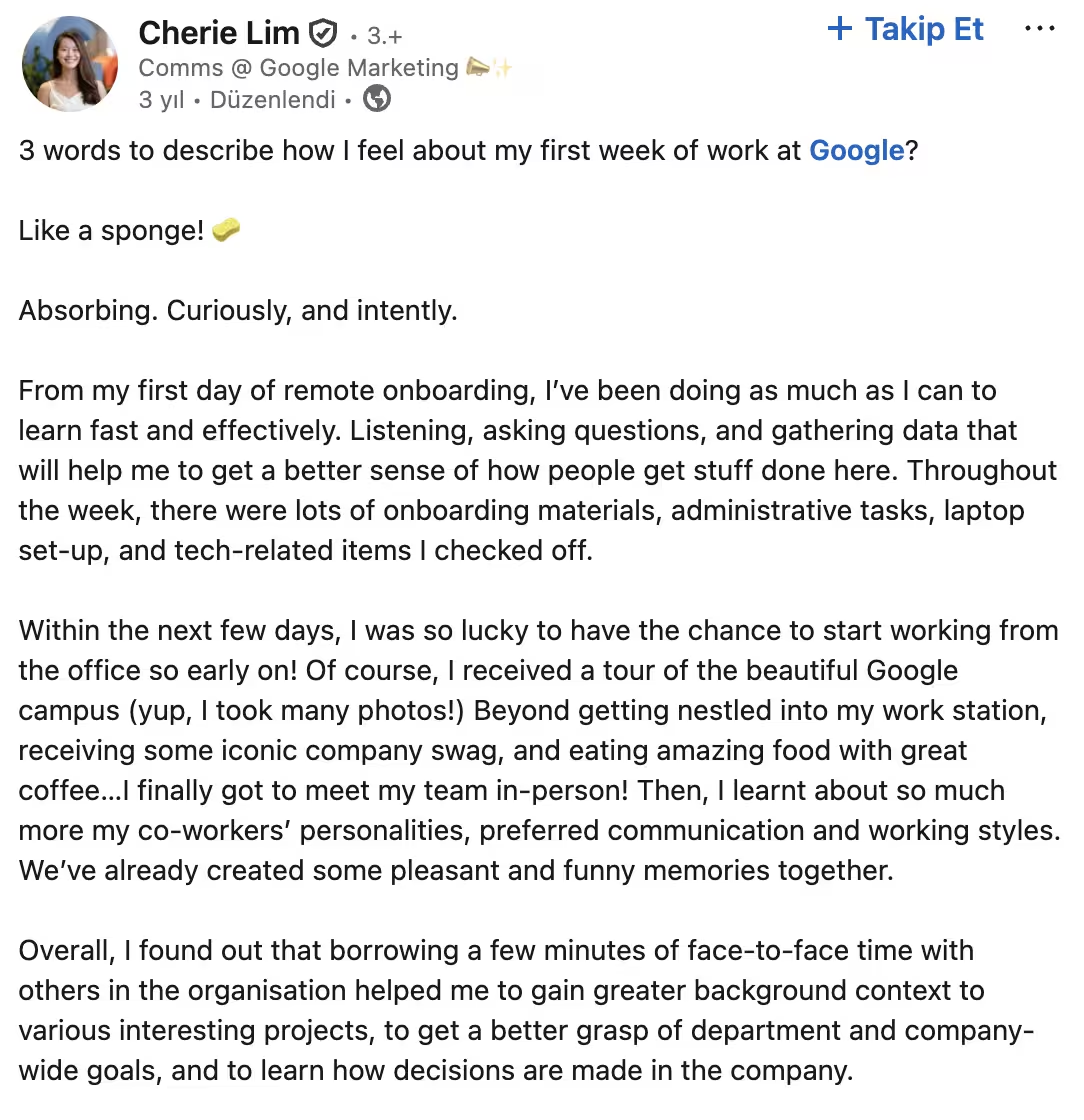
When you are an industry giant like Google, your onboarding and training experience sets the tone for every new hire. Thousands of “Nooglers” (new Google employees) share their experiences online, and the patterns are clear: Google combines mentorship, in-person engagement, and role-specific training to make onboarding highly effective.
From the moment employees accept their offer, preboarding starts immediately.
New hires access a portal with tasks like reviewing contracts, setting up accounts, learning compliance policies, and exploring company culture.
Mentorship plays a central role, as well.
Each Noogler is paired with a buddy, someone already in their role, who helps them navigate the workplace, answer questions, and model best practices. This buddy system ensures that new employees feel supported and connected from the very first day.
Role-specific training complements company-level onboarding.
Nooglers attend a mix of in-person sessions and self-paced courses tailored to their position, giving them the skills they need to contribute quickly.
What makes this a standout example?
✅ Combines preboarding, mentorship, and role-specific training.
✅ Aligns new hires with company culture while building practical skills.
✅ Creates early engagement that improves retention, productivity, and team cohesion.
Education: EI Design gamifies their compliance training
Gamification’s place in employee training settings increase day by day, and there are valid reasons for that.
⚡ According to research done by Colombia Business Research, gamification in training supports the efficient acquisition of new concepts, amplifies problem-solving skills, and helps employees connect the dots between specific actions and positive business outcomes.
A great example comes from EI Design.
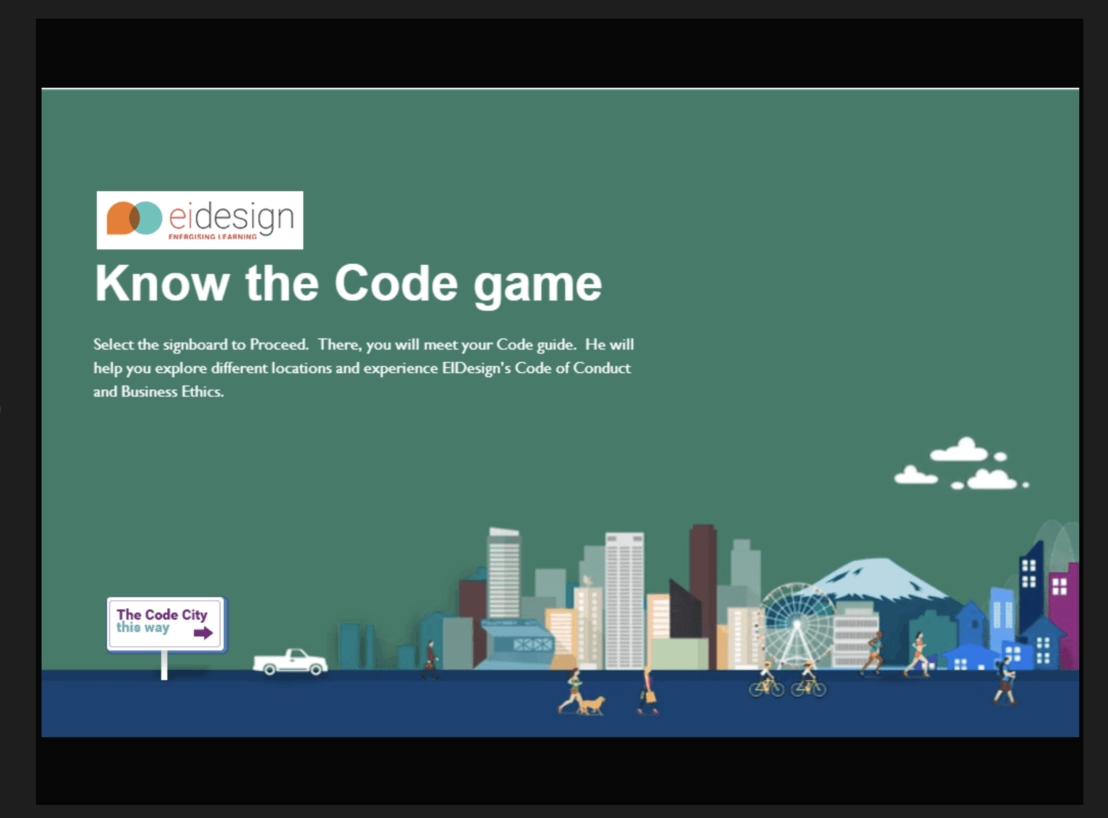
They rebuild a traditional Code of Conduct course and replace long decks of slides and static presentations with an immersive, gamified eLearning experience. Employees navigate six “locations” within a virtual workplace, each representing a key principle of the Code of Conduct.
The learning journey includes:
- Challenges and quizzes at each location to test knowledge and decision-making.
- Points and digital passport stamps to reward progress and unlock new levels.
What makes this a standout example?
✅ Transforms mandatory compliance training into an interactive, game-like journey.
✅ Reinforces learning through challenges, rewards, and immediate feedback.
Telecommunication: Verizon empowers their directors with leadership training program
Verizon relies on its directors to execute strategy, lead teams, and champion company culture. To equip these leaders for a complex and fast-paced environment, Verizon launched VLeads in late 2020, a nine-month executive development program targeting around 150 directors across the enterprise.
The program combined 360-degree assessments, personalized development goals, peer learning circles, skill-building workshops, executive mentoring, and elective courses.
Initially designed as in-person sessions, COVID-19 required a pivot to fully virtual delivery using digital platforms and interactive simulations.
Peer groups and mentors helped participants apply learning to real-world business challenges, while workshops and electives allowed them to build leadership skills tailored to their needs.
What makes this a standout example?
✅ Combines multiple learning strategies to create a high-impact leadership experience.
✅ Scales executive education effectively through virtual learning tools/ environments.
Automotive: Hyundai offers micro-training programs for sales managers and consultants
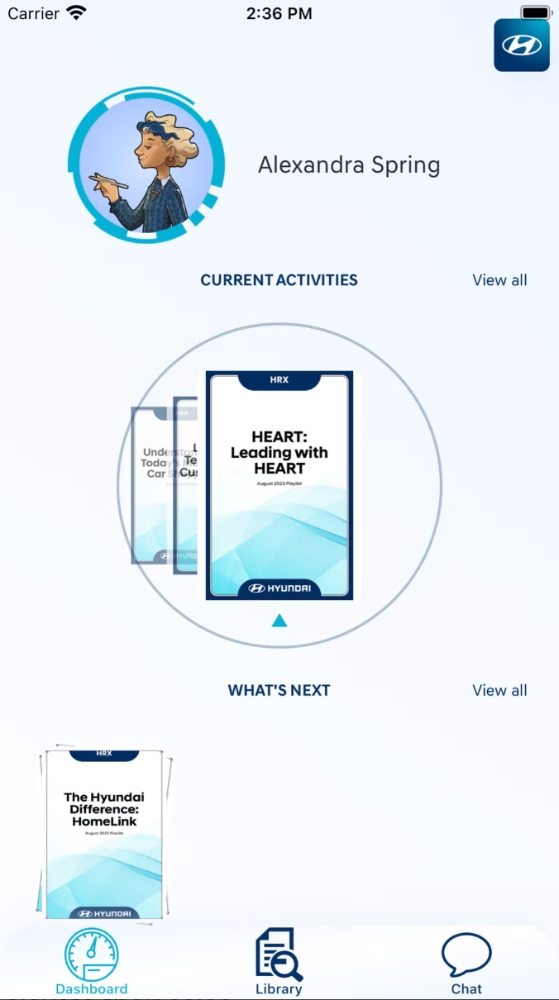
Hyundai empowers its sales teams through the Hyundai Performance Institute (HPI), a digital learning hub built to support sales consultants, sales managers, and other dealer‑staff roles.
The platform provides access to brand, product, and customer‑experience content through a mobile‑first Sales Learning App.
On HPI, salespeople complete monthly learning activities covering new product knowledge, Hyundai brand differentiators, core technologies, and best practices for customer retail experience.
What makes this a strong example?
✅ Delivers scalable, consistent training across hundreds of dealerships via a mobile app + online platform.
✅ Training is short and manageable, and can be accessed again and again to refresh memory.
✅ Dashboards track learning goals and activities.
Healthcare: Escola CEJAM digitizes healthcare employee training and offers role-specific training programs
Escola CEJAM faced challenges in scaling and standardizing training across multiple healthcare units in Brazil. Traditional in-person sessions were costly, time-consuming, and difficult to deliver to staff, including nurses, doctors, and administrative teams.
To address this, CEJAM adopted a digital platform that allows employees to access role-specific courses on any device, with features like microinteractions, gamification, and offline access.
After this change in training method, over 24,000 employees engaged in online courses and knowledge trails, and completion times for key courses dropped dramatically (e.g., 4 months to 20 days).
What makes this a strong example?
✅ Delivers role-specific learning with interactive and engaging content.
✅ Tracks progress and outcomes to ensure learning is effective.
👉🏻 Read more about the onboarding trends in the healthcare industry.
E-commerce: Amazon uses VR technologies for soft-skills training
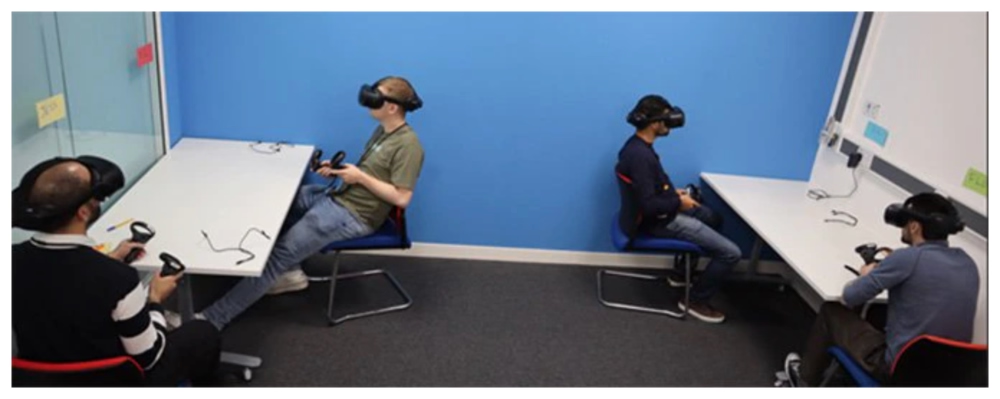
Amazon EU Customer Fulfilment transforms soft-skills training for newly hired managers using Virtual Reality (VR). Traditional classroom role-play has time and resource constraints, so Amazon partnered with Virti and HTC VIVE to create immersive 360° video simulations.
In these simulations, managers practice leading meetings, having engaging conversations, and giving performance feedback in a safe, repeatable environment.
Each simulation features branching scenarios, so managers experience different outcomes based on their choices. Trainees use VIVE Focus 3 headsets, enabling them to complete the modules anytime, anywhere, and repeat scenarios as needed.
Results from a 2023 trial show that 95% of participants would revisit the training, 93% felt more prepared to apply learnings in real situations, and 92% reported increased confidence.
What makes this a strong example?
✅ Builds confidence through realistic practice in a safe and risk-free environment.
Saas/Hardware: Cisco conducts sales enablement training
As Cisco expanded from hardware into subscription-based software services, its sales teams struggled to adapt their selling strategies to SaaS markets.
To address this, Cisco partnered with Janek to design a customized Critical Selling Skills (CSS) program. The program focused on SaaS-specific discovery, solution presentation, and communication strategies tailored to target markets.
6 workshops were delivered.
Separate versions were also developed for direct sales representatives and licensed distributor partners. Managers received coaching tools to reinforce skills and ensure knowledge was applied consistently on the job.
Cisco then integrated the program into formal onboarding for new hires to sustain SaaS sales capabilities.
What makes this a strong example?
✅ Tailors sales training to new business models, addressing specific market needs.
SaaS: Playbook automates new hire onboarding
Playbook faced a challenge as its sales team grew rapidly: onboarding new sales reps was time-consuming and required significant hands-on effort. To scale efficiently, the company turned to Copilot to streamline training and coaching.
With Copilot, all calls are recorded and annotated, allowing new reps to review real examples of sales interactions. Sales leaders provide contextual feedback directly on these calls, enabling reps to learn from real situations rather than abstract instructions.
This approach allows for real-time coaching immediately after calls.
Onboarding time dropped from 4-5 days to just 1-2 days.
What makes this a strong example?
✅ Automates onboarding and training to scale with a growing sales team.
✅ Uses real calls for contextual learning and immediate feedback.
Ride-sharing: Uber creates realistic scenarios as part of their customer-service training programs
With millions of trips completed per day globally, Uber needed a way to train driver partners to handle difficult situations and maintain customer satisfaction.
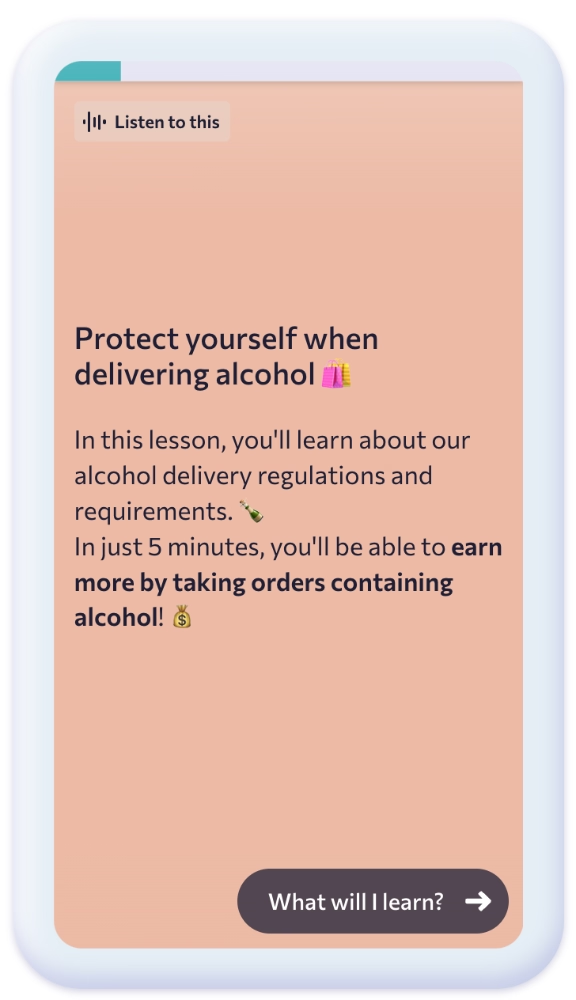
Using eduMe’s Scenario Videos, Uber built immersive conflict-resolution training.
Within these programs, drivers encounter interactive, real-world scenarios, such as identifying high-risk situations or responding to emergencies, and make decisions that impact the outcome.
They also get immediate feedback based on their answers in the training, which helps them understand the best approaches for de-escalation and safe, effective customer interactions.
This approach made training highly engaging, with 97% of participants finding the content useful and a 31% increase in completion rates.
What makes this a strong example?
✅ Uses realistic, interactive scenarios to build practical skills.
✅ The training improves both employee performance and customer satisfaction.
SaaS: Microsoft’s role-specific new employee onboarding
At Microsoft, onboarding for software developers is largely hands-on and on the job.
Instead of just attending lectures or completing online modules, new team members begin working on real engineering tasks, such as fixing bugs or implementing small features.
This approach is an example of on-the-job training, where employees learn by performing actual work in a guided, supportive environment. It allows them to immediately apply knowledge, develop skills in context, and gain confidence while contributing to team projects.
Surveys of 189 developers and 37 managers confirmed that this practice improves productivity, job satisfaction, and overall onboarding outcomes.
What makes this a strong example?
✅ Combines real work with social integration to help new hires adapt quickly.
How to choose the right training method for your team
1. Identify skill gaps
- Conduct assessments, surveys, and performance reviews.
- Gather feedback from managers and peers.
2. Prioritize training needs
- Rank skill gaps by business impact, urgency, and number of employees affected.
- Focus on areas that directly influence performance or critical business outcomes.
3. Choose the right format for the task
- Match training type to skill and consider blended learning.
4. Select the right tools and resources
- Use LMS, learning apps, or interactive platforms to scale training.
- Include job aids, checklists, or guides for on-the-job support.
5. Set clear learning objectives and outcomes
- Define measurable goals for post-training performance.
- Ensure outcomes align with organizational objectives.
6. Plan the learning journey
- Schedule your training logically: start with basic skills before advanced ones.
- Provide opportunities to practice and apply learning in real tasks.
7. Incorporate reinforcement and feedback
- Use quizzes, assessments, or simulations to reinforce knowledge.
- Provide regular feedback from managers or mentors to support learning.
8. Track improvement and measure impact
- Monitor performance metrics, completion rates, and skill mastery.
- Gather feedback from participants and managers to refine content and approach.
9. Iterate and update training
- Adjust training content, delivery, and tools based on results and evolving needs.
- Keep materials up-to-date with new processes, tools, or technologies.
💡Pro Tip: When you’re monitoring the performance of your training and learning initiatives, try to be mindful of what metrics you track.
There are vanity metrics that look good on dashboards (like course completion rates), but do not actually measure the real impact of your employee training programs. While these can still offer some insight into employee engagement with training programs, for example, low completion rates might indicate inefficient delivery methods, they do not necessarily demonstrate knowledge retention.
So, depending on your training materials and subject matter, you need to come up with other ways to measure the effectiveness of your training.
Next steps
Your training programs will naturally evolve as your team and business needs change.
So don’t hold back waiting to create the “perfect” training with the perfect format and perfect material.
Because it doesn’t exist.
What you can do is launch a solid version, track how people engage with it, gather feedback, and make small improvements over time.
Frequently Asked Questions
What are the most effective onboarding training examples for new employees in SaaS companies?
Employee onboarding works best when you combine in-app guidance with other learning formats so employees get support both in context and at a broader skill level. Google’s onboarding model, for example, demonstrates how pairing hands-on software training with mentorship and role-specific sessions deepens understanding. When you offer help at the moment of need and reinforce it through live or self-paced learning, employees gain confidence faster and use the software more consistently.
What are the best customer service training examples that improve CSAT scores?
Scenario-based training works especially well for customer-facing teams because it exposes employees to realistic situations they are likely to encounter. Uber’s immersive conflict-resolution modules show how interactive decision-making and immediate feedback help people learn the best way to respond to tense or high-risk moments. You create higher CSAT when your training focuses on practical moments, emotional awareness, and consistent service behaviors that people can practice repeatedly.
What are the most crucial sales enablement training examples with role-play scenarios?
The most effective sales enablement examples use real conversations, realistic objections, and guided feedback. Programs like Cisco’s SaaS-focused workshops and Playbook’s use of recorded sales calls help reps understand customer needs and refine messaging in context. You build stronger skills when reps practice discovery questions, solution positioning, and negotiation in simulated or real scenarios where they can review their performance and get specific coaching afterward.
Which compliance training examples for regulated industries like finance and healthcare work the best?
You see better outcomes when compliance training is interactive, contextual, and designed to support recall rather than passive consumption. Programs like EI Design’s gamified Code of Conduct course show that employees engage more deeply when they navigate scenarios and make decisions that mirror real ethical dilemmas. In healthcare settings, digital platforms with role-specific modules and measurable progress tracking help you reinforce critical standards consistently across large, distributed teams.
What do the most effective leadership and management training examples for first-time managers include?
Effective leadership training gives new managers a mix of self-awareness, real practice, and structured support. Programs like Verizon’s VLeads show that assessments, coaching, peer learning circles, and targeted workshops help managers build confidence and adopt strong communication and decision-making behaviors. You create long-term impact when training connects directly to daily responsibilities and gives managers repeated opportunities to apply what they learn in their own teams.
What are the microlearning employee training examples for remote teams?
You can deliver short product updates, customer-service reminders, and process explanations directly inside tools employees already use. These small, repeatable pieces help people stay current with minimal friction. Platforms that send mobile-friendly learning bites or embed guidance into daily systems make it easy for remote teams to learn continuously and revisit key topics as needed. Hyundai, for example, offers a mobile app for their sales representatives, through which they provide microlearning courses on customer service practices as well as new products.
Which cross-training program examples that support internal mobility work the best?
Cross-training programs help employees develop skills outside their current roles while staying aligned with business needs. Programs like Cisco’s SaaS sales training allow hardware-focused sales teams to learn new approaches for selling software, broadening their capabilities and career opportunities. Similarly, Verizon’s VLeads program trains directors in leadership skills beyond their immediate responsibilities, helping them take on cross-functional roles. These examples show how targeted cross-training can prepare employees for internal mobility and future leadership opportunities.
What are some of the diversity and inclusion training examples with measurable outcomes?
PwC’s approach, which uses inclusion networks, mentorship, and ongoing surveys, helps employees build belonging while giving leaders visibility into engagement and retention patterns. You see stronger outcomes when your DEI training includes both structured learning moments and opportunities for employees to connect, reflect, and share feedback that guides future improvements.
Which software training examples using in-app guidance tools work better?
Examples like RAM’s step-by-step walkthroughs show how interactive guides, tooltips, and checklists help people learn software without long manuals or scheduled sessions. With in-app guidance, you reinforce adoption when instructions appear directly in the workflow and employees can repeat steps anytime. This reduces errors, speeds up onboarding, and keeps teams aligned on how to use key tools. You can use product adoption tools like UserGuiding and WalkMe to create in-app guides and help materials.
What are the best safety training examples for manufacturing and warehouse staff?
Safety training should be practical, repeatable, and tied closely to daily tasks. You support safe behavior when employees practice scenarios in workshops or simulations and revisit microlearning reminders on equipment use or hazard awareness. That is why AR and VR technologies are becoming more and more popular for safety training in the manufacturing industry.

.png&w=3840&q=75)