

.svg)
.svg)
.svg)
.svg)



.svg)




.svg)
.svg)

User onboarding has one primary goal: Help people become better at what your product enables them to do, as Wes Bush (CEO and co-founder at ProductLed) says in his LinkedIn post 👇
This cannot be a one-and-done occasion if a company aims for long-term success. Research backs this up. According to Gartner, when onboarding is viewed as a one-time event, B2B providers miss out on the opportunity to design follow-on experiences that build on that foundation and deepen the customer relationship.
This includes product managers as well. With all the business goals, user goals, questions of feasibility, product managers cannot afford to approach user onboarding as just teaching features.
Luckily, the right user onboarding tool can make all the difference in 2026.
In this article, we’ll cover multiple ways how product managers can build onboarding experiences, what AI brings to the table, and how to pick the best tool so ROI stays consistent.
From free coding libraries to no-code in-app onboarding tools, if it exists, we’re covering it. Let’s dive in.
TL;DR
- No-code in-app onboarding tools allow non-technical teams to create user guides, product tours, and other interactive onboarding experiences within your product, mostly for education.
- Open-source onboarding tools are coding libraries used to create highly customizable user walkthroughs and onboarding elements like tooltips or hotspots.
- Email onboarding tools are used to create, schedule, and automate your onboarding emails.
- Video onboarding tools help you pre-record guiding video tutorials and webinars.
- Onboarding analytics tools are designed to monitor and optimize the effectiveness of your onboarding flows, not create them.
- Knowledge base tools enable you to centralize all your onboarding materials in one hub.
- User feedback tools allow you to communicate with your users and understand what they feel about your onboarding flows or product.
- A/B testing tools are experimentation tools for different versions of landing pages, onboarding forms, flow sequences, etc.
- Live chat tools help you manage real-time communication channels with your users through human support reps and/or AI chatbots.
Why Product Managers Need Dedicated Onboarding Software
AI has enabled a lot. From launching products and websites to lowering the bar for coding, it has shown people that many things can be done faster and with less time commitment.
This includes user onboarding too. That’s why there’s a big shift from high-scale and development-heavy products to “zero coding required” solutions. Because customers want to build things in minutes instead of waiting for IT to build it for them.
This coincides with the rise of action-based logic as more users move away from linear walkthroughs. They want onboarding to be shaped by their preferences, key actions, and use cases.
Product managers need to be aware of these changes and advocate for the necessary steps to keep up with the onboarding race. The easiest way to do so is having dedicated onboarding software.
This software empowers customers and product managers alike by removing developer bottlenecks and turns visibility into action by tracking these metrics:
- Activation rate: Product managers should define a clear “aha! Moment,” where users first realize the core value of your product, and measure the percentage of new users who reach this milestone within a specific time frame. However, there are some common pitfalls that many product managers fall into. First, defining activation too broadly or including too many steps within the definition makes the metric too noisy. Not using session recordings or user interviews to understand why users activate or not is also a common mistake.
- Time-to-value (TTV): Perhaps the most important metric of it all, and one that you cannot afford to ignore, is time-to-value. It is the duration between purchase or sign up and the moment a user reaches the “aha! moment”. A shorter TTV directly correlates to how quickly a solution proves its worth. Therefore, product managers should monitor user journey milestones and segment data to get the best insight.
- Feature adoption: Feature adoption is the rate at which users discover, engage with, and build a habit out of using a new feature. Product managers should pay attention to depth of adoption (how much of the feature’s capability is being used) as much as usage frequency and the time relapsed between a user learning about a feature and actually trying it.
The Role of AI in 2026 User Onboarding
Users sign up, complete a product tour, then fend for themselves to figure out the rest of the product and its features. And this user onboarding system worked for a while. But not anymore.
Predictive behavioral modeling changed the game. Now, instead of triggering the same product tour and tooltips for every new user, you can suggest new tours based on what users struggle with the most. They’re not using a key feature that helps their use case? Trigger an onboarding sequence targeted at that feature.
When this behavioral model is combined with AI, the result is even better: AI-driven onboarding reduces time-to-productivity by 40%.
What used to be a static, one-size-fits-all experience (where every user followed the same product tour) is now dynamic, adaptive, and continuously improving based on real behavior. The shift is being driven by predictive modeling and automation that removes guesswork for both users and product teams.
Here’s how AI changes user onboarding in 2026:
- AI suggests the “next best action” for each user: Modern onboarding tools go beyond reactive triggers. By combining historical data with real-time behavior, AI can recommend the most relevant next step — whether that’s exploring a feature, completing a setup task, or revisiting a skipped step. This creates a personalized path to value instead of a predefined journey.
- Users see less noise and more relevant guidance: Because activation events and onboarding steps are dynamically determined, users aren’t overwhelmed with unnecessary prompts. AI ensures they only see what’s relevant to their goals and current progress, while giving them the flexibility to skip steps that don’t apply. This creates a sense of control without sacrificing guidance.
- Faster iteration leads to continuously improving onboarding: Because creating and updating tours is no longer a bottleneck, teams can experiment more frequently. Combined with AI insights, this creates a feedback loop where onboarding is constantly refined based on what actually drives activation and retention.
Quick Summary Matrix: Top User Onboarding Platforms in 2026
A product manager rarely has the time to investigate every user onboarding product on the market. It’s especially harder to keep up since new tools enter the market every other day.
To give you a starting point and guide your search, we’ve looked at:
For many product managers, the biggest differentiator is how quickly you can launch and iterate on onboarding experiences.
Meanwhile, complexity, especially longer adoption cycles and technical involvement, can be potential tradeoffs.
If your goal is to build in-app onboarding (product tours, checklists, tooltips, and announcements), you don’t need an all-in-one enterprise suite. Instead, tools that balance ease of use and capability tend to deliver faster results.
No-Code In-App Onboarding Tools
There isn’t a faster way to deliver value than onboarding within the product. Because Wes Bush is right: In the AI era, users won’t tolerate hand-holding. They don’t want training wheels … The product is onboarding.
What we disagree on with Bush is that onboarding doesn’t disappear completely. It becomes part of the product experience. Users still learn by doing and they iterate using that experience.
Here are twelve no-code user onboarding tools that will help product managers hit the expected time-to-value 👇
1) UserGuiding
UserGuiding is a product adoption platform built for product managers who want to move faster without waiting on engineering.
Drive activation, improve retention, and own the onboarding experience end-to-end with:
✅ Interactive product tours and in-app guides
✅ User onboarding checklists that actually get users to “aha” moment
✅ Hotspots, tooltips, and contextual in-app messaging
✅ Resource centers and self-serve knowledge bases
✅ NPS and in-app surveys to capture feedback in the moment
Ship better onboarding. See impact sooner. Stay in control. Here’s what UserGuiding looks like in action👇
📢 Latest features and enhancements
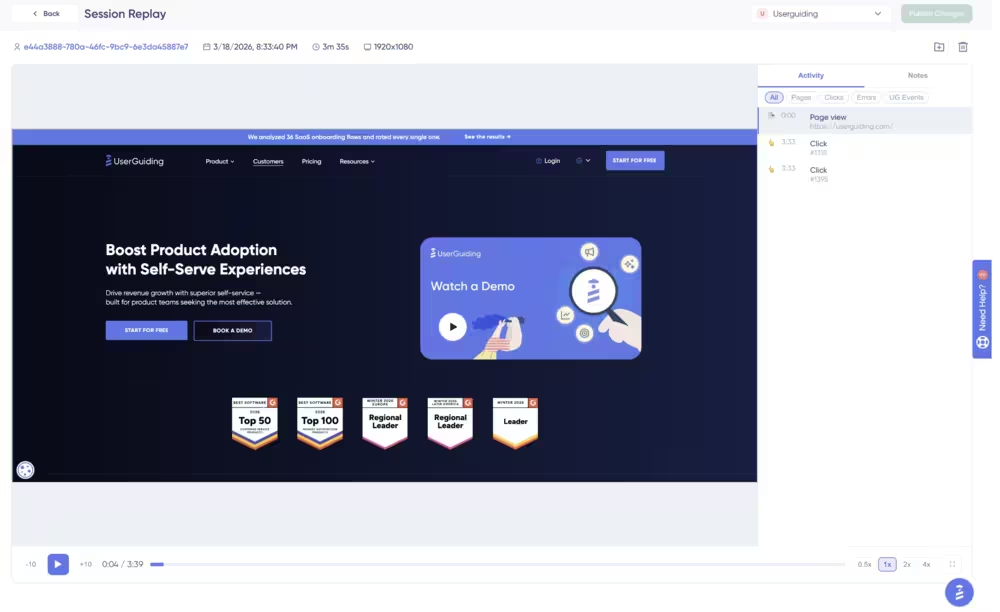
UserGuiding introduced session replays in March 2026. With session replays, you can understand the real experience behind the numbers.
While dashboards show you what is happening, session replays show you why with full onboarding recordings that capture navigations, clicks, scroll depth, rage clicks, and errors.
In April 2026, UserGuiding also released its MCP server. It connects AI tools directly to your UserGuiding projects’ live data, so you can run natural-language queries without SQL or exports. The MCP server is available across user management and analytics, and pairs with the product’s no-code event tracking to cover the analytics stacks most teams use without extra pay.
🥇 UserGuiding was also named leader for SMBs across many regions, including UK, EMEA, and Asia Pacific on G2!
2) Appcues
Appcues is a customer engagement platform and experience orchestration engine that helps users create personalized user experiences across in-app, email, and push notifications.
You can use the platform’s key features to complete onboarding:
✅ Pins (tooltips and buttons)
✅ Analytics
✅ Event tracking
✅ Banners
✅ NPS surveys
✅ Experiments (A/B testing)
✅ In-app resource center (Launchpad)
Here’s what the product looks like inside👇

📢 Latest features and enhancements
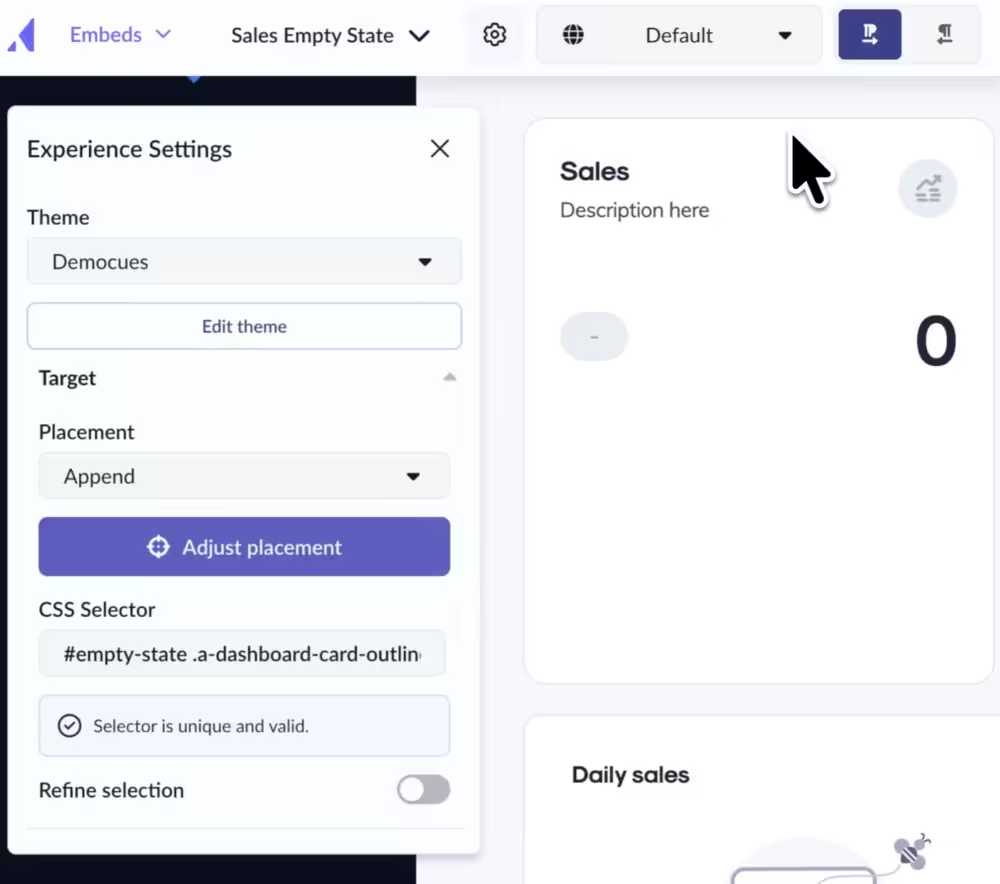
Appcues announced Embeds in April 2026. Rather than living on top of your product (such as modals, tooltips, and banners), Embeds are a new type of experience that lives directly inside your product. The goal is to make the product experience feel native rather than interruptive.
3) Pendo
Pendo is a product experience and analytics platform that helps you surface insights for what features employees and users are interacting with and what parts of the product are driving delight or frustration. It also provides onboarding features, including:
✅ Guides
✅ Analytics
✅ Session replay
✅ NPS and in-app feedback
✅ Orchestration
✅ Journey mapping
Here’s what Pendo’s Guides look like within the product 👇

📢 Latest features and enhancements
Pendo introduced its app health feature in open beta in March 2026. App health helps you see all apps in one place and compare key metrics side by side. The feature intends to show you which one of your apps are growing, stalling, or needing attention without the need for building custom dashboards.
As a result, you can compare adoption and engagement across apps.

4) Userpilot
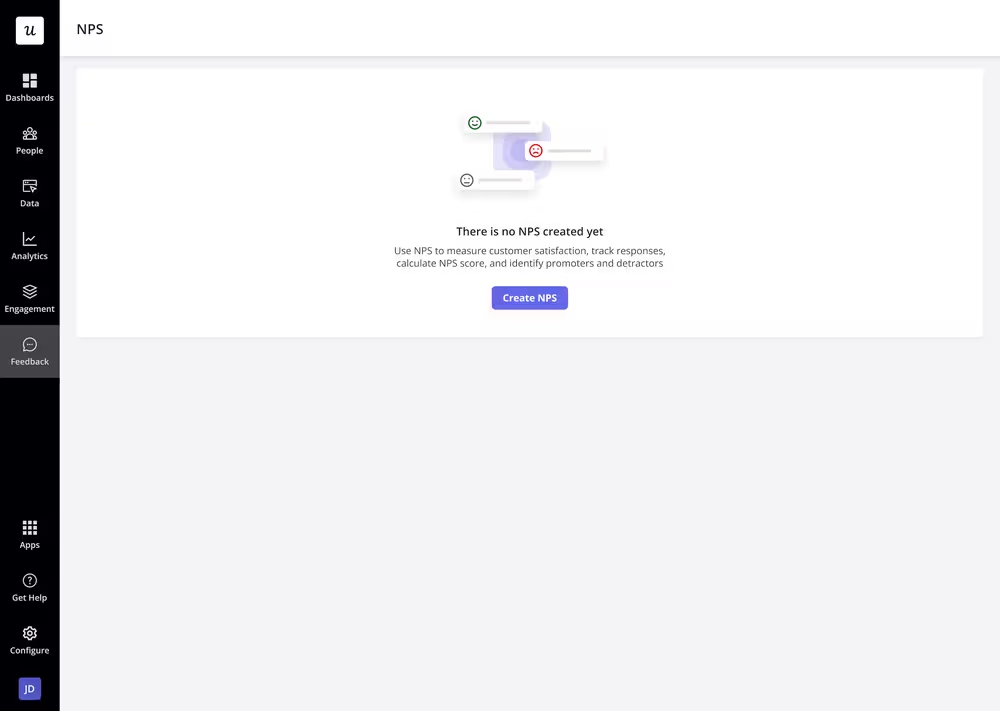
Userpilot is a product growth platform that combines product analytics, session replay, and in-app engagement to increase product adoption. It offers features in four different use cases:
✅ User onboarding (checklists, product tours, banners)
✅ Product analytics (event tracking, trend/funnel/retention analysis)
✅ User feedback (NPS, CSAT, CES, and other in-app surveys)
✅ Session replay (session recordings and playlists)
Here’s what Userpilot looks like in action 👇
📢 Latest features and enhancements
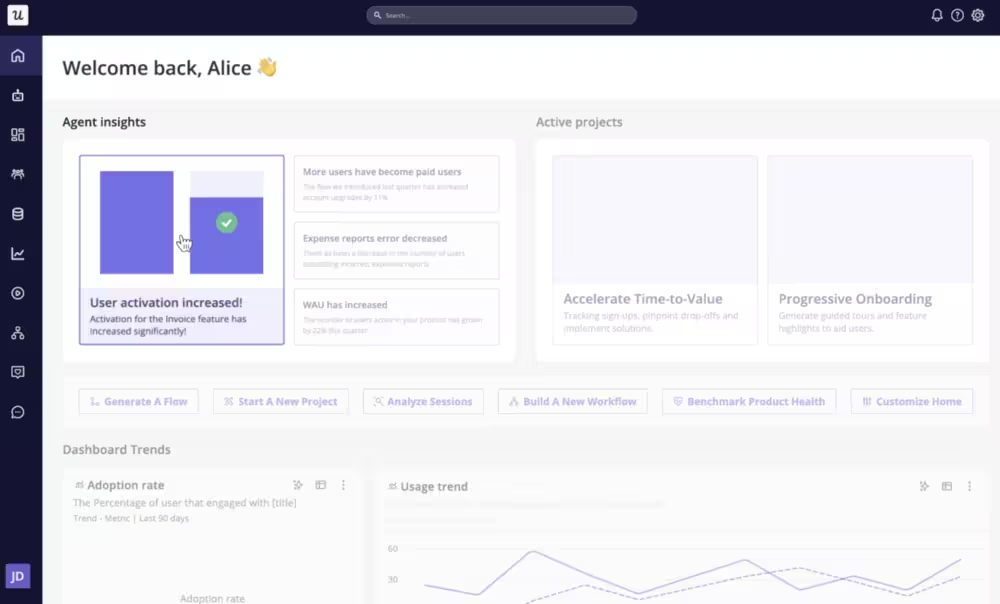
Userpilot has a beta waitlist for its product growth AI agent, Lia. Instead of just sending an alert, Lia automatically creates an in-app message, tour, or survey, and monitors results to see what’s working or not and takes action accordingly.
5) Userflow
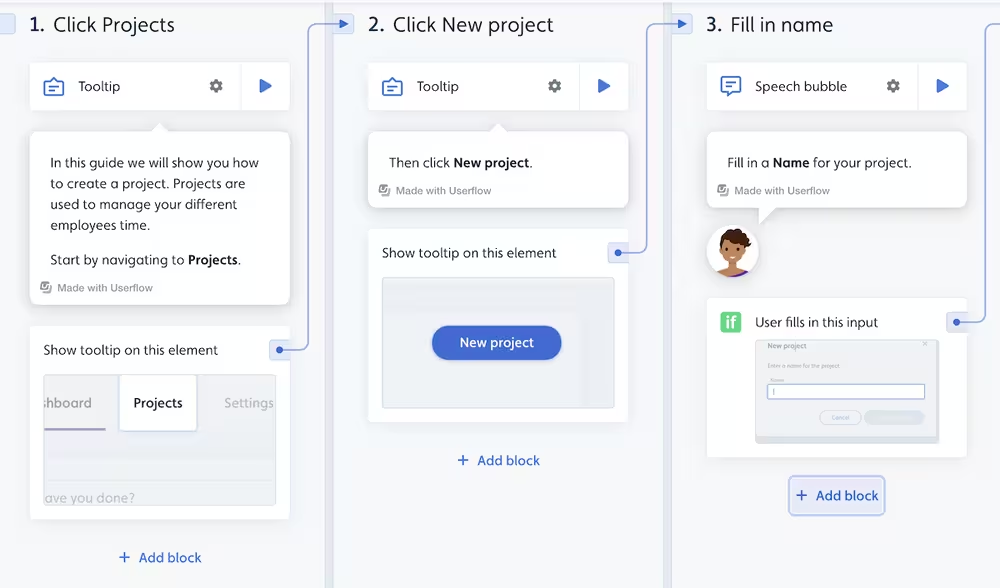
Userflow is a user onboarding and product adoption software that helps teams build in-app experiences and support users in the moment. It offers features like:
✅ Product tours, checklists, and Smartflows
✅ FlowAI Adoption Agent
✅ Resource center
✅ Banners and announcements
Here’s what the product looks like👇
📢 Latest features and enhancements
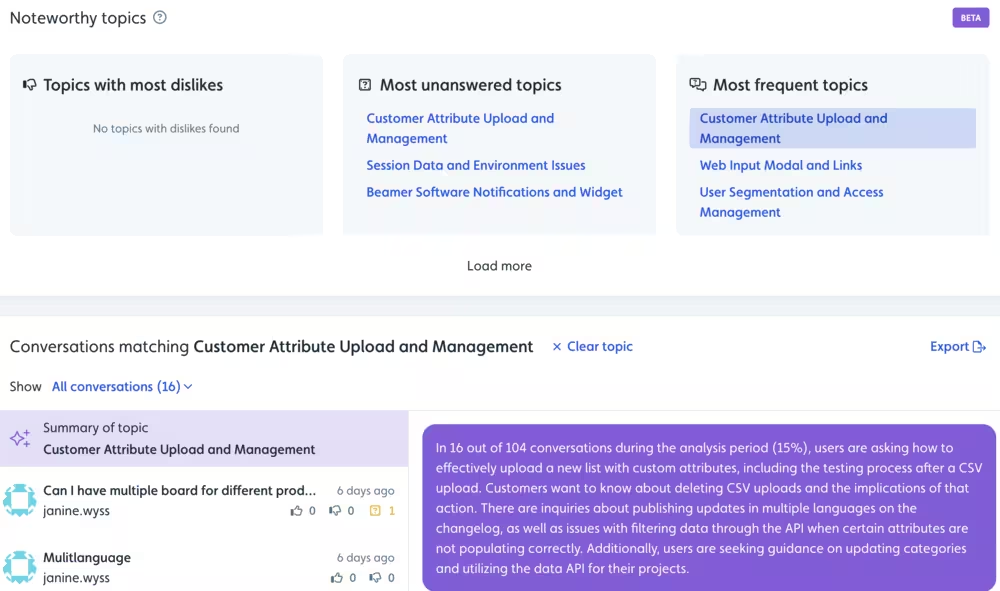
Userpilot announced FlowAI Signals for Adoption Agent in March 2026. Signals aim to show you patterns across user questions and interactions without the need to manually dig through conversations. The goal is to spot repeated questions instantly and uncover friction in workflows.
6) Product Fruits
Product Fruits is an AI-powered user onboarding platform where you can create onboarding elements, such as:
✅ Product tours and guides
✅ Hints and tooltips
✅ In-app announcements
✅ Onboarding checklists
✅ NPS and surveys
✅ Knowledge base
✅ Feedback widget and Copilot
Here’s what Product Fruits looks like in action 👇
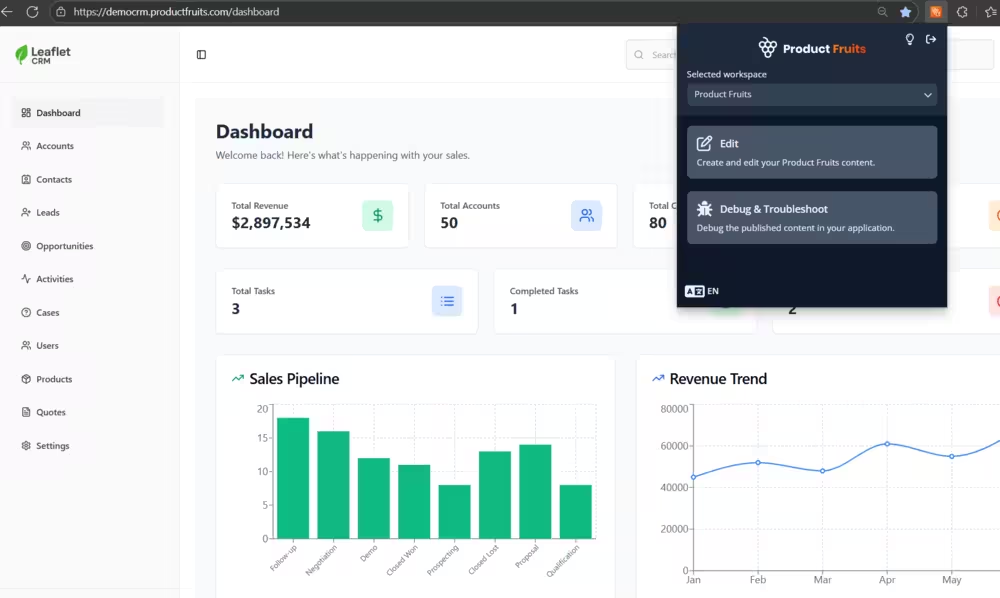
📢 Latest features and enhancements
On April 9, 2026, Product Fruits CPO, Martin Fišera, revealed the first look at Discoveries on a webinar. Marketed as a “smarter alternative to traditional in-app surveys,” Discoveries uses Elvin AI (Product Fruits’ AI product) to generate a conversational and non-intrusive micro-survey.

7) Userlane
Userlane is a no-code digital adoption platform that combines application intelligence with contextual assistance to remove friction during customer and employee onboarding. Especially for internal training, user engagement, and software adoption at scale.
Though it’s primarily better suited for employee onboarding, but offers features that fit both use cases:
✅ HEART analytics
✅ Platform reporting
✅ App discovery
✅ In-app guides
✅ Resource center
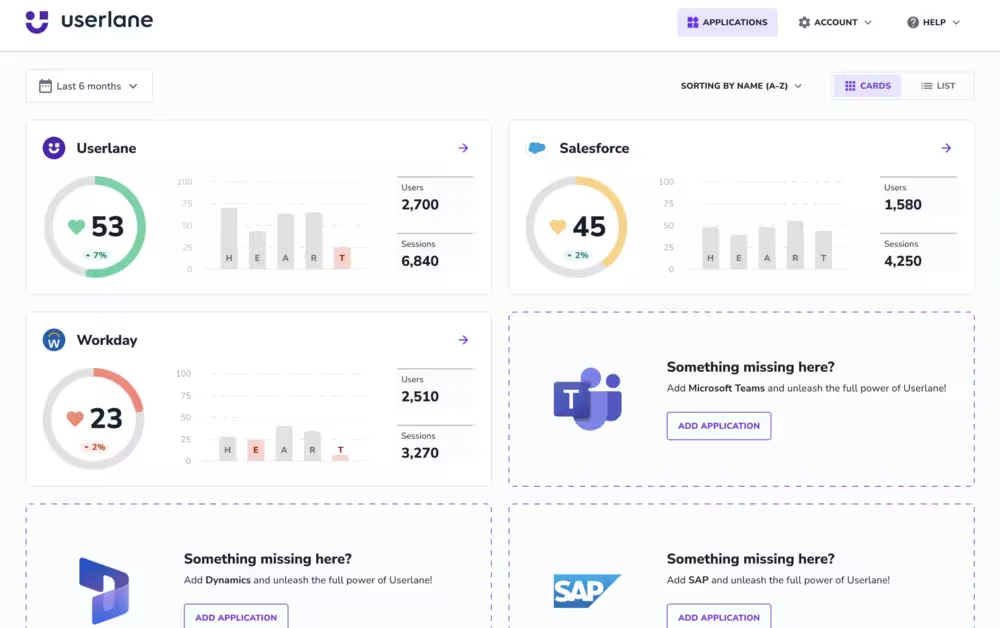
📢 Latest features and enhancements
Userlane introduced four new improvements in the first quarter of 2026: task flow visualization, AI assistant analytics, new team roles, and tracking tasks with multiple starts. These features aim to show what users ask about or use the most within a product and how teams can coordinate better to meet their needs.
8) Chameleon
Chameleon is a no-code product adoption platform designed for SaaS businesses to create onboarding flows and more broadly, in-product experiences. Its main features include:
✅ Product tours
✅ Tooltips, banners, and embedded cards
✅ Announcement modals
✅ Checklists
✅ Resource centers
✅ NPS and micro surveys
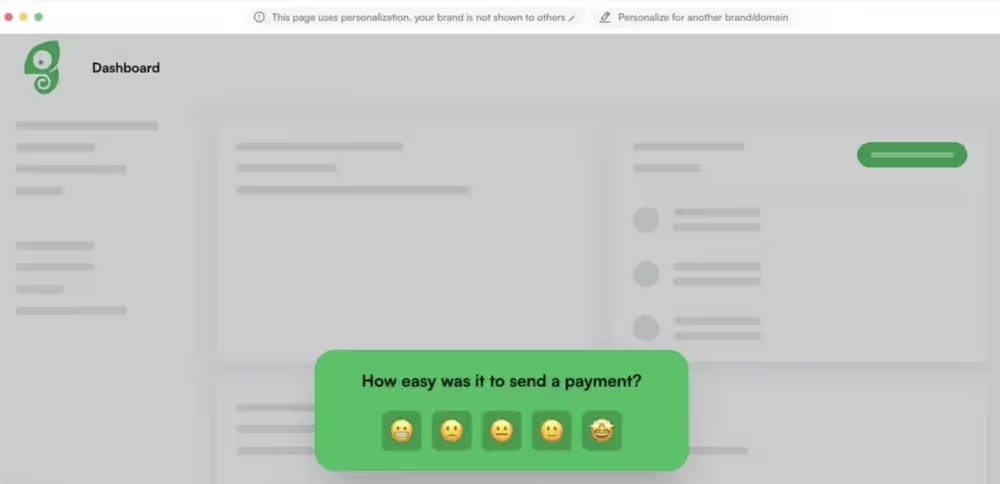
📢 Latest features and enhancements
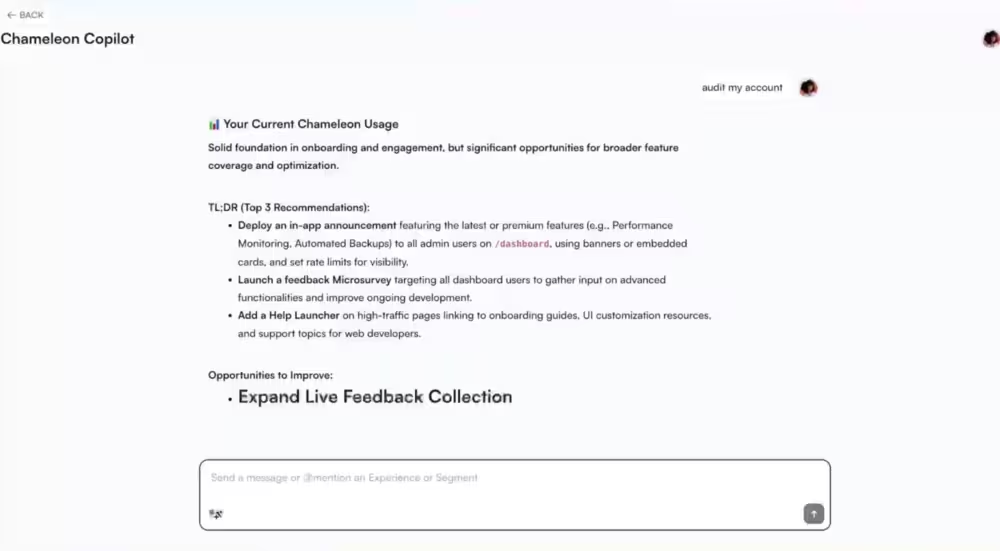
Chameleon announced in April 2026 that its Copilot (Agent dedicated to in-app growth) can now run full account audits. This feature is intended to identify underperforming experiences, features with zero in-app guidance, and other opportunities you’re missing. When you run an audit, Copilot comes up with recommendations specific to your setup and product.
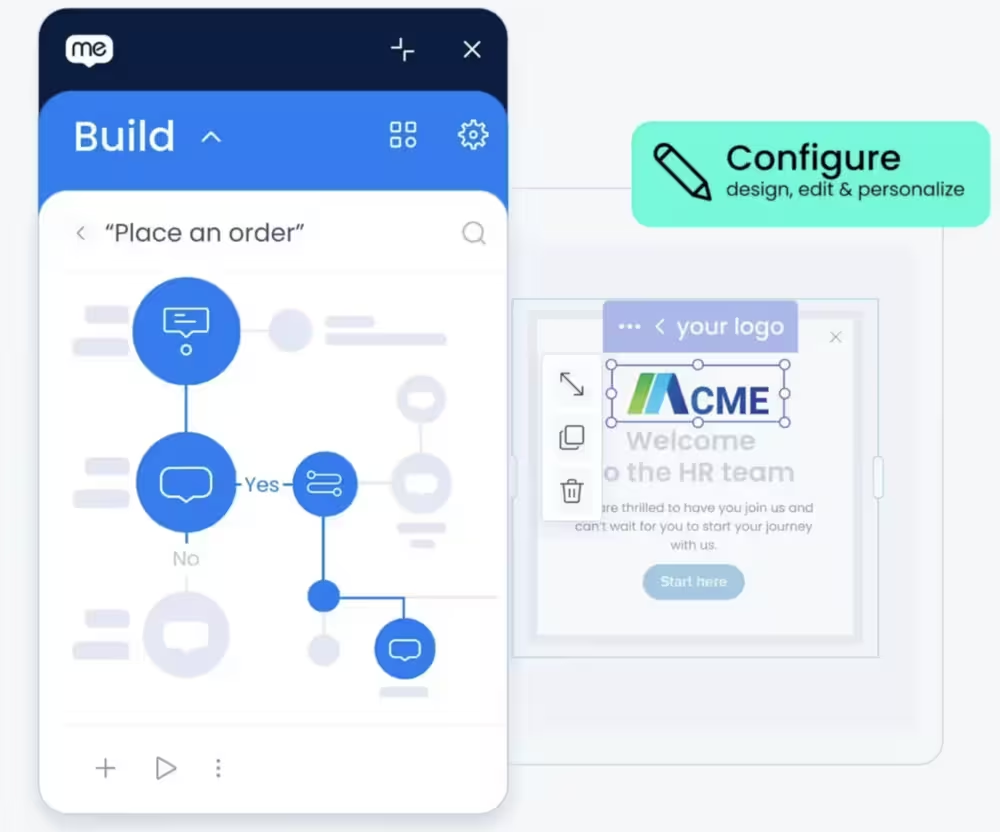
9) WalkMe
WalkMe is another digital adoption platform (DAP) that acts as an AI-powered overlay on top of existing software, automating tasks and providing on-screen guidance.
Similar to Userlane, WalkMe’s main use case is employee onboarding. And its feature sets vary depending on whether you use the platform for employee or user onboarding.
Regardless of the plan, the core features WalkMe provides for adoption are:
✅ Interactive in-app guidance
✅ Notifications and surveys
✅ ActionBot
✅ Personalization based on user actions
Analytics and data capabilities differ significantly between the two plans. Moreover, WalkMe is often categorized as a low-code tool, meaning that you still need to code in order to customize and use the platform to its full potential.
Check out the best WalkMe alternatives for different use cases and needs.
📢 Latest features and enhancements
WalkMe introduced its Learning Arc in 2026, which aims to put learning in context. As an alternative to traditional courses, Learning Arc turns every workflow into a learning opportunity by creating personalized, data-driven training in context and helping employees learn new skills directly inside the app.
10) Jimo AI
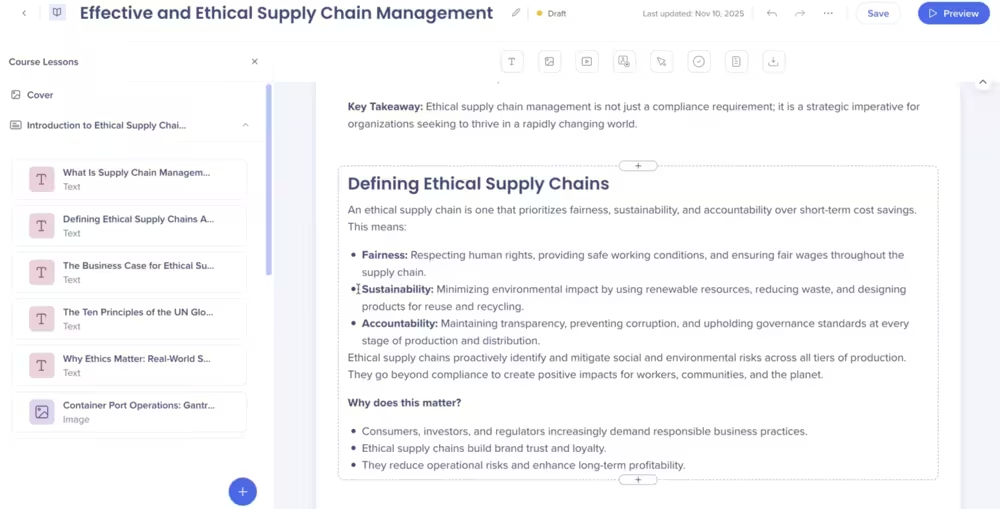
Jimo AI is an up-and-coming AI-powered user onboarding platform and it’s purpose-built for this use case. To help customers offer contextual assistance, Jimo AI offers the following features:
✅ Tours and modals
✅ AI resource center
✅ Checklists
✅ Surveys
✅ Hints
✅ In-app announcements
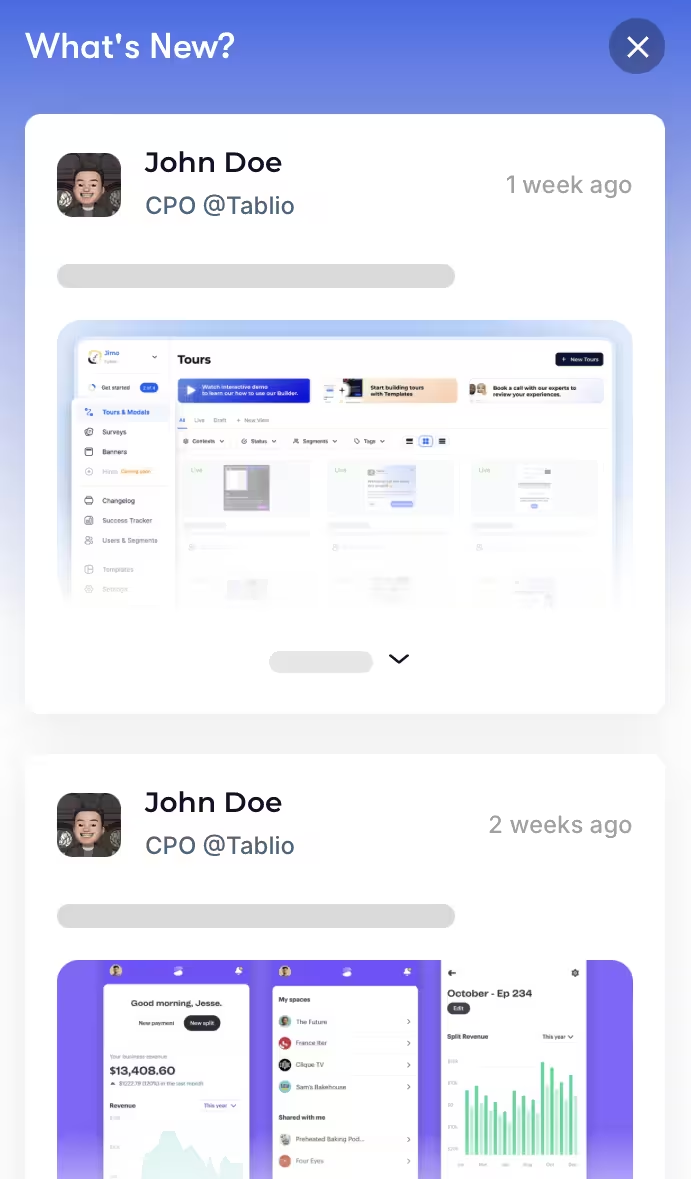
✅ Changelog widget
✅ Success tracker
Similar to WalkMe, Jimo AI is a low-code tool.
📢 Latest features and enhancements
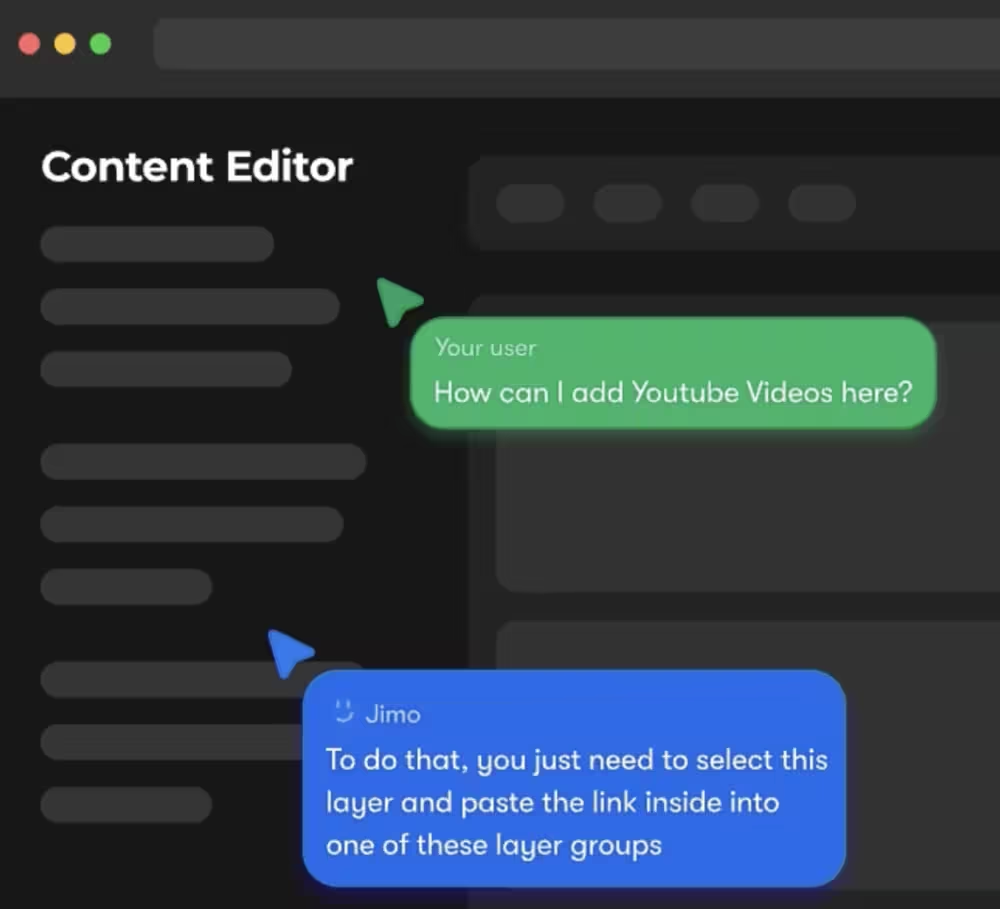
Jimo AI has been teasing an AI-powered in-app cursor since late 2025. The cursor can appear contextually based on user interactions to help them find and use features relevant to their tasks.
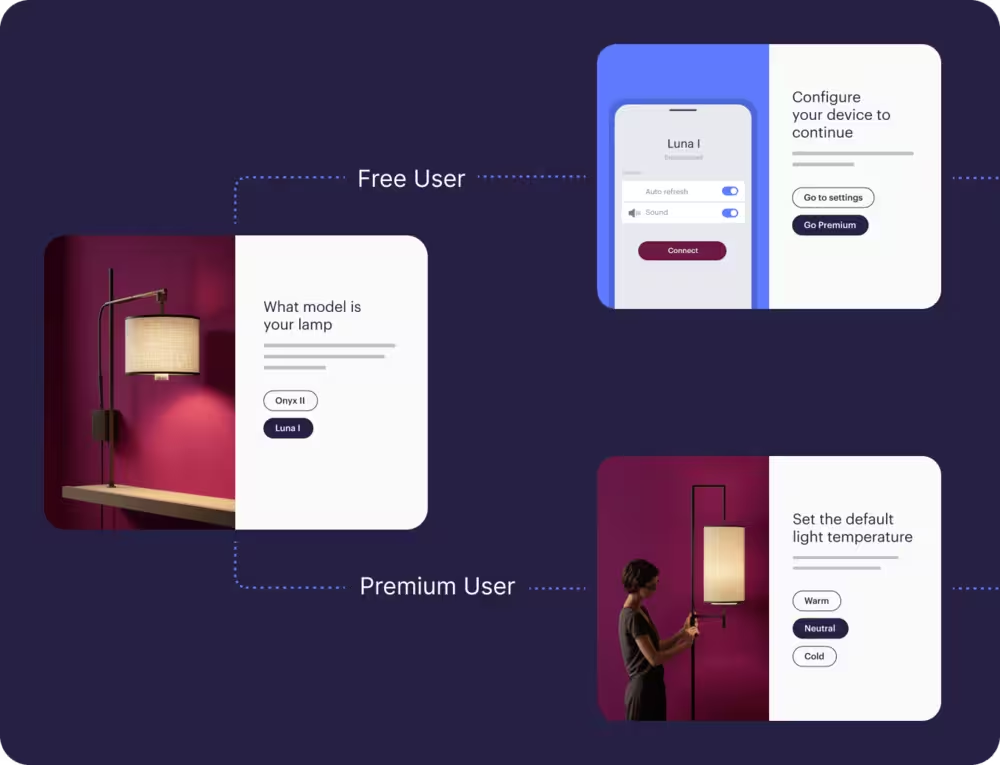
11) Stonly
Stonly is a digital adoption platform that mainly serves customer support use cases. It’s a simple tool with essential user onboarding features, but its simplicity can be a drawback too because some other onboarding essentials (such as in-app surveys and product announcements) are missing.
Here’s what Stonly has to offer:
✅ Interactive guides
✅ Knowledge base
✅ AI answers
✅ Guided tours
✅ Contact forms
✅ The Widget (aka visual cues that provide contextual assistance)
📢 Latest features and enhancements
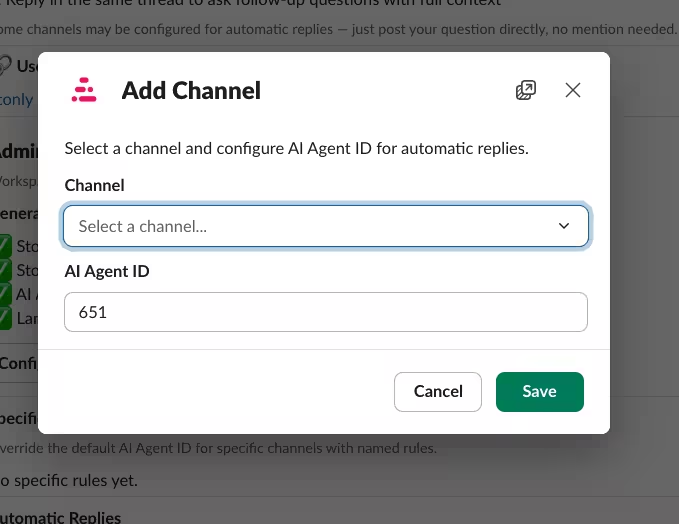
In March 2026, Stonly announced two big improvements: Slack integration and Breadcrumbs in UI. The first improvement allows you to integrate Stonly AI directly into Slack channels, while Breadcrumbs display navigation breadcrumbs to easily identify content when embedding a guide.
12) Gainsight
Gainsight has three main products:
- Gainsight CS for customer success
- Gainsight PX for product experience and adoption
- Gainsight Customer Communities for user engagement
It is a cloud-based platform designed to help B2B companies reduce churn and increase retention, and provides a 360-degree view of customer health by consolidating data and helping teams proactively manage customer relationships.
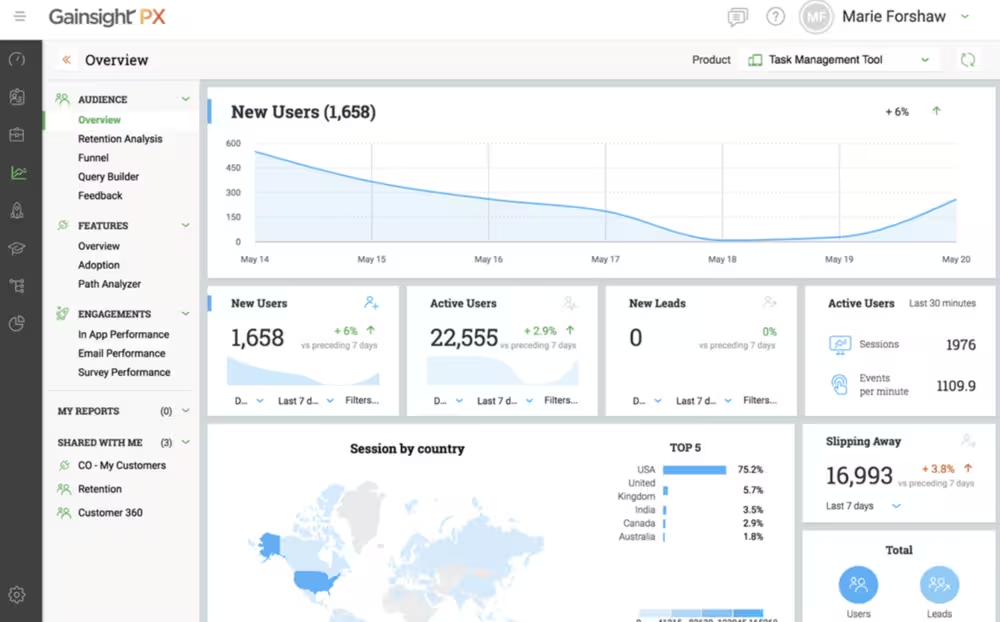
Though there’s some overlap between features and use cases, we’ll mainly focus on Gainsight PX for the purpose of this article. Here’s what Gainsight PX has to offer for user onboarding:
✅ Advanced product analytics
✅ AI-powered product mapping
✅ Self-paced, self-service guides
✅ Onboarding checklists
✅ Product tours
✅ In-app assistance
✅ NPS and micro surveys
✅ In-App Hub (Knowledge Center Bot renamed for branding)
📢 Latest features and enhancements
In the first quarter of 2026, Gainsight PX added rage clicks as part of behavioral analytics to help you identify unresponsive or confusing elements that might reveal user frustration. You can then use rage clicks to review and analyze repeated interactions and their patterns.

Open-Source Onboarding Tools
For many B2B product teams, third-party onboarding tools can fall short: too rigid for complex workflows or too expensive as you scale.
That’s where open-source onboarding libraries come in. You get full control to design onboarding around your product, your users, and your integrations.
However, there’s a catch. You’ll need engineering muscle as these aren’t plug-and-play tools. They take real work and coding hours to customize, implement, and maintain.
But if onboarding is mission-critical and you’ve got the developer resources, it’s a tradeoff worth making.
Here are a few options to check out:
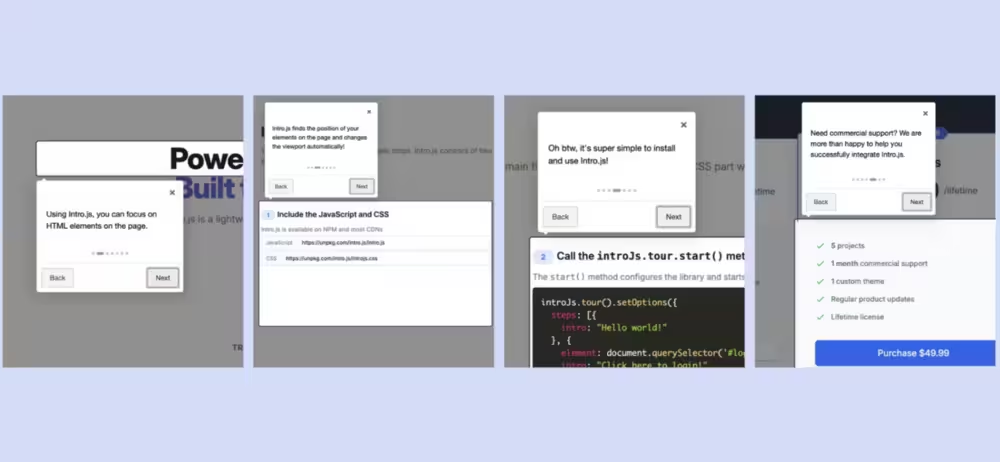
1) Intro.js
Intro.js is a JavaScript library that helps you build user onboarding step-by-step. For this use case, into.js is an effective tool. Simple and gets the job done. It offers:
✅ Product tours
✅ Highlight animations
✅ Tooltips
📢 Latest features and enhancements
Intro.js seems to shift its focus from new feature development to maintenance and bug fixes.
2) Shepherd.js
Shepherd.js is another JavaScript library designed for product tours. Similar to Intro.js, it’s highly customizable. Shepherd’s GitHub community is more active than that of Intro.js, so getting help might be easier.

📢 Latest features and enhancements
Shepherd.js also focuses on maintenance, patches, and bug fixes rather than new features and enhancements at the moment.
3) Tippy.js
Tippy.js is a lightweight tooltip and popover library with customization options. It offers features like:
✅ Support for rich content, including HTML, images, and videos
✅ Tooltips
✅ Animations

📢 Latest features and enhancements
Tippy.js is no longer under active development and is in read-only mode. However, it’s still a widely used library.
Email Onboarding Tools
If one part of user onboarding is engaging users within the app, the other is keeping their attention fresh outside the app. And the fastest way to do it is through onboarding emails.
From a product manager’s perspective, onboarding emails are a tool to accelerate the path to “aha! moment” and provide further guidance to users for increased feature adoption.
In the “SaaS Email Onboarding” episode of UI Breakfast, email onboarding expert and strategist Val Geisler explains that onboarding emails drive ongoing value, not just sending out subscription reminders.
Sometimes users are aware that there’s a problem and choose your product to solve it. But sometimes, they are neither aware of it nor understand its severity. As a product manager, it’s your job to ensure that these users feel connected to the product in and outside the app, which includes onboarding emails.
We’ve picked two tools that can help you put these strategies into action:
1) ActiveCampaign
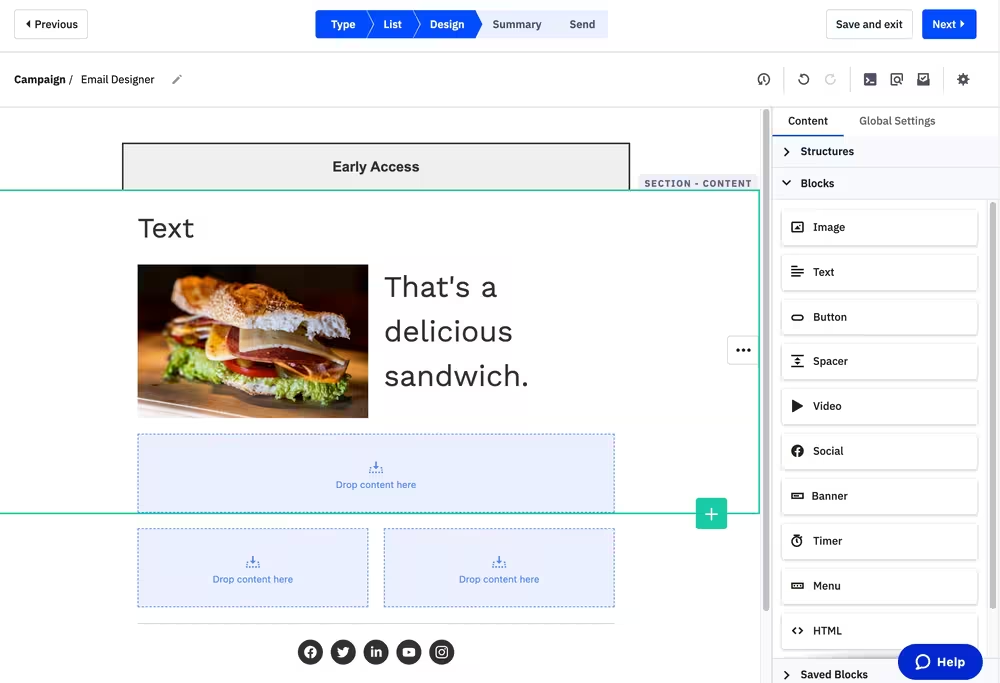
ActiveCampaign is a cloud-based platform for customer experience automation, combining email marketing, sales, and CRM. To make email marketing on-brand and personalized, ActiveCampaign offers various features, including:
✅ Drag-and-drop designer
✅ AI suggestions for send times, subject lines, and content
✅ AI assistance for user segmentation
✅ Deliverability check based on IP management and verified authentication
✅ Split testing
📢 Latest features and enhancements
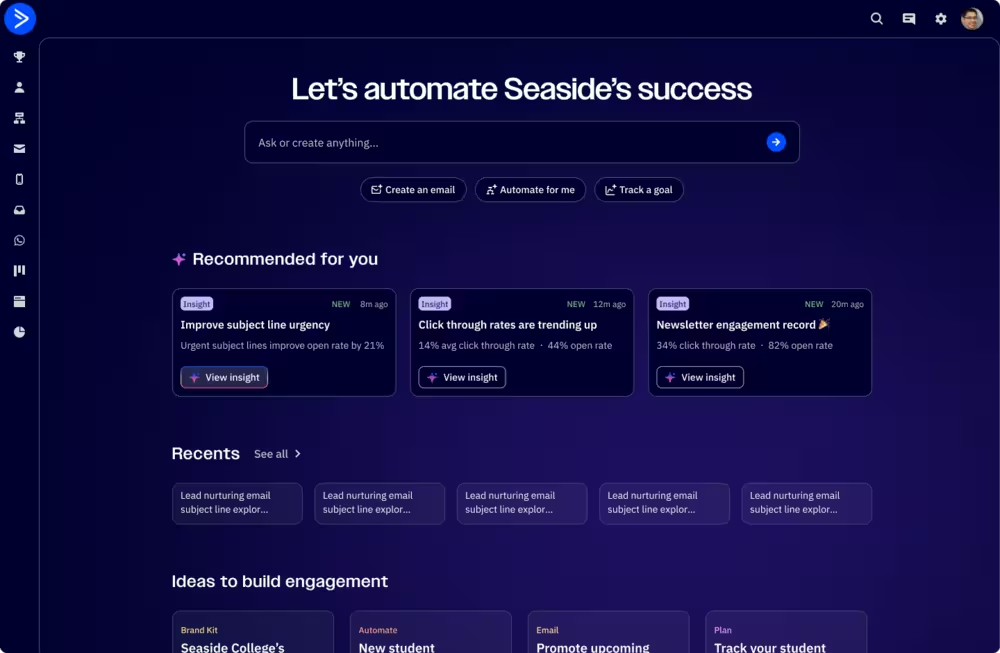
When many teams were getting out of the slump of the holiday season, ActiveCampaign dropped Autonomous Insights as part of the Active Intelligence feature in January 2026. Autonomous Insights provides you with proactive AI insights and recommendations that appear directly on your home page.
You can explore campaign insights and performance, get fresh insights delivered on a weekly cadence, and expand any insight to open a conversation where you understand the “why” behind recommendations. Available to all with Active Intelligence enabled.
2) Customer.io
Customer.io specializes in personalized marketing communications, including email automation. It covers the essentials of email onboarding and then some with features like:
✅ Drag-and-drop interface to build campaigns
✅ Multi-channel campaigns, including email, push, Slack, and more
✅ Segment, event, form, relationship, and webhook triggers
✅ A/B testing
✅ Conversion goals and analytics

📢 Latest features and enhancements
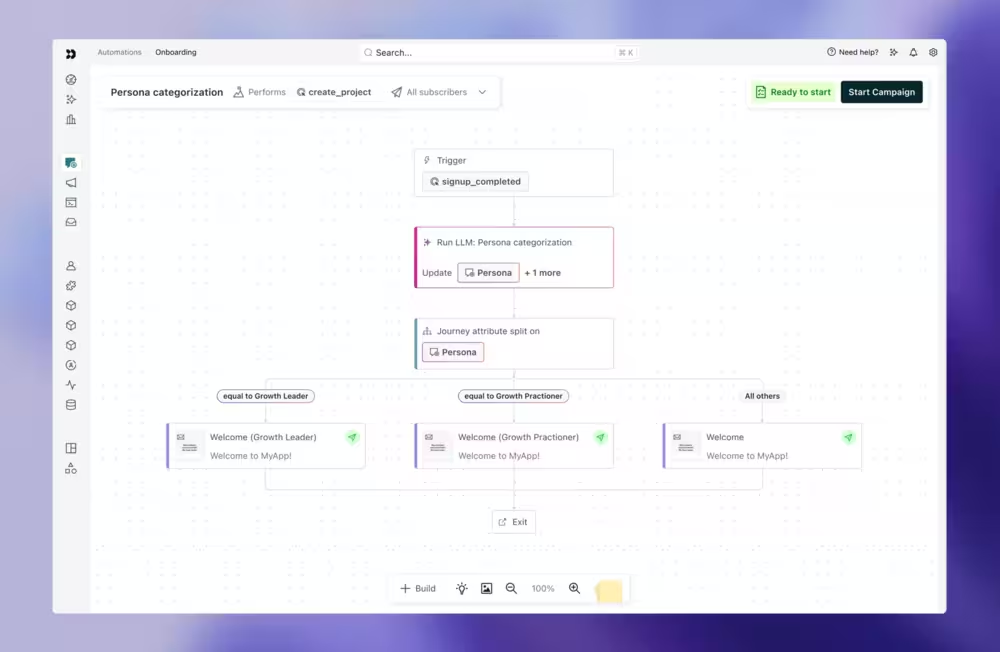
In April 2026 alone, Customer.io announced or released several new capabilities: AI-powered intelligence, outcome-first measurement, a redesigned experience, and expanded channel reach. Let’s go over what each one can do for your business:
- The AI Agent: The AI Agent uses your attributes, campaigns, and performance history to help you build anything from a campaign to a re-engagement journey.
- LLM Actions: You can use any large language model directly within a campaign workflow and store the output as a journey attribute, which can later be called to generate personalized content.
- Goals and universal search: Goals let you define specific outcomes you’re aiming for, while universal search makes your entire Customer.io workspace findable.
Video Onboarding Tools
Video onboarding is another effective tool that should be considered for every product manager’s toolbox.
Though in-app user onboarding tools take the lead easily (interactive elements and self-paced environments are hard to beat, to be honest), budget and timeline constraints can hold teams back from investing in one. Video onboarding can be the second best thing.
If all you need is a simple tutorial or a walkthrough, videos can make complex ideas feel easy to understand. And with many video tools offering voiceovers or simultaneous face recordings, there’s no wonder why 91% of users are on board with video format during the process.
Here are three tools you can use to create onboarding videos:
1) Loom
Loom is a cloud-based video messaging and screen recording platform. Built for asynchronous communication, Loom was acquired by Atlassian in October 2023, and has been part of the Atlassian ecosystem since.
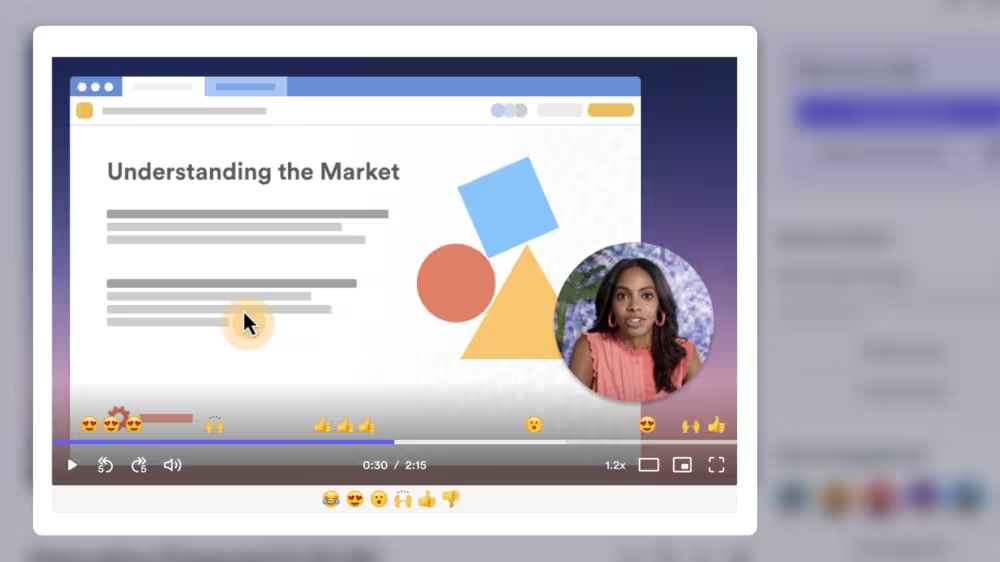
With Loom, you can:
✅ Record videos from your screen, webcam, or both
✅ Use drawing tools for annotation
✅ Get feedback, leave comments, and emojis
✅ Add external links
✅ Embed videos anywhere to educate users
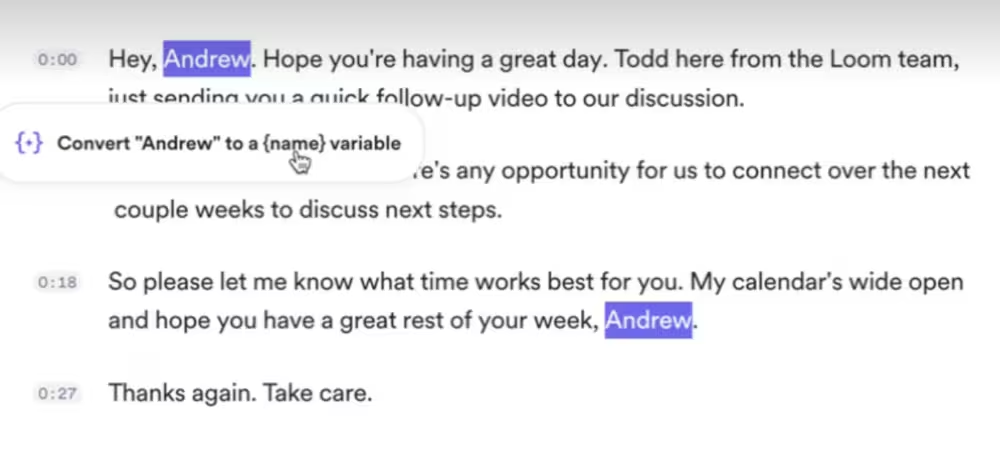
Here’s what Loom looks like in action:
📢 Latest features and enhancements
Loom announced a new feature to personalize looms (recorded videos) back in January 2025. Variables, which allows the recorder to record a high-quality demo and customize it for every recipient by swapping out a name or word. Variables automatically duplicate your video by replicating your voice, aiming to increase engagement. It also lets you upload a CSV of up to 100 recipients to create and send these videos with a few clicks.
2) VEED
Veed is a video creation and editing platform that offers a lot of features and capabilities for screen recording, video creation and editing, subtitling, dubbing, and many more workflows.
With Veed, you can:
✅ Record your screen, webcam, or both, with a built-in teleprompter
✅ Auto-generate subtitles and translate/dub videos into different languages
✅ Use "Magic Cut" and background noise removal to clean up raw recordings
✅ Apply a Brand Kit (colors, fonts, logo) for consistent-looking tutorials
✅ Type a script and let AI turn it into a voiceover-led demo
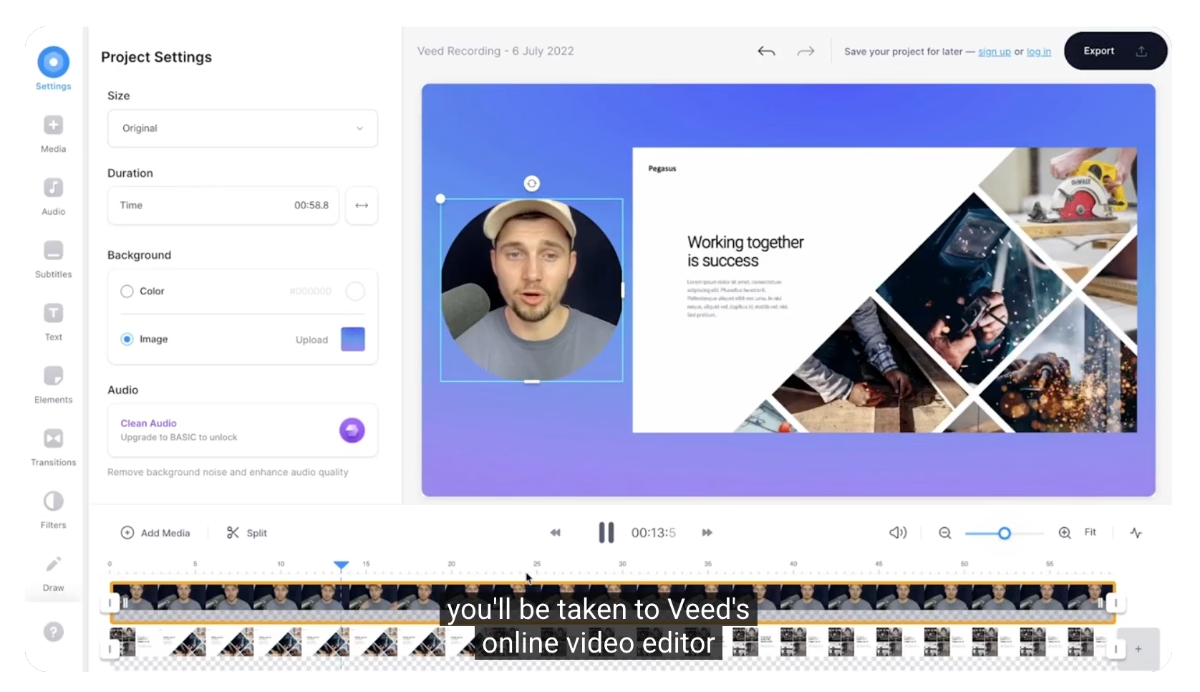
Here’s what VEED’s video editor looks like:
📢 Latest features and enhancements
The platform has focused a lot on its AI-powered capabilities recently, and now allows you to generate videos with AI avatars, AI influencers, and your “digital twins”.
Beside the AI capabilities, Veed has also been building out its Steps Recorder specifically for workflow documentation and capturing a dynamic video walkthrough that teams use for software demos, SOPs, and new-employee onboarding videos, with drag-and-drop annotations.
3) Wistia
Wistia is a video marketing and hosting tool aimed at businesses that want to create, manage, and analyze video content. Besides video recording and editing, you can use Wistia for:
✅ Video and webinar hosting, recording, and editing
✅ AI video dubbing and lip sync
✅ CTAs and lead capture forms
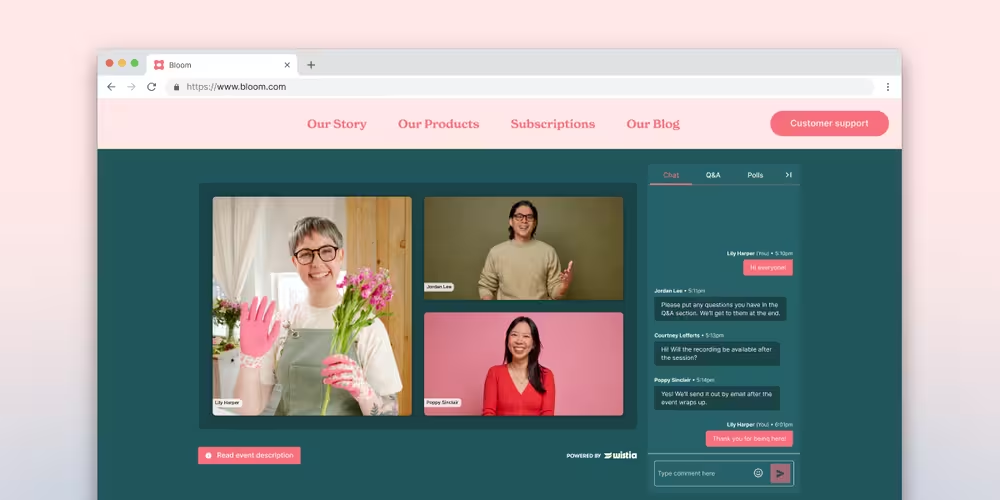
✅ Webinar attendee analytics
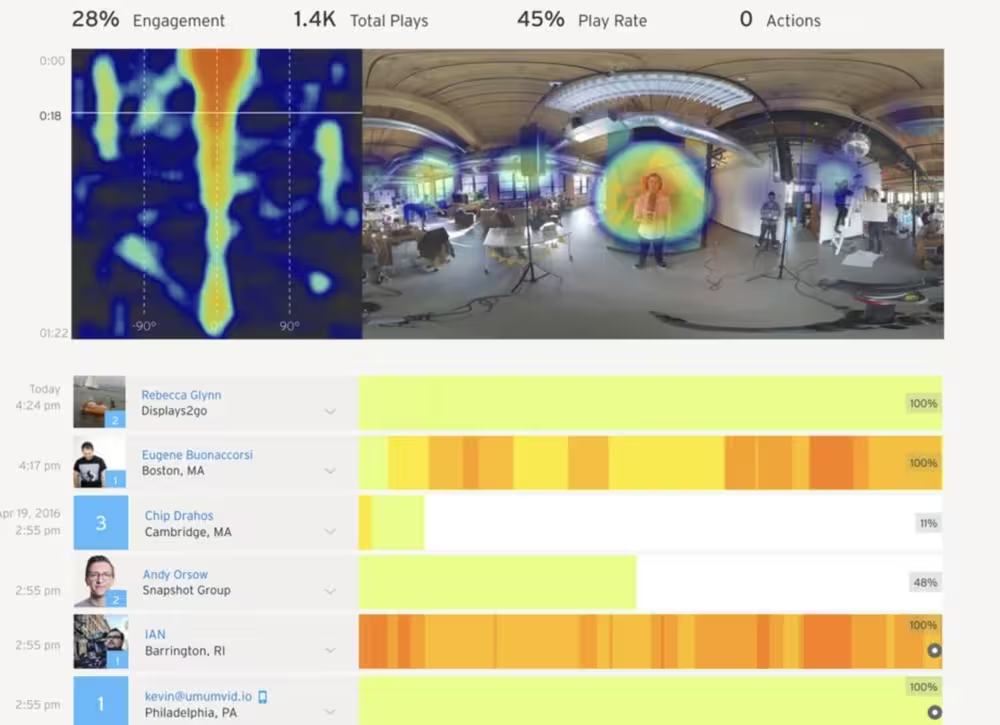
✅ Viewer heatmaps
✅ Marketing integrations
Here’s what the product looks like:
📢 Latest features and enhancements
Wistia has actively launched new features to improve customer experience in 2026, the latest of which is embeddable webinars. With this new feature, instead of sending people elsewhere to register or join the live room, you can run webinars on your own domain. The experience isn’t fractured, neither the Wistia-backed elements (marketing automation forms as well as analytics).
3) Vimeo
Vimeo is an AI-powered video hosting, recording, hosting, and sharing platform, specifically designed for creators, marketers, and businesses. Vimeo offers many features that could be helpful for creating onboarding materials, such as:
✅ Video player and hosting
✅ Video recording, making, and editing
✅ Webinars and live streaming
✅ Vimeo AI for recording and translation
✅ Monetization tools
Here’s what Vimeo looks like in action:

📢 Latest features and enhancements
Vimeo’s latest feature announcement was on April 23, 2026 for Vimeo Review. With this update, Vimeo simplifies Review, so you can set up video review links faster, review videos exactly where you store them, and get feedback from anyone who has the review link (whether they have a Vimeo account or not).
Onboarding Analytics Tools
Once launched, it can be harder to find and fix the flaws in your onboarding and UX before they drive users away.
That’s why a good onboarding analytics tool is a product manager’s best friend. It can track every scroll, click, and action, giving you the right insights into which part of your onboarding rolls off smoothly or leaves users frustrated.
A well-designed onboarding can increase user retention by 50%, so achieving similar results depends partly on having a robust analytics system in place.
Here are three tools we’ve picked for this purpose:
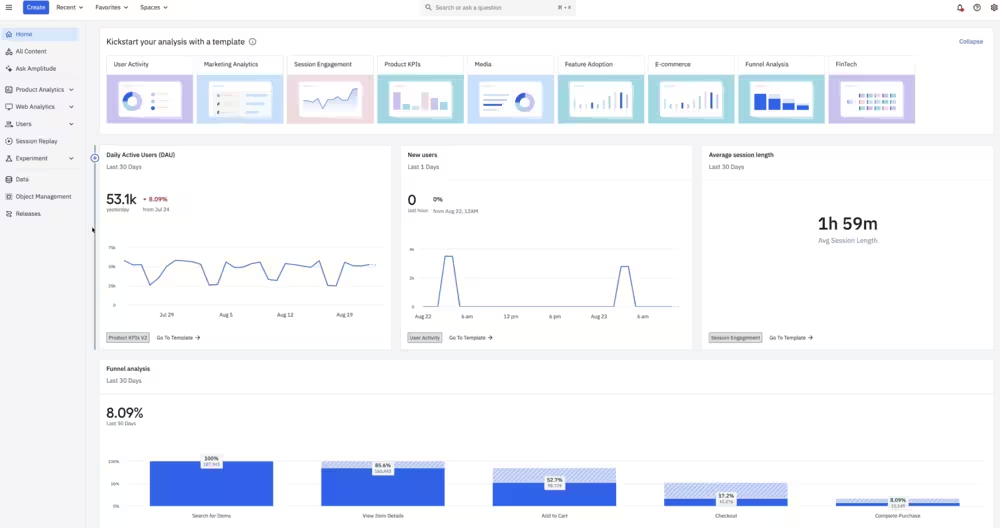
1) Amplitude
Amplitude is an AI-powered digital analytics and experimentation platform that helps you learn deeper and act faster with your product based on user behavior. Here are some of its key capabilities:
✅ A/B testing and feature experimentation
✅ User guides and surveys
✅ Behavioral segmentation
✅ Event-based tracking
✅ Funnel analysis and retention tracking
✅ Heat maps and session replays
✅ Predictive analytics and machine learning insights
In addition to features that support user onboarding, Amplitude also provides data governance.
Here’s what the product looks like:
📢 Latest features and enhancements
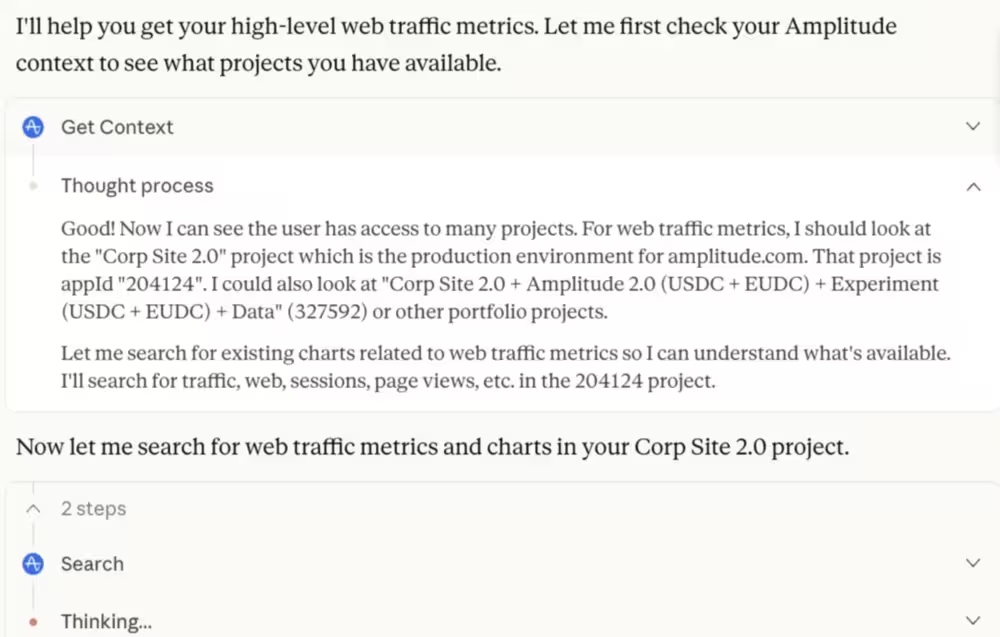
In January 2026, Amplitude announced new updates to its Amplitude Model Context Protocol (MCP) server. The Amplitude MCP server enables product managers to analyze product data, experiments, and user behavior using conversational AI.
Then, you can use these insights to create charts, dashboards, other experiments, and cohorts directly through AI interfaces. The latest improvement made it so that these charts and elements can be directly within your favorite AI tool, so you can explore data and ask a question about your product without ever leaving your workflow.
2) Mixpanel
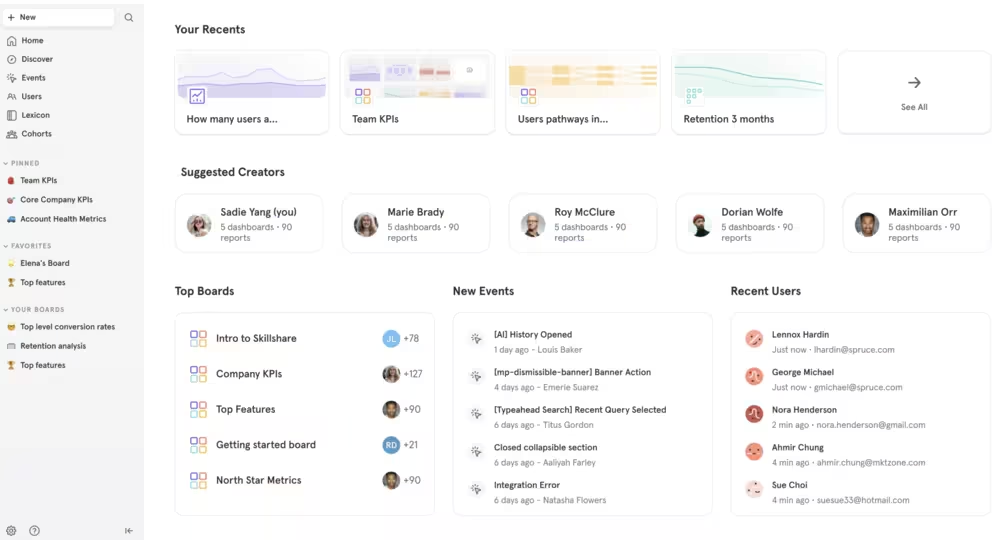
Mixpanel is a product analytics platform built on three pillars:
- Events: Actions that happen in your product
- Users: People who use your product
- Properties: The attributes of your users and events
Using these pillars, Mixpanel helps you better understand your users and answer questions about your product. As an analytics platform, it enables you to track how users engage with your product and analyze this data with interactive reports. Amplitude’s features include:
✅ Session replays
✅ Event-based tracking with real-time data
✅ Experiments and feature flagging
✅ Retention and cohort analysis
✅ Metric trees
✅ Automated reports and alerts
Here’s how Mixpanel looks like in action:
📢 Latest features and enhancements
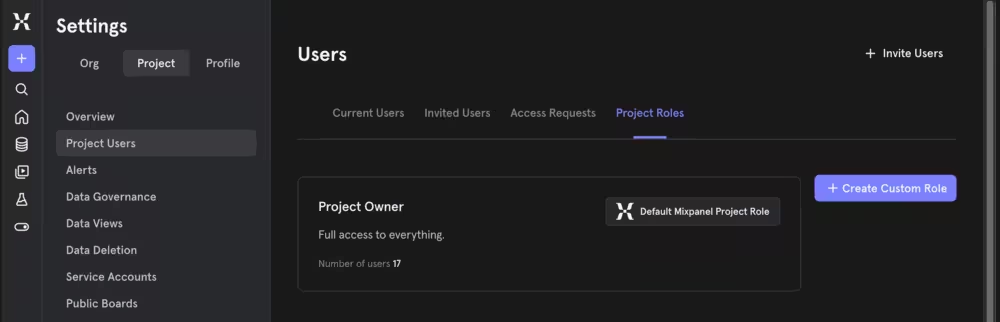
Mixpanel announced its latest feature in April 2026 — Custom Roles. Custom Roles lets you create specialized access profiles to define granular, project-level permissions. Instead of boxing you within the four default project roles (Owner, Admin, Analyst, Consumer), you can use Custom Roles to define precise access, copy roles across projects, and enable bulk role assignment across accounts and teams.
3) PostHog
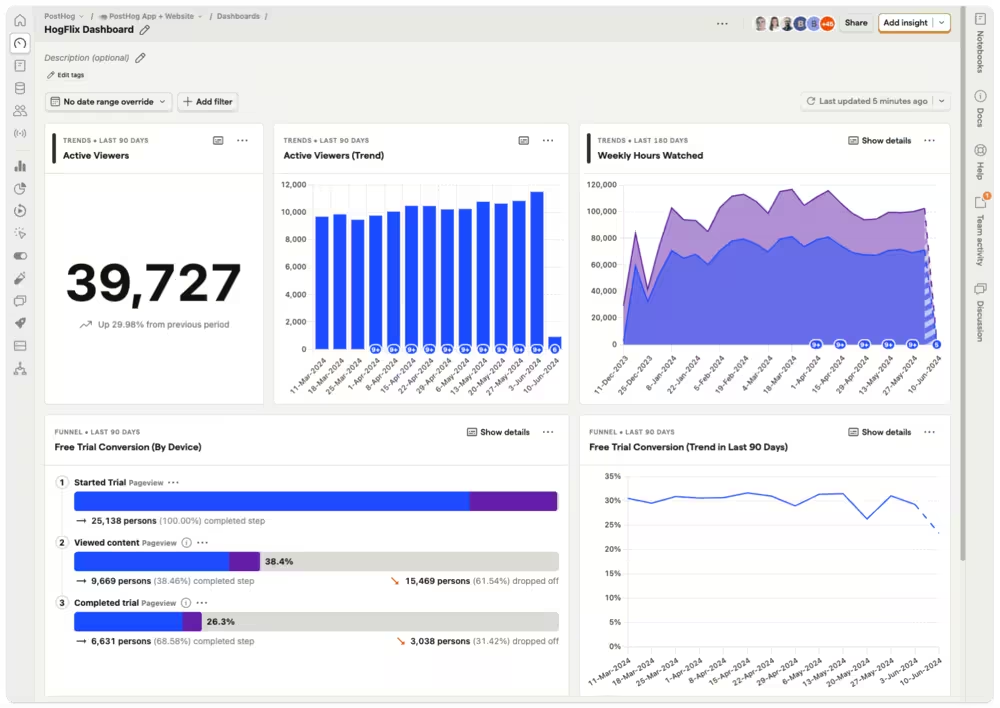
PostHog is actually a suite of products that help you build, test, and improve your product experience. To avoid scope creep in our own article, we’ll only focus on the “testing” part for this section.
For onboarding and analytics as a product manager, PostHog has in store:
✅ Product, web, and revenue analytics
✅ Session replay
✅ Feature flags
✅ Experiments and surveys
✅ Data pipelines
✅ Funnels and lifecycles
Here’s what PostHog looks like in action:
📢 Latest features and enhancements
In April 2026 alone, PostHog announced 26 updates, the most notable ones being customer journey and weekly web analytics summary via the PostHog MCP. The former lets you visualize how users move through key conversion steps in your product (which informs how well your onboarding is received) and the latter shows you a weekly summary for traffic, top pages, and referrers through any MCP-compliant AI agent or tool.

Knowledge Base Tools
In the Agile Brand Podcast with Greg Kihlström, guest Sophie Wyne highlights the importance of maintaining self-serve customer support resources like knowledge bases and AI chatbots.
What does this matter to a product manager? Well, self-serve onboarding serves you too because it’s a window into how quickly users understand, adopt, and get value from the product without needing human intervention. That has ripple effects across growth, retention, and even how the product itself evolves.
Forrester research has repeatedly shown us that self-service is now the first point-of-contact and that customers want fast, low-effort answers and value their time.
This is even more true for new users in a free trial or onboarding phase. They’re unlikely to reach out without an established relationship with the brand.
However, a scattered, poorly managed knowledge base is unlikely to solve any problems, leading frustrated users back to support as a last resort. To avoid that, let’s take a look at three tools to effectively build knowledge bases for self-serve support 👇
1) Zendesk
Zendesk isn’t a knowledge base-first platform. But as a customer service and engagement tool, it offers knowledge bases, mostly customer-facing documentation to streamline a customer rep’s workflow by directing customers to the right articles and materials.
Here are other key offerings Zendesk has:
✅ Messaging, live chat, and ticketing
✅ AI and automation
✅ Data privacy and protection
✅ Help center and knowledge base
✅ Agent workspace

📢 Latest features and enhancements
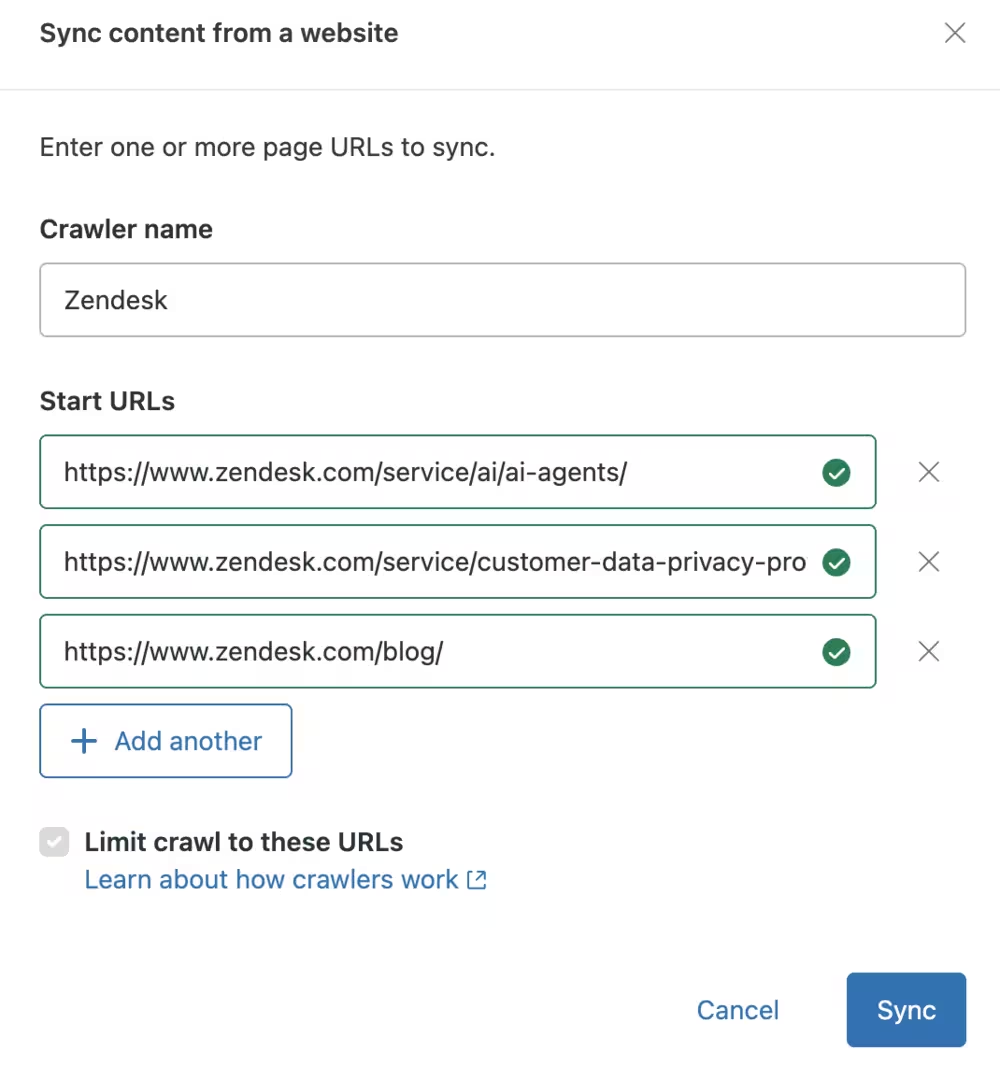
Zendesk launched new improvements in March 2026 across different departments. On the knowledge side, the latest update is the web crawler simplifier, which allows users to start crawling by providing just a start URL to sync content.
2) Confluence
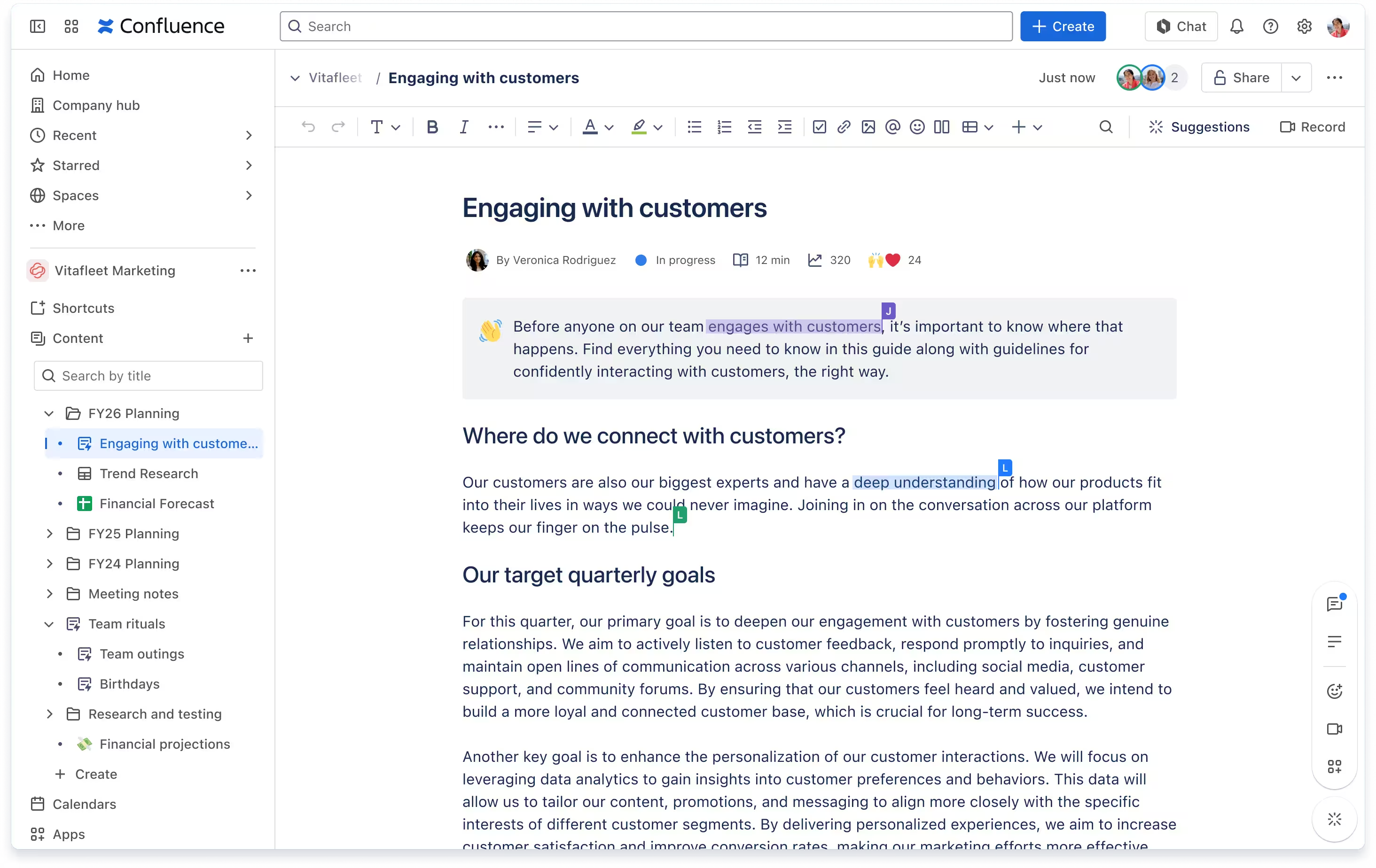
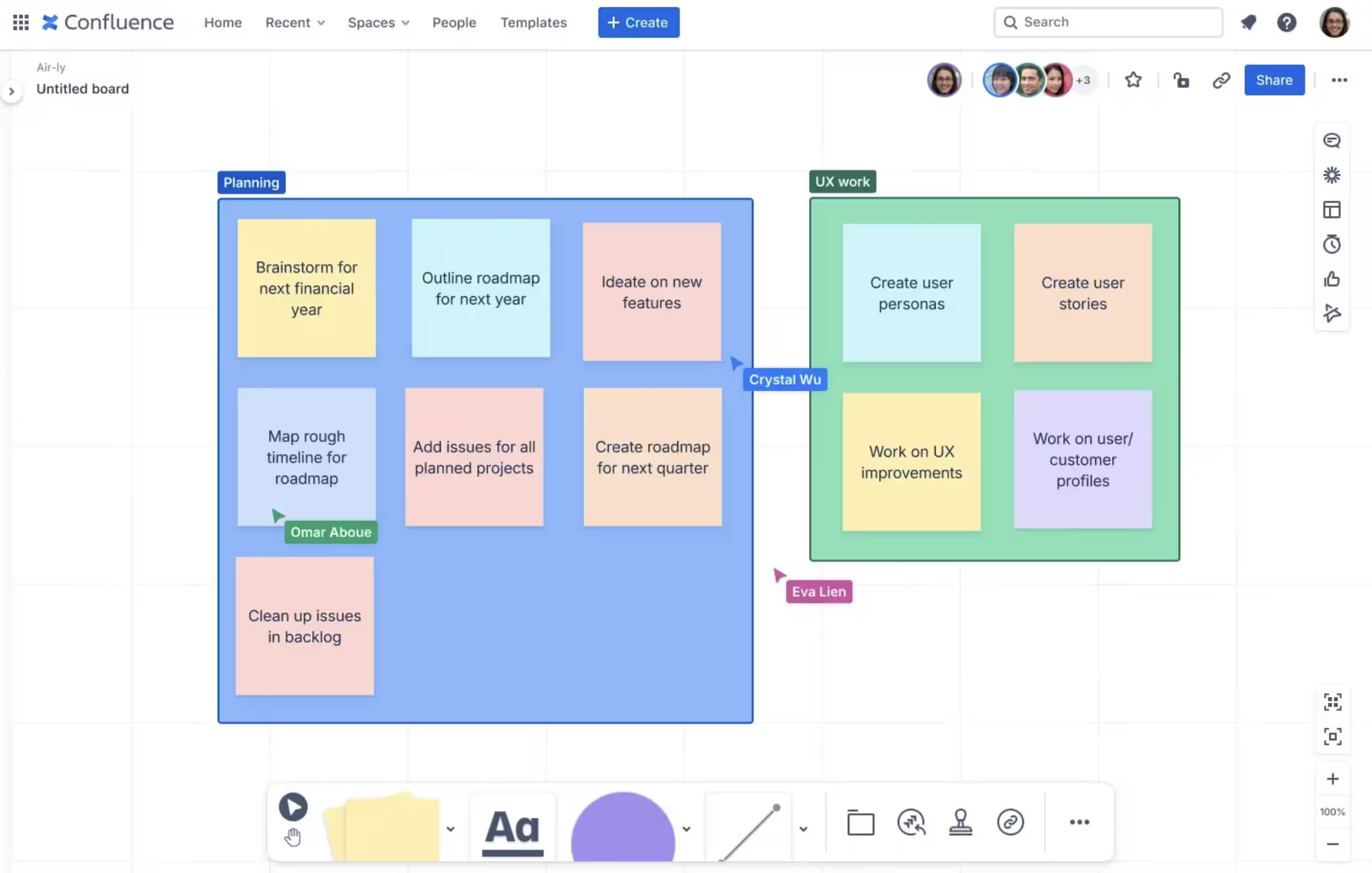
Confluence serves as an internal knowledge base tool that centralizes documentation in a searchable wiki that teams can contribute to, which is valuable during onboarding to keep teams aligned. As part of the Atlassian system, it’s easy to integrate Confluence with Jiro and Trello, but it doesn’t really support connecting knowledge to live customer interactions.
Confluence has four key features:
✅ Pages
✅ Whiteboards
✅ Databases
✅ Loom recordings
✅ Spaces
📢 Latest features and enhancements
The latest updates to the platform came in January 2025, introducing AI in whiteboards and Jira tasks created directly within Confluence by using Confluence pages.
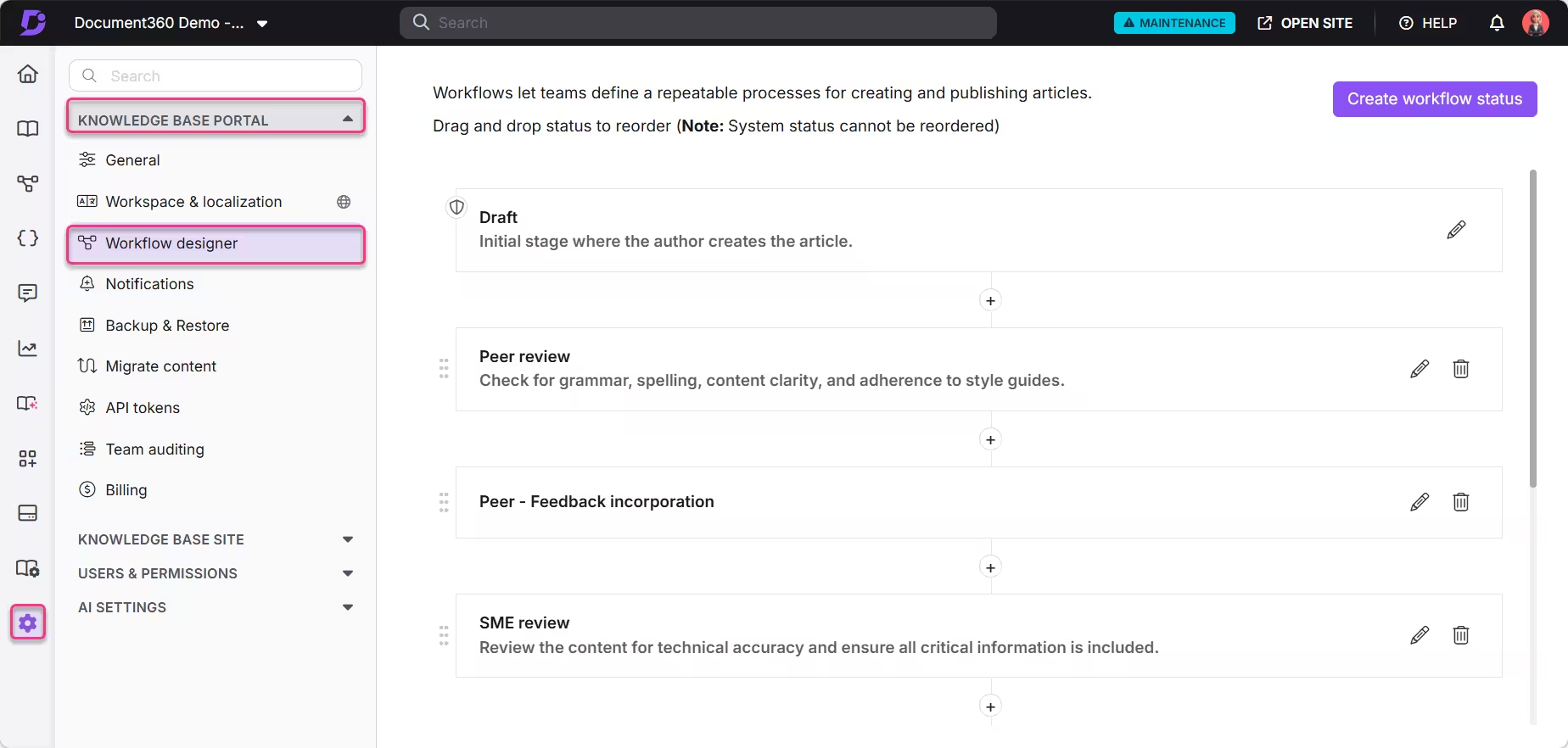
3) Document360
Document360 is a knowledge base platform that helps you centralize public and private knowledge using AI-powered version control and review workflows to keep content up to date. With Document360, you can:
✅ Create AI summaries
✅ Create self-service documentation (help articles, release notes, user manuals, SOPs)
✅ Store versions
✅ Workflow designer
✅ Reporting and analytics
Here’s what the platform looks like:
📢 Latest features and enhancements
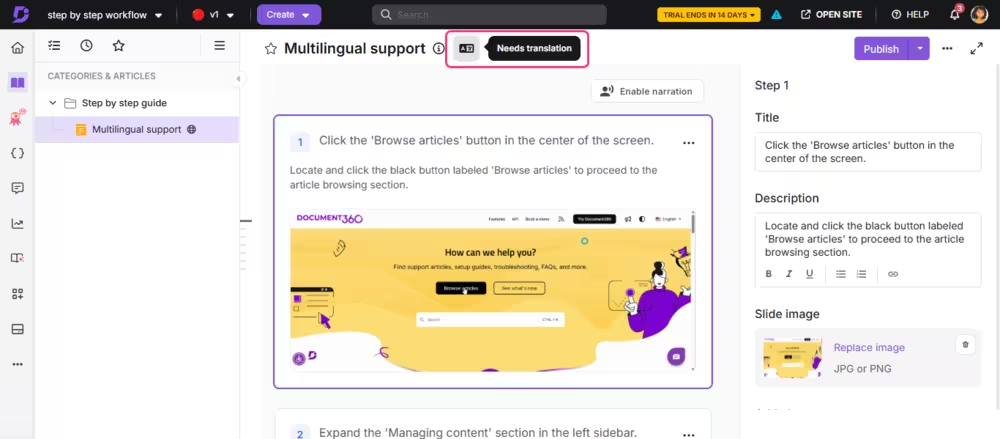
Document360 announced multi-language support for step by step guides in April 2026. Using guides created in the default workspace language as the source, Document360 can now generate translations for any enabled secondary language to ensure guides remain up to date and consistent across your knowledge base.
User Feedback Tools
In Hannah Clark’s podcast, The Product Manager, Ramli John shares a crucial yet often overlooked nature of user onboarding feedback.
He points out that onboarding is one of the rarest moments when users are openly vulnerable and share their struggles and goals by saying, “I don’t know how to do this,” “I’m stuck here,” or “I’m trying to accomplish this.”
This feedback is incredibly valuable for a product manager to show real (not imaginary) pain points, yet it frequently gets lost in the loop. Whether users go through an automated onboarding flow or a 1:1 demo, their questions and concerns are a golden opportunity to improve both the product and the onboarding experience.
Let’s explore four tools that can help you capture and act on this real-time feedback👇
1) Typeform
Typeform is a SaaS platform built to create conversational, interactive forms as well as surveys and quizzes that ask questions one at a time. With Typeform, you can ask questions about your users’ use cases before the onboarding and about the onboarding during and after their onboarding.
Here’s what Typeform is fully capable of:
✅ Customizable survey, quiz, and form designs
✅ Video forms
✅ Workflow automation to qualify and route leads
✅ Typeform AI to analyze your data and adapt your forms
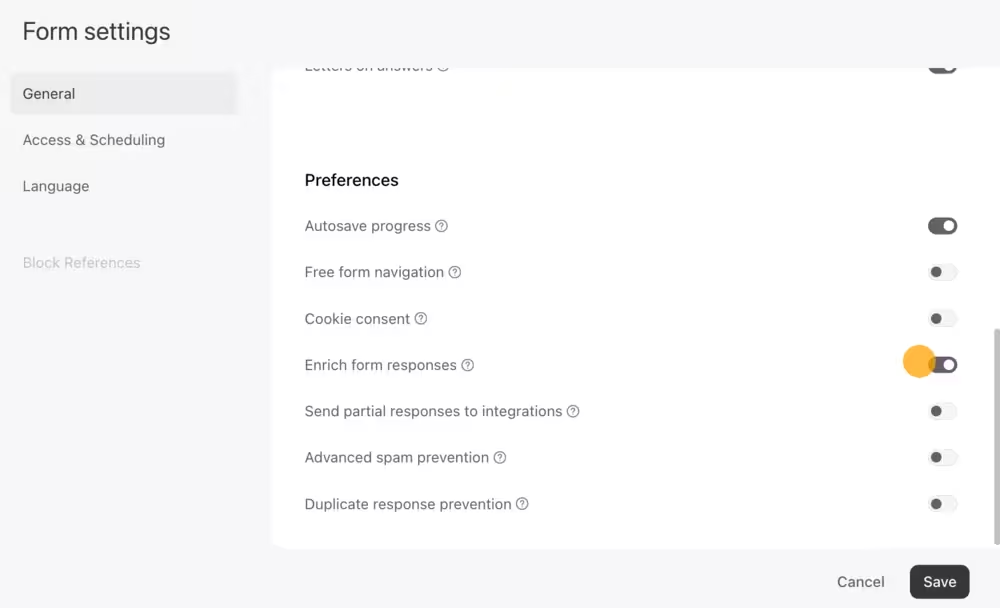
Here’s what the platform looks like:

📢 Latest features and enhancements
Typeform announced its new AI data enrichment feature back in February 2026. This new feature personalizes follow-ups, qualifies leads faster, and focuses on opportunities most likely to convert with new reporting dashboards and deeper segmentation.
2) Survicate
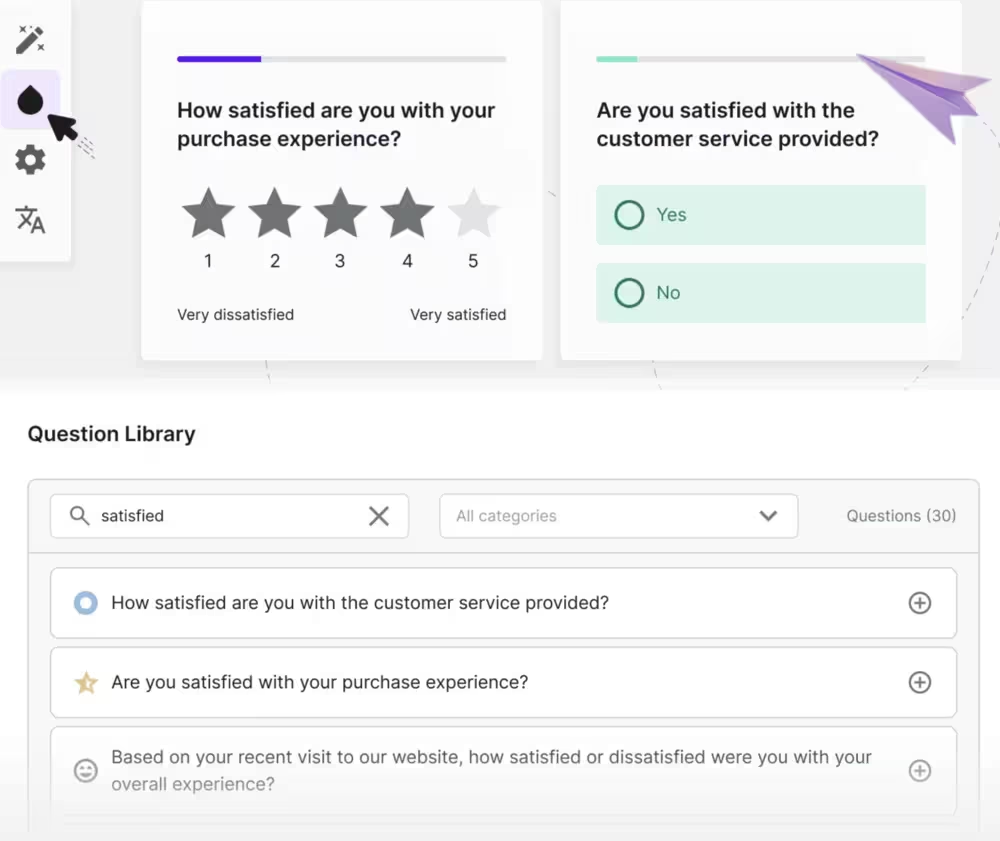
Survicate is an intuitive, drag-and-drop survey builder that lets you create surveys for websites, mobile apps, in-product experiences, emails, and direct links. Some of its key features include:
✅ Surveys
✅ Analysis dashboards
✅ Research hub
✅ Multi-language feedback
✅ AI-powered analysis
Here’s what Survicate looks like in action:
📢 Latest features and enhancements
In March 2026, Survicate released response attributes in web, product, and mobile surveys. Unlike user attributes, response attributes session-specific data that resets with each new session and appears in individual response analysis. This enables users to track the current page, cart value, feature being used, support ticket ID, and more.
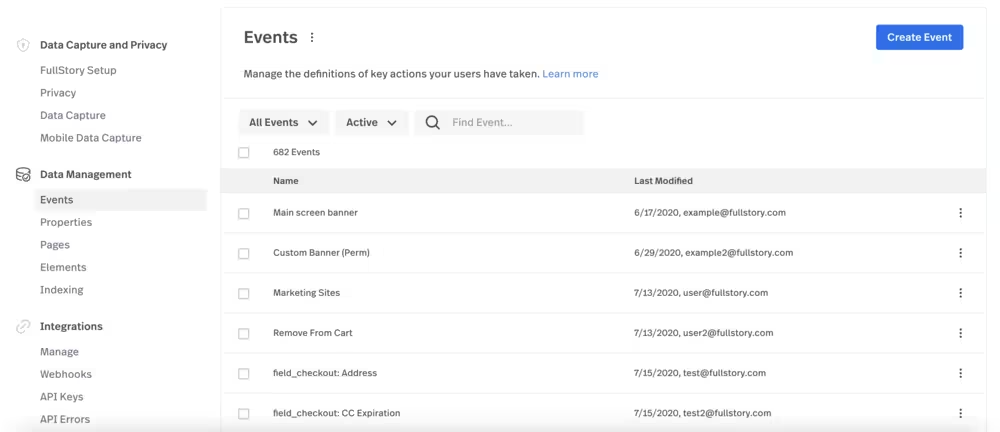
3) Fullstory
Fullstory is branded as an intelligent digital experience platform that captures, analyzes, and replays user interactions (like clicks, dead clicks, and scrolls) across websites and mobile apps to improve conversion and provide insights into user behavior.
Some of its key capabilities include:
✅ Session replay
✅ Guides and surveys
✅ Behavioral data analysis across product and mobile app
✅ StoryAI for clear, accurate insights
Here’s what the platform looks like:
📢 Latest features and enhancements
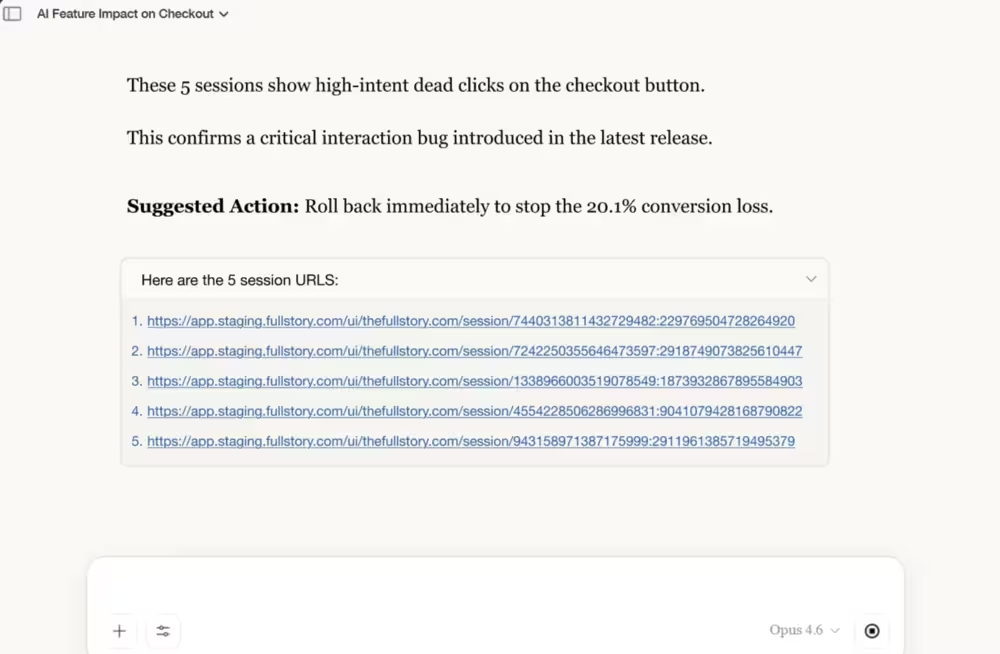
The latest addition to Fullstory’s stack is the Fullstory Model Context Protocol (MCP) server. MCP is designed to proactively detect and fix broken user flows, unify all your digital experience insights into a single source of truth, and send you an automated daily digest highlighting the most important changes in user behavior.
4) Jotform
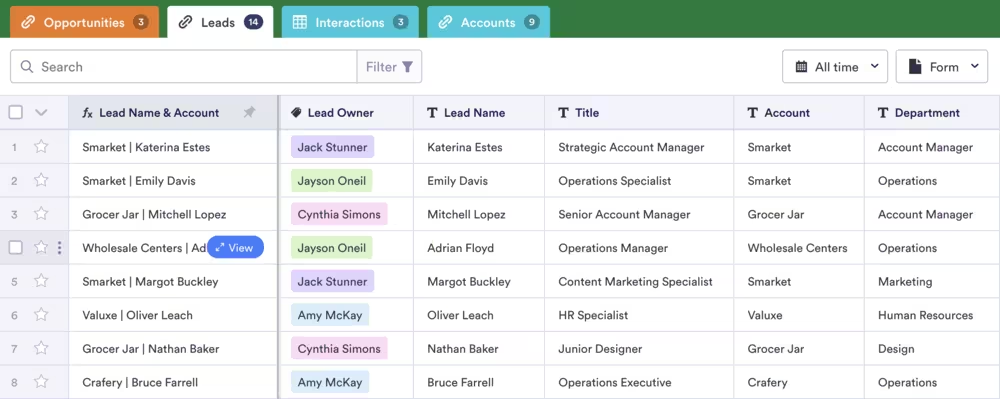
Jotform is an online form builder that allows users to create custom forms, surveys, and applications without any coding. From sign and feedback forms to payment forms, Jotform offers over 20,000 ready-made form templates.
Here’s other key capabilities offered by the platform:
✅ Ready-made templates
✅ Apps and tables
✅ Workflows
✅ Inbox and report builder
✅ E-signature
Here’s what the platform looks like:
📢 Latest features and enhancements
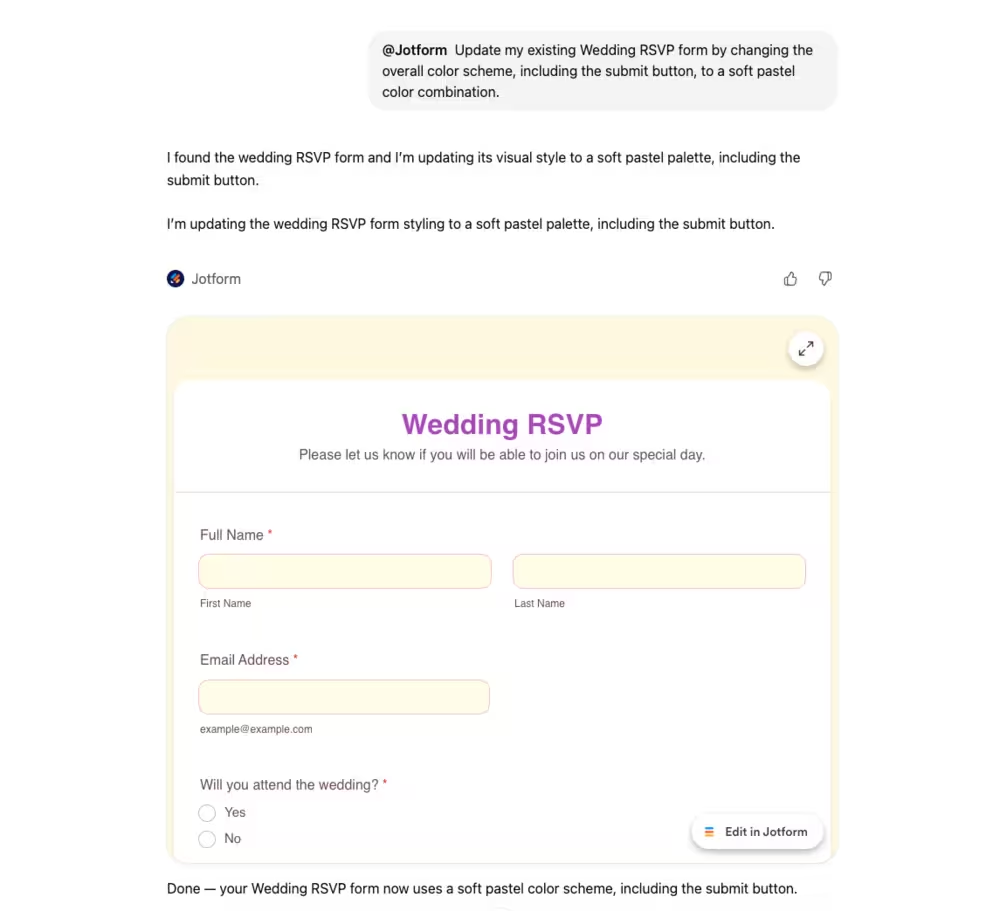
Jotform announced its ChatGPT app in April 2026. The app aims to bring creation, editing, and visualizations directly in ChatGPT to create and modify forms, search existing ones, and work with your submissions using conversational language.
A/B Testing Tools
When a thought leader in SaaS makes a bold claim that “well over 30% required user onboarding steps are rubbish,” you can panic. Or think why such a claim rings true.
Onboarding should guide users until they can habitually use your product, not drag them through every hoop until they graduate from your academy.
To avoid this (very common) pitfall, A/B testing is key.
These tests not only show you what unnecessary steps to remove but also discover which steps or elements you should add to improve the flow.
Here are two tools that can get this job done 👇
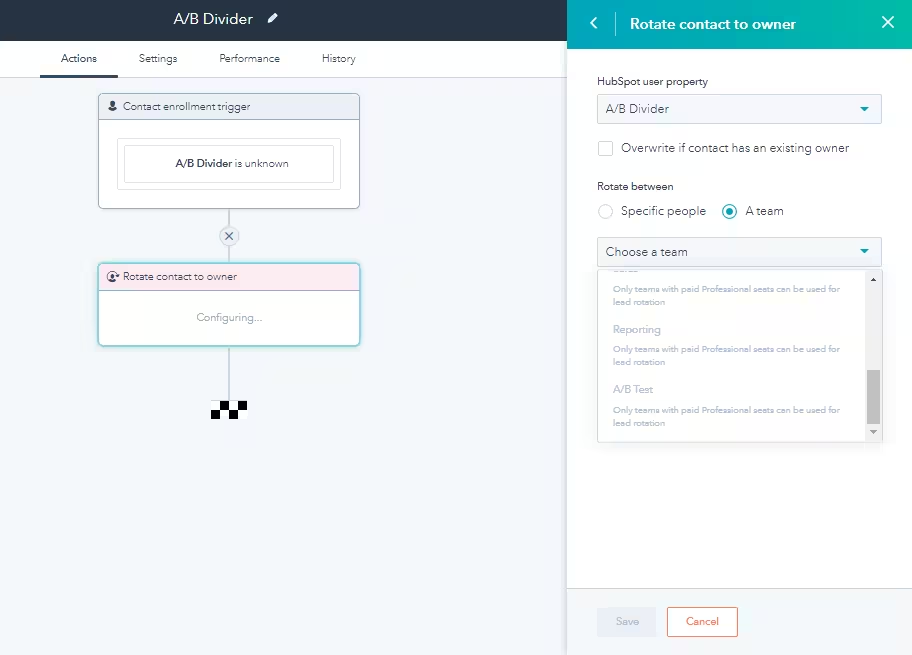
1) HubSpot
When someone’s looking for an all-in-one-platform for inbound marketing, sales, and customer service, HubSpot is usually one of the top choices. The platform is built around the idea of attracting visitors, converting leads, and retaining customers for long-term success.
With HubSpot, you can conduct A/B testing for your:
✅ Onboarding emails
✅ Landing pages (signup pages, introductory offers)
✅ Registration and onboarding forms
See HubSpot in action:
📢 Latest features and enhancements
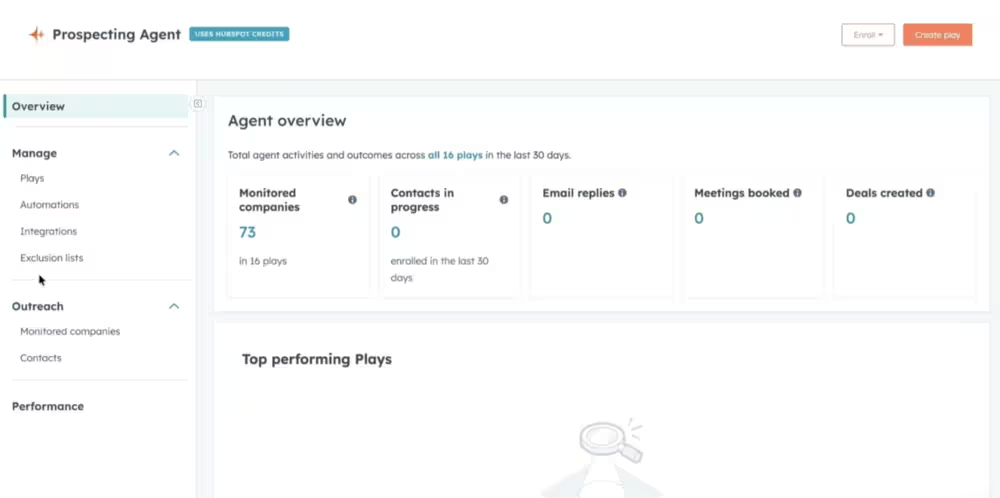
You can now use Customer Agent on email. The Agent helps you handle more email volume, resolves routine queries. And because it’s built within HubSpot, the Agent can draw on every ticket and interaction to respond to the customer’s specific context and not create a generic template.
2) Optimizely
Optimizely is an AI-powered digital experience platform (DXP) and marketing operating system that helps businesses experiment with A/B testing, multivariate testing, and built-in personalization hooks. Its main features include:
✅ Web and mobile testing
✅ Targeting and user segmentation
✅ Personalization
✅ A/B, multivariate, feature, and server-side testing
✅ Feature flagging
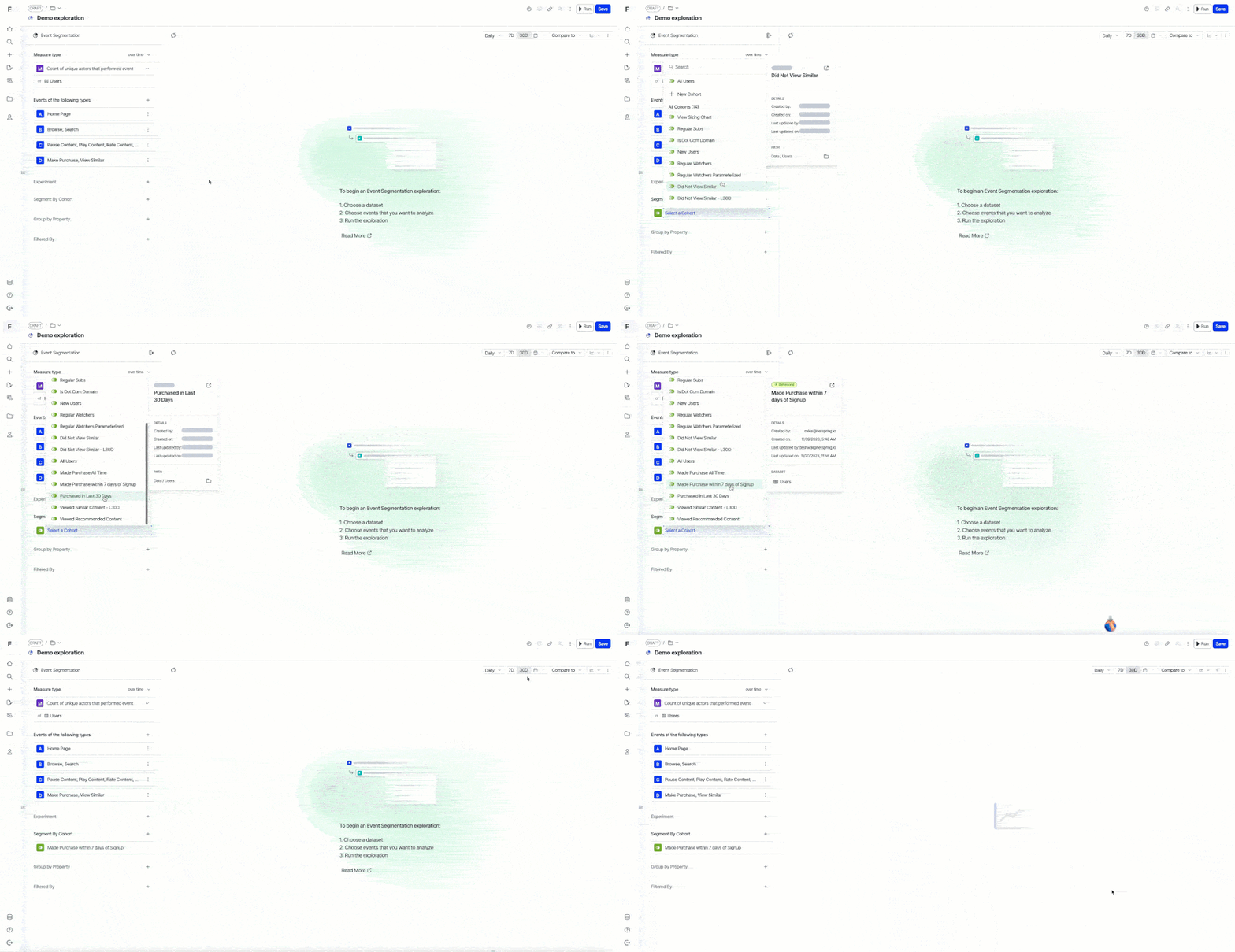
Here’s what the platform looks like:
📢 Latest features and enhancements
Optimizely has launched a new experimentation update in beta: Frequentist stats engine. A widely-used methodology for analyzing experiment results over the duration of a set period of time, this beta feature enables consistent, auditable analysis and fits well within regulated environments and pre-defined test durations.

Live Chat Tools
Self-serve knowledge bases and onboarding tutorials are great but some users prefer human interaction over sifting through articles or completing multi-step tours. And sometimes, it’s tough to put a problem into words or even know what to search for.
That’s where support teams shine; they decode the real issue, even when users can’t.
Here are three tools to help you achieve that:
1) Tidio
Tidio is an AI-powered customer support software suite designed to streamline communication between businesses and their customers. The suite consists of:
✅ Live chat
✅ AI agent
✅ Chatbot automation (Flows)
✅ Help desk
✅ Lead generation
Here’s an example of what you can do with Tidio:

📢 Latest features and enhancements
After its initial release, Tidio has focused its product releases around its conversational AI tool, Lyro. The latest release, however, concerns e-commerce businesses. They can use Lyro AI Agent as a shopping assistant to provide smarter recommendations by asking follow-up questions to customers, suggest cart-aware items that match or complement customer’s taste, and overall help customers find products faster.

2) Freshchat
Freshchat is Freshdesk’s dedicated live chat and messaging solution, designed to provide real-time support and customer management. Its main features include:
✅ Live chat and messaging
✅ Multichannel support and integration
✅ AI chatbot and automation (Freddy AI)
✅ Unified agent inboxes
✅ Surveys and reports
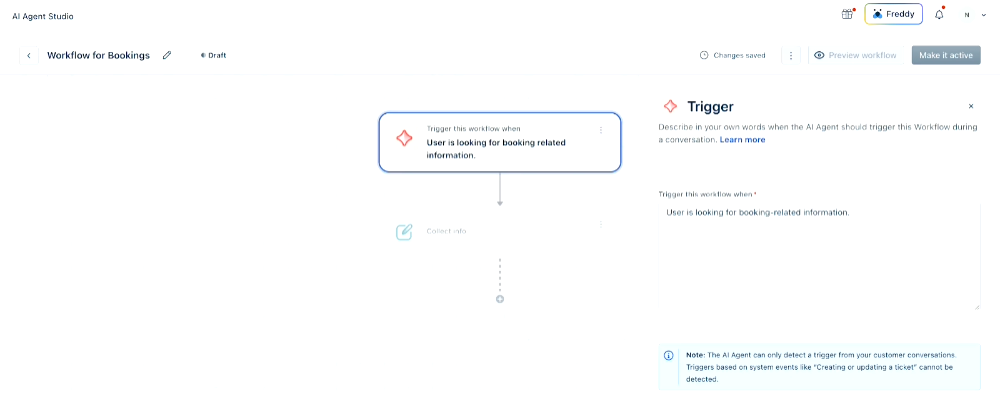
Here’s a closer look at the platform:

📢 Latest features and enhancements
Freshchat’s April 2026 product update introduced no code Agentic Workflows to the tool. With Agentic Workflows, you can save information like customer details during conversations straight into Freshdesk Omni properties, so these values can be used across workflow steps and shown to agents for easy follow-ups.
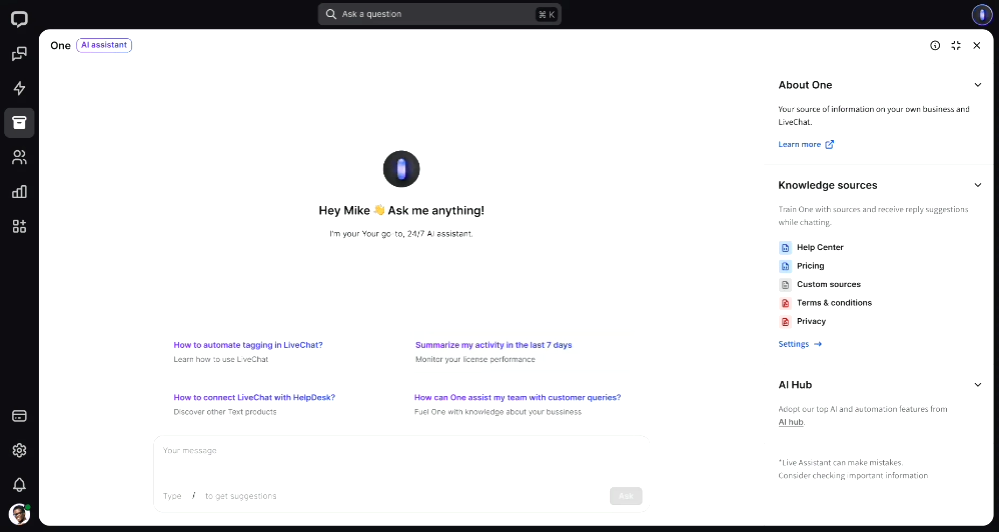
3) LiveChat
LiveChat is a real-time, chat-based support tool embedded on websites or apps to help engage users and assist them throughout their journey. Just like Freshchat, LiveChat allows you to create both live chat and AI chatbot.
LiveChat also includes features like:
✅ Live chat and messaging
✅ Chat tags, archives, transfers
✅ Multichannel messaging, including Instagram, call, SMS, and email
✅ Agent profiles
✅ Reports and analytics
Here’s a closer look at the platform:
📢 Latest features and enhancements
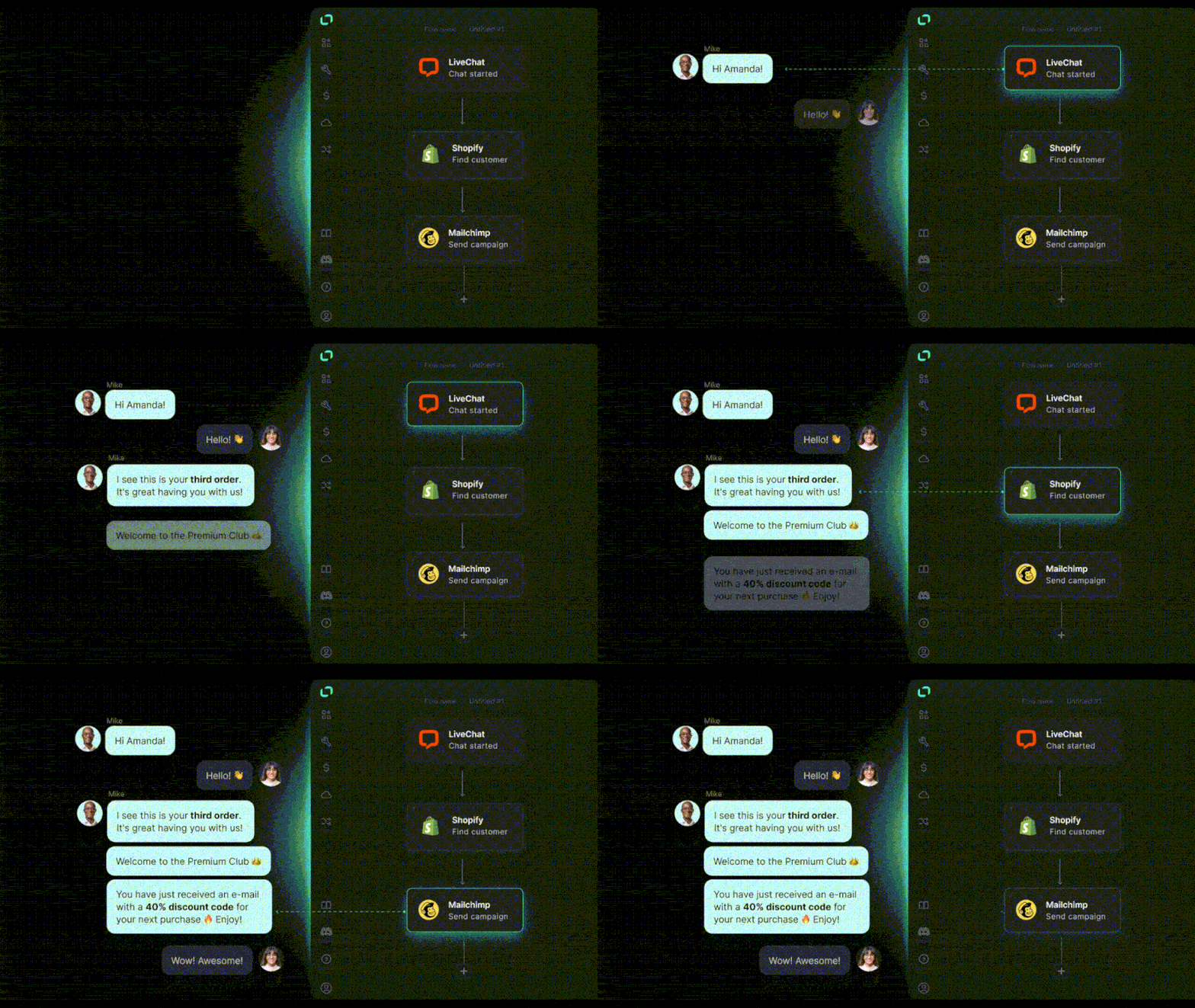
LiveChat announced its Workflows feature back in January 2026. Workflows are visual automation builders that handle repetitive work such as welcome messages, creating tickets when a chat ends, and sharing chat summaries with your team.
Justifying the ROI of Onboarding Tools to Stakeholders
If you’re getting pushback on investing in onboarding tools, the conversation usually boils down to one thing: prove the payoff. Stakeholders know and probably have tested these tools already. What they need is a clear line from investment to impact. Start there.
A simple ROI formula keeps things grounded:
ROI = (Revenue retained from reduced churn + Engineering hours saved x hourly cost) - Tool cost
Break it down in business terms:
- Reduced churn: If better onboarding improves activation and reduces early drop-off, you’re retaining more customers. Even a small percentage lift can translate into meaningful recurring revenue.
- Engineering time saved: Every hour your team isn’t building onboarding flows, fixing edge cases, or maintaining brittle systems is time redirected to core product innovation.
This is where “immediate satisfaction and ROI” becomes more than a buzz phrase. Good onboarding tools deliver quick wins as much as they enable long-term success.
Faster time-to-value for users. Fewer support tickets. Less friction in product adoption. Those are outcomes stakeholders can see within weeks, not quarters.
Now, let’s address the inevitable question: build or buy?
- Build (Internal Tooling): At first glance, building in-house can feel cost-effective. You already have engineers. You control the roadmap. But in reality, most internal onboarding systems rely on script-based implementation, which is a patchwork of custom logic that becomes harder to scale, test, and maintain over time. What starts as a quick solution often turns into a long-term drain on engineering resources. Every update competes with higher-priority product work, and iteration slows down when non-technical teams are blocked.
- Buy (Onboarding Platform): This is about empowering your team. Purpose-built tools shift ownership from engineering to product, growth, or customer success. That means faster experimentation, quicker iteration, and less dependency on dev cycles. Instead of rebuilding the same patterns (tooltips, walkthroughs, checklists), you’re deploying and optimizing them in days, not sprints.
The real ROI lies in momentum gained. When your team can move faster, respond to user behavior, and continuously improve onboarding without bottlenecks, you’re not just justifying the investment. You’re compounding it.
Conclusion
Onboarding is a system with multiple touchpoints, many of which often don’t get enough attention. Product managers often focus on in-app flows, but elements like lifecycle emails, feedback loops, and post-activation education can have just as much impact on retention and expansion.
Each layer of onboarding can be addressed with different tools and approaches. Some solutions are purpose-built, such as in-app guidance or email automation, while others aim to consolidate onboarding into a single platform.
You’ll also encounter tradeoffs between code-heavy tools that offer flexibility and no-code tools that prioritize speed and autonomy. Cost and scalability vary widely between the two depending on the complexity of your organization.
No tool will fix a broken onboarding strategy. Tools amplify your approach but they don’t define it. The goal is to choose solutions that align with your product’s maturity, your team’s resources, and the outcomes you’re accountable for.
Before evaluating tools, clarify your priorities:
- Which part of onboarding is currently the weakest or most underdeveloped?
- Where are users dropping off or failing to reach value?
- What does user feedback tell you about their onboarding experience and expectations?
- Which capabilities are non-negotiable, such as segmentation, experimentation, analytics, UX flexibility?
- What constraints are you working within—budget, engineering bandwidth, or time-to-implement?
Framing the problem this way helps you avoid underutilizing tools or solving the wrong onboarding problem altogether.
Frequently Asked Questions
What is the difference between product onboarding software and employee onboarding tools?
Product onboarding software helps companies guide users through a digital product, typically via in-app tutorials, walkthroughs, tooltips, and behavior-driven messaging. Its goal is to drive activation, feature adoption, and retention.
Employee onboarding tools, on the other hand, are designed for internal HR processes. They streamline hiring workflows like document collection, training modules, compliance, and new-hire orientation.
How do I justify the ROI of replacing our current onboarding tool in 2026?
Tie onboarding improvements directly to measurable business outcomes to justify ROI to stakeholders:
- Faster time-to-value: Improved onboarding reduces how long it takes users to reach key activation milestones.
- Higher retention: Better first experiences lead to lower churn and increased lifetime value.
- Increased feature adoption: Contextual guidance boosts usage of high-impact features.
- Reduced engineering costs: Modern no-code or low-code tools decrease reliance on developer resources.
- Operational efficiency: Product and growth teams can iterate without long release cycles.
In 2026, ROI expectations are higher as buyers expect onboarding platforms to combine analytics, personalization as well as experimentation. If your current tool lacks these, the opportunity cost (lost conversions, slower iteration) becomes part of the ROI argument.
Can I use product onboarding tools for no-code event tracking?
Yes, many modern product onboarding platforms now include no-code or low-code event tracking capabilities. These tools typically allow teams to:
- Define custom events without engineering support
- Tag UI elements directly within a visual editor
- Track user behavior across journeys and funnels
- Trigger onboarding flows based on real-time actions
However, there are limits. While onboarding tools can handle lightweight to moderate event tracking, they may not fully replace dedicated analytics platforms for complex data modeling, cross-platform tracking, or deep reporting.
For most SaaS teams, they work well as a complementary layer by bridging onboarding experiences with actionable behavioral data without requiring constant developer involvement.

.png)